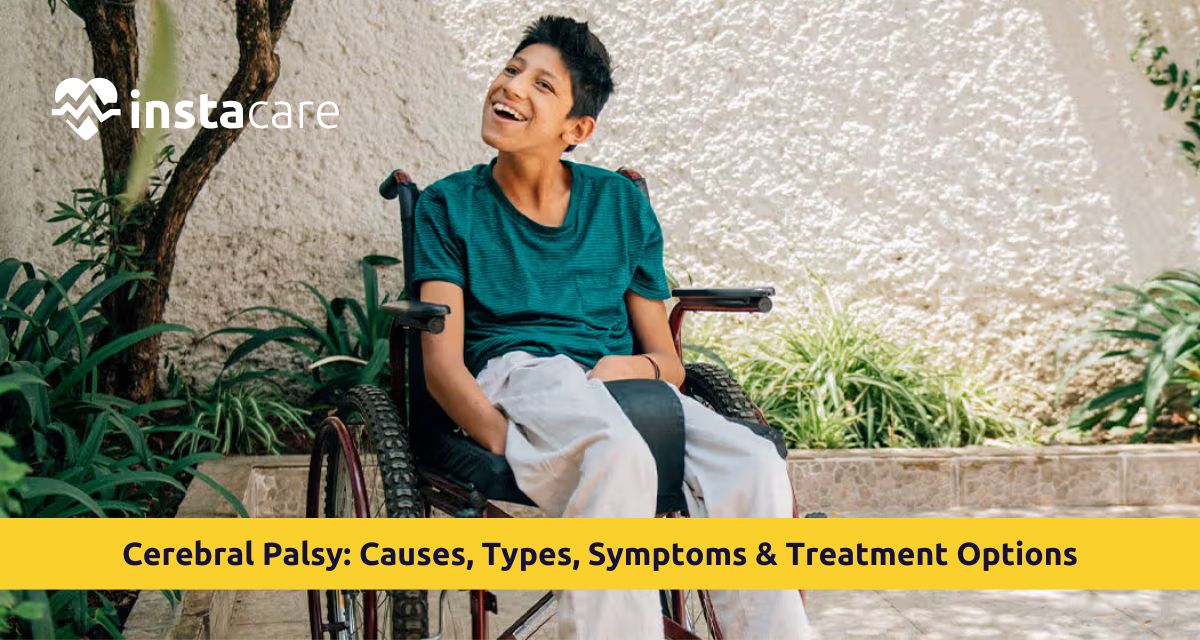
Learning what is cerebral palsy, its early symptoms, and where the treatment techniques are available properly is required to have improved results. Although it can't be cured, there are some treatments and supportive devices that make life improve. Let's open the cerebral palsy causes, types, symptoms, and treatment to learn better how to deal with this disorder.
What is Cerebral Palsy?
A collection of disorders that affect the ability to move, hold posture, and balance. CP results from abnormal development of the brain or injury to the area of the brain responsible for movement. "Cerebral" identifies the brain, and "palsy" identifies weakness or loss in movement.
Cerebral palsy in infants is generally diagnosed by the age of two when crawling, sitting, or walking milestones are not achieved. Others are diagnosed sooner if they are highly involved. Cerebral palsy is not a progressive illness, i.e., worsening illness, but the manifestations change with growth.
It is appropriate to make a distinction between cerebral palsy vs autism because the two illnesses impair growth but in a different manner. CP impairs movement, and autism impairs behavior and also communication. It is possible, however, that an individual can be afflicted by the two illnesses at the same time.
Causes of Cerebral Palsy
There are a number of possible causes of cerebral palsy, and the most frequent ones are brain damage during development. The damage can be to the brain before birth, at the time of birth, or following birth. Pregnancy causes, which is the most frequent, are:
- Pregnancy infection, including rubella or cytomegalovirus
- Inadequate passage of oxygen (hypoxia) to the brain
- Genetic growth or brain mutation
Disorders acquired postnatally and may be the causative disorders during labor and delivery are premature birth, labor complication, or low birth weight. Their etiology may be postnatal, for example, head infection in the form of head injury, stroke, or meningitis.
Types of Cerebral Palsy
There are four fundamental types of cerebral palsy, and they are divided depending on the nature of the motor disorder that the patient is possessing. They are:
Spastic Cerebral Palsy
It is the most prevalent type, present in nearly 80% of CP children. It leads to stiffening of muscles and abnormally hyperactive reflexes, so that the patient ambles. Subtypes are spastic diplegia, hemiplegia, and quadriplegia according to limbs involved.
Dyskinetic Cerebral Palsy
Also referred to as athetoid CP, it leads to involuntary movement, primarily of arms, face, and legs. The movement renders sitting, walking, and speaking cumbersome.
Ataxic Cerebral Palsy
It is done with impaired depth perception, coordination, and balance. People might have trouble in performing activities such as writing or buttoning a shirt.
Mixed Cerebral Palsy
Patients have features of more than one subtype, i.e., most commonly spastic and dyskinetic. Determination of cerebral palsy subtype is needed in order to prepare treatment.
Symptoms of Cerebral Palsy
Cerebral palsy symptoms are diverse based on type and degree of disease. Generalized symptoms are:
- Muscle stiffening or floppiness
- Weak muscle coordination and balance
- Abnormal body posture
- Impairment in walking and standing
- Delay of milestone such as crawling or speech
Newborns can be screened to show early signs of cerebral palsy, even unconsciously, like inability to hold the head, reaching with one hand with the other fist clenched, or inability to roll over by a specific time. Early signs of cerebral palsy offer early intervention and treatment to a better long-term result.
Seizures, retardation, blindness, deafness, and deformed joints are some of the others. These cerebral palsy symptoms that occur in old age are well-managed with early cerebral palsy treatment.
Read More: What Is Cognitive Behavioral Therapy (CBT)?
Diagnosis of Cerebral Palsy
Diagnosis starts with physical examination and developmental screening. Doctors can order:
- Brain scan such as MRI or CT scan to establish brain damage
- EEG to exclude seizures
- Genetic assessment to eliminate other causes
Diagnosis of cerebral palsy is typically established by age 2 but in patients with more covert cerebral palsy is typically delayed. Because CP has no test for diagnosis, diagnosis involves meticulous evaluation on the part of pediatric neurologists and child development specialists.
Cerebral Palsy Therapy
Although cerebral palsy itself cannot be cured, cerebral palsy therapy for symptom reduction and quality of life enhancement can be achieved. They are
Physical Therapy
Physical therapy for cerebral palsy aims at strengthening posture, muscle, and mobility. Physical therapy intervention during early age enables the child to learn motor skills and prevent complications later on.
Occupational Therapy
Occupational therapy for cerebral palsy makes the children independent in performing daily activities such as eating, dressing, or urination. It achieves independence and development of motor functions.
Speech and Language Therapy
The person with speech or swallowing impairment needs speech and language therapy. The therapy enhances the communication ability to the best possible level and prevents feeding disorders.
Medications
Pain, muscle spasms, or seizures can be treated with medication. Baclofen, diazepam, and botulinum toxin injections are some examples of such medications.
Surgery
An orthopedic deformity can be fixed, tight muscles relaxed, or a joint aligned by surgery.
Assistive Devices
Walkers, braces, communication aids, and wheelchairs are among the most appropriate cerebral palsy equipment. They enable mobility and daily living.
Support Networks
Cerebral palsy support groups provide emotional support and in-life guidance to CP families. Support groups battle and assert claims on resources. Cerebral palsy therapy always has to be multidisciplinary with physicians, therapists, teachers, and family members all working together to craft an individualized therapy plan.
Conclusion
Infantile cerebral palsy also exists as a state of disease in and of itself independent of its contributory etiologic role in other states of disease, but treatment and intervention for cerebral palsy per se may have a great deal to do with maximizing the extension of the child's development and independence.
Cerebral palsy and intellectual disability occur together, but not all people with CP are intellectually disabled. They must be treated individually and provided with any education and care to which they are entitled by law.
From cerebral palsy physical therapy to cerebral palsy occupational therapy, families also receive a range of services from which they can select. Cerebral palsy support groups and community support also assist. Whether starting from the beginning with cerebral palsy diagnosis or mid-stream with managing cerebral palsy, resources and experts are on hand to assist you.
Please book an appointment with the Best Neurologist in Lahore, Karachi, Islamabad, and all major cities of Pakistan through InstaCare, or call our helpline at 03171777509 to find a verified doctor for your disease.