This syndrome can be endured by a child or an adult. It is a condition that takes time to occur, and the signs can be misdiagnosed as obesity, stress, or other ailments. Cushing syndrome causes, symptoms, diagnosis, treatment, and management facts enable early prognosis and diagnosis.
What is Cushing Syndrome?
Cushing Syndrome is a condition resulting from exposure to excessive cortisol for more than the body could possibly receive for an incredibly long duration of time. Cortisol naturally rises and falls during the day. The levels of Cushing Syndrome are never lower than average.
We have to understand how cushing syndrome vs cushing disease are different from each other. Cushing disease is not such a frequent diagnosis because there is a tumor secreting an adrenal hormone in the pituitary gland. The hormone tells the adrenal glands to release more cortisol than usual. Cushing Syndrome may be caused by adrenal tumors, drugs, or extrapituitary ACTH-secreting tumors.
Causes of Cushing Syndrome
The reasons for Cushing syndrome are divided into two categories: endogenous (internal) and exogenous (external).
Endogenous Causes
They are due to the fact that the body naturally secretes too much cortisol:
- Pituitary tumors (Cushing disease) – The most prevalent cause of endogenous Cushing Syndrome. They overproduce ACTH levels.
- Adrenal gland tumors – Tumors above the adrenal glands can directly secrete cortisol in excess.
- Ectopic ACTH secretion – Certain lung, pancreatic, or other tumors release ACTH and cause hypercortisolemia.
Exogenous Causes
They are caused by drug or treatment with cortisol-mimetic drugs
- Long-term treatment with corticosteroid drugs for asthma, arthritis, or autoimmune disorders.
- Abuse of steroid cream or injection through inhalation or injection.
Other risk factors include age, gender (rather prevalent in women), obesity, and some genetic disease. The sooner the Cushing syndrome diagnosis would be useful for prevention.
Symptoms and Signs of Cushing Syndrome
Cushing syndrome symptoms would vary based upon age, gender, and etiology. Some of the most prevalent signs are:
- Cushing syndrome weight gain – Usually in and around the abdominal area, face (moon face), and upper back (buffalo hump)
- Thin arms and legs
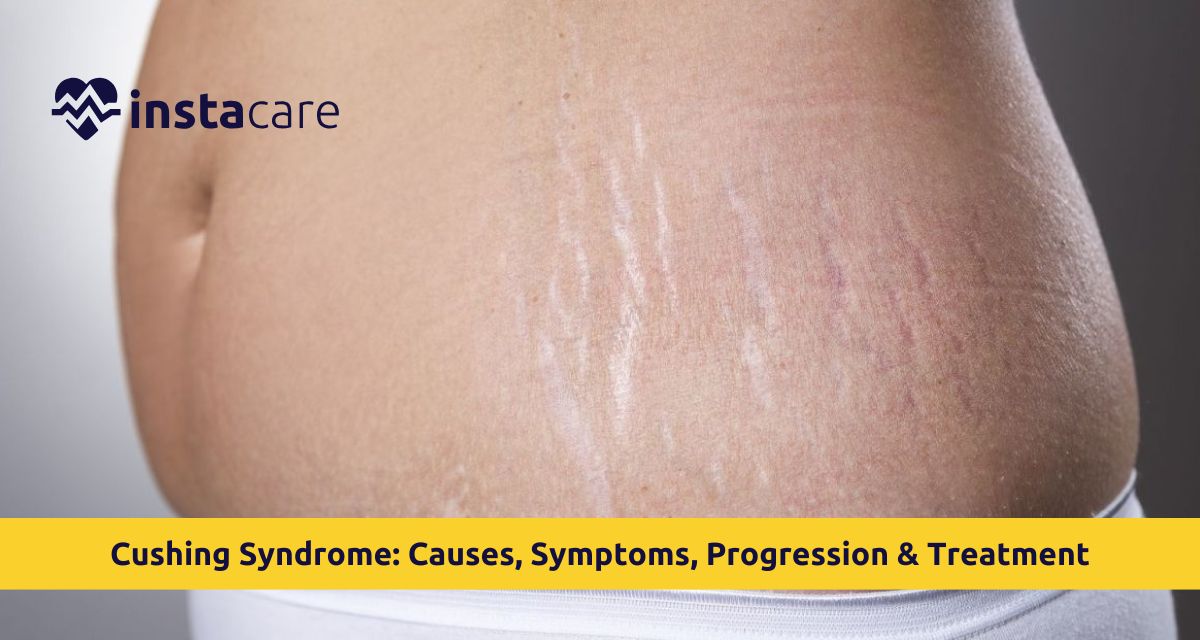
- Purple or pink stretch marks on thighs, breasts, or abdomen
- Thin, brittle skin
- Weakness and fatigue
- Hypertension
- Mood disorders, depression, or anxiety
- Infection and delayed healing of wounds
The Cushing syndrome in children will lead to childhood obesity, delayed puberty, and delayed growth. The Cushing syndrome in adults will expose adults to osteoporosis, diabetes, and hypercholesterolemia.
Excessive, chronic secretion of cortisol can lead to severe Cushing syndrome complications including cardiovascular disease, kidney disease, and immunosuppression.
Diagnosis of Cushing Syndrome
The diagnosis of Cushing syndrome must be done accurately as its symptoms and signs are very prevalent in other diseases like obesity, depression, or metabolic syndrome. Physicians perform different tests:
- Cortisol tests – They test high blood pressure in urine, blood, or saliva.
- Dexamethasone suppression test – Examines how your body responds to synthetic steroids.
- ACTH levels – Tests whether the cause is in the pituitary gland or elsewhere.
- Imaging studies – Pituitary or adrenal gland CT or MRI detects tumors.
Early diagnosis enhances Cushing syndrome outcome and allows doctors to implement proper Cushing syndrome treatment in a timely fashion.
Read More: Computer Vision Syndrome
Treatment of Cushing Syndrome
Cushing syndrome treatment is different depending on etiology, severity, and patient status.
Surgery
Option first when hypercortisolism due to tumor:
- Pituitary surgery – Destroys the tumor cells secreting excess ACTH.
- Adrenal surgery – Destroys adrenal tumor cells secreting cortisol.
Drugs
Pharmacotherapy of Cushing syndrome is employed when surgery is no longer possible or a temporary measure:
- Ketoconazole, mitotane, and metyrapone – Suppresses secretion of cortisol.
- Pasireotide – Relaxes pituitary tumors to reduce ACTH levels.
- Mifepristone – Blocks excess cortisol action.
Radiation Therapy
When pituitary tumors are left behind, radiation therapy retards hormone secretion.
Lifestyle and Management
Treatment of Cushing syndrome also encompasses:
- Balanced, healthy dieting to control weight gain from Cushing syndrome
- Daily exercise to ensure healthy bones and muscles
- Daily monitoring of blood pressure, blood sugar, and cholesterol
- Counseling for depression, mood swings, or anxiety
Effective treatment prevents the complications of Cushing syndrome and enhances the quality of life.
Living with Cushing Syndrome
Individuals with Cushing Syndrome are required to have a regular checkup. There also occurs variation in the levels of cortisol even after successful treatment. They are required to:
- Observe regularly with doctor occasionally to monitor hormone levels
- Take Cushing syndrome medications with caution
- Observe closely for recurrence of symptoms of Cushing syndrome
- Maintain healthy diet to avoid weight gain and loss of bone
- Obtain help with mood control since depression and worry are common
Cushing syndrome prognosis is favorable if treated. Intervention early prevents permanent complications and enhances day functional capacity.
Prevention of Cushing Syndrome
Cushing syndrome prevention of either condition is not possible, but some preventions decrease the risk:
- Use direct corticosteroid drugs only on prescription
- Do not over-use steroid creams and injections
- Nursing for early warning symptoms of premature growth, especially Cushing syndrome, symptoms of weight increase, bruising, or drowsiness
- Live healthy lives in a bid to protect yourself from risk factors
Prevention of chronic excess cortisol is easy to achieve by restricting Cushing syndrome risk factors and conditions.
Conclusion
Cushing syndrome and cortisol levels are linked. Cushing Syndrome is a preventable, malignant disease as a result of inappropriately high cortisol levels over an extended period. Children and adults develop this, and, if left untreated, are very dangerous medical diseases. Diagnosing the signs of Cushing syndrome, data regarding the causations of Cushing syndrome, and diagnosing Cushing syndrome are all certainly necessary.
Cushing syndrome management is by surgery, Cushing syndrome drugs, radiation, and management of life. Appropriate management of Cushing syndrome avoids complications, preserves the quality of life, and gives a favorable prognosis of Cushing syndrome. Early preventive diagnosis, appropriate monitoring, and correct therapy are also given to Cushing Syndrome patients for leading normal life. Prevention and awareness are prevention against long-term complications' hidden weapons.
Please book an appointment with the best Endocrinologist in Lahore, Karachi, Islamabad, and all major cities of Pakistan through InstaCare, or call our helpline at 03171777509 to find the verified doctor for your disease.