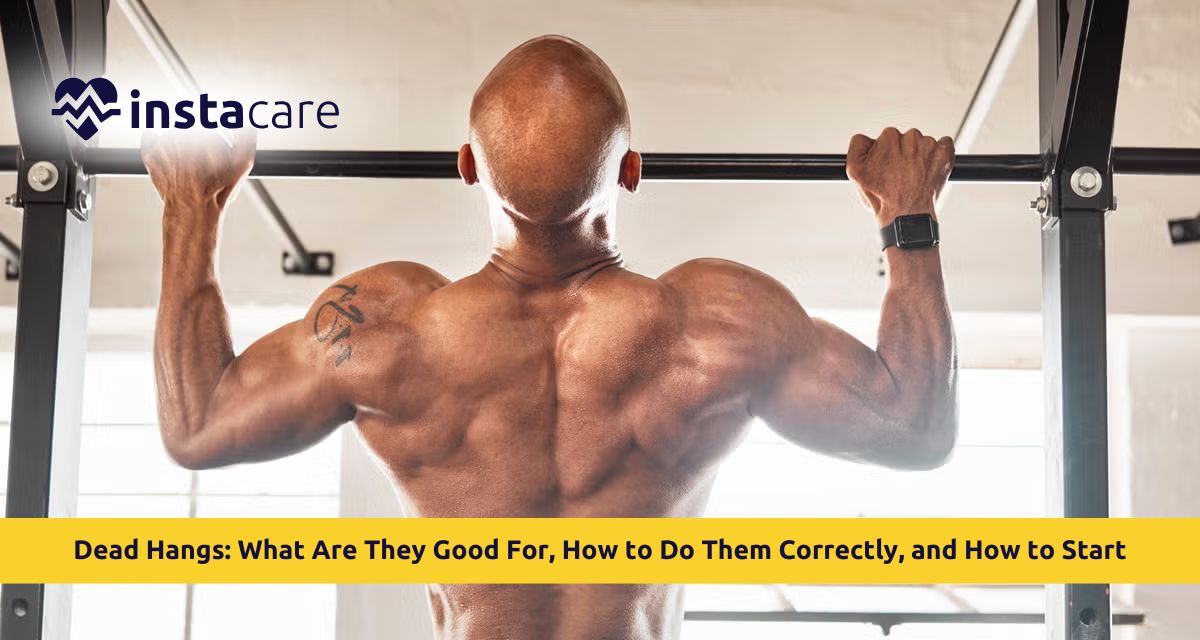
This article is going to focus on dead hangs exercise, proper form, variations, benefits, mistakes to avoid, and tips to use them in your training. As a novice or professional athlete, dead hangs can be adjusted to suit you.
What Are Dead Hangs?
Dead hang is where you take a pull-up bar or any heavy overhead bar and hang with your loose body. Dead hangs vs active hangs are different. Your feet can be off the ground, and your arms should be straight. In contrast to active hangs where you use your shoulder muscles, dead hangs are passive.
Dead hangs are something that basically anyone can perform. They don't take special equipment besides a safe bar, so they are convenient and handy. They can be used to incorporate dead hangs for grip building, add on the shoulders, and even decompress your spine.
Advantages of Dead Hangs
Dead hangs have many health and fitness advantages, so they are more than just a grip exercise.
- Dead hangs for grip strength – Regular hanging strengthens and endures the hands and forearms. A strong grip comes in handy when lifting, climbing, and performing other activities.
- Dead hangs for shoulder mobility – Hanging loosens joints within the shoulders and enhances mobility, rendering you more flexible and less stiff.
- Dead hangs for posture – Dead hangs develop upper back muscles so you will be able to stand taller and maintain a good posture.
- Dead hangs for spinal decompression – Hanging extends the spine, and pressure between vertebrae is reduced, potentially reducing pain in the back.
- Dead hangs muscles involved – Forearms, shoulders, upper back, core, and grip muscles are involved in the exercise.
Other benefits are building endurance, loosening the shoulders, and conditioning your body for additional, more advanced pulling exercises.
How to Do Dead Hangs Properly?
Proper dead hangs technique is the key to deriving benefits and avoiding injuries.
Beginner's instructions:
- Grasp a pull-up bar with an overhand grip that is shoulder-width apart.
- Hang with straight arms and loose shoulders. Don't shrug too much.
- Engage your core lightly and bring your legs together or cross them.
- Maintain your spine in neutral position and don't arch your back.
- Breathe normally and maintain for your preferred dead hangs duration.
Tips:
- Little stops are fine if you are a beginner. Even 10–20 seconds is helpful.
- Increase time over time gradually as shoulders and grip become stronger.
- Don't swing or jerk.
Dead Hangs Variations
You can progress dead hangs with different types over time.
- Novice dead hangs – Start with knees bent or feet on a box.
- Active hangs and dead hangs – When active hanging, you are contracting shoulder muscles, with the shoulders slightly lowered. They are useful when training pull-ups or rock climbing.
- Weighted dead hangs – Adding a small weight vest or belt can add grip strength and endurance.
- One-arm dead hangs – Advanced variation to build unilateral grip and shoulder strength.
- Mixed grip hangs – One underhand hand, one overhand hand, in order to change forearm stimulation.
Progress gradually and avoid jumping on high-level versions. Effective dead hangs progressions prevent injury.
Frequent Errors to Avoid
For most benefit of dead hangs exercise, avoid these frequent errors:
- Shrugged shoulders – Dead hangs for spinal decompression is good. Having shoulders rise up too much reduces spinal decompression benefit.
- Bent arms – Arms should be completely straight for effective form.
- Swinging or kipping – Bouncy motion can result in shoulder or wrist injury.
- Holding breath – Always exhale to keep your core stable and avoid tension.
- Doing too much on a daily basis – Although daily dead hangs are excellent, excessive hanging can over-stress grip and shoulders.
Having proper form and controlled time is the best to receive maximum benefits and remain safe.
How to Add Dead Hangs to Your Workout
- Dead hangs are easy to incorporate into almost any exercise routine.
- Do them at the beginning of a workout as shoulder and upper back warm-ups.
- Do them after pull-ups or other upper body exercises to stretch and release.
- Do 2–4 sets of dead hangs for 20–60 seconds per set. Adjust as appropriate based on your strength and goals.
- Add variations, such as active hangs or weighted hangs, as you get stronger.
Even a few minutes of Dead hangs daily can enhance grip, shoulder, and spinal alignment in the long run.
Read More: Exercises for Heart Health
Dead Hangs for Targeted Purposes
- Dead hangs for grip strength – Just hold the bar for as long as possible. Gradually try to increase the duration.
- Dead hangs for shoulder mobility – Relax the shoulders and feel for the light stretching.
- Dead hangs for posture – Slightly contract upper back muscles to develop postural muscles.
- Dead hangs for back pain – Use them to relieve your back tension, but consult a doctor if you have underlying injuries.
By identifying your goals, you can design your dead hangs exercise to maximum benefit.
Risks and Safety Tips
Dead hangs are safe but not riskless.
Dead hangs risks and safety tips:
- Do not hang if you've got recent shoulder, elbow, or wrist injuries.
- Warm up before hanging in order to prevent strains.
- Do not overexert yourself; progressively increase dead hangs duration.
- Use a stable bar that can bear your weight.
- If experiencing pain, discontinue and rest.
Adhering to the above guidelines guarantees safe and efficient dead hangs training.
Conclusion
Dead hangs are a simple, efficient, and overall exercise. Dead hangs for grip strength are good, shoulder range of motion, posture, spinal decompression, and even lower back pain. Dead hangs muscles worked multiple muscles like forearms, shoulders, upper back, and core.
Attaining correct dead hangs form, dead hangs hold time, progressions, and errors is sure to bring you maximum return with no risk at all. You can start from basic hangs and move on to active, weighted, or one-arm hangs. Incorporating dead hangs into your daily workout or several times a week will boost strength, flexibility, and overall fitness.
Please book an appointment with the best Physiotherapist in Lahore, Karachi, Islamabad, and all major cities of Pakistan through InstaCare, or call our helpline at 03171777509 to find the verified doctor for your disease.