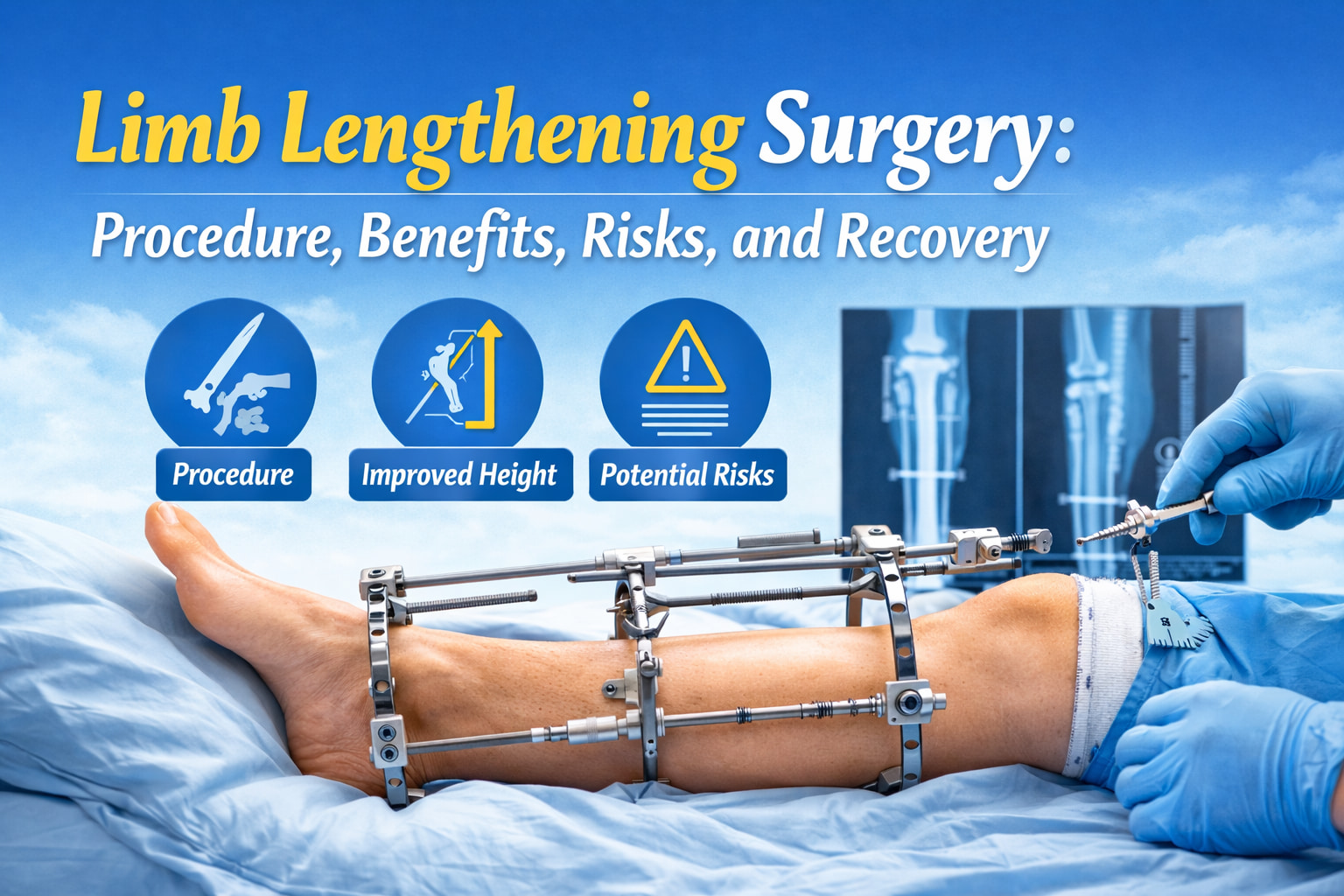
Limb lengthening surgery is an orthopedic operation that is specific and aims at lengthening the bones of the arms or legs. Originally created to solve medical issues like limb discrepancies and malformations, it is presently applied in height increase in certain people that are selected. It is a complicated procedure, which takes time and time to heal. It is imperative to understand the mechanisms involved, the type of people it suits, and the outcomes to expect before making up their minds about this life-altering procedure.
Indications of Limb Lengthening Surgery
Individuals undergo limb lengthening surgery because of a medical and personal motivation. Clinically, it is usually advised to remedy functional issues with elective cases being scrutinised. Common reasons include:
- Inequality in the length of limbs because of birth defects or growth disorders.
- Traumatic or infectious bone damage.
- Bones deformity with respect to movement.
- The short stature is related to certain medical conditions.
- Self-nurturing need of increasing height using height increase surgery.
All cases are evaluated individually and physical health with realistic expectations are prioritized.
Forms of Limb Lengthening Surgery
Different methods are applicable based on the type of bone, length needed and factors such as the patient.
- External Fixation Method. This is the traditional method, which involves the application of external metal frame to the bone which is held by the use of pins or wires. It also can be lengthened gradually but can be seen externally.
- Internal Lengthening devices. The current methods involve motorized rods that are inserted inside the bone which have offered better comfort and reduced external complications.
Lengthening surgeries performed on limbs in the orthopedics profession are done not because of cosmetic choice but because of safety, quality of the bone, and the experience of the surgeon.
Read More: What is Liposuction Surgery Recovery Results
The Limb Lengthening Surgery Process
Limbs lengthening process has a principle based on the controlled bone regeneration. The surgeon excises the bone very accurately and fixes it with fixation. The process of the Limb lengthening procedure occurs in stages:
- Osteotomy: The bone is severed.
- Distraction phase: The bone gradually gets divaricated at a rate of 1 mm daily.
- Consolidation stage: The new bone becomes hard and strengthens.
The Ilizarov technique is one of the oldest and most famous techniques and this showed that bone is capable of regenerating when it is pulled in a slow manner under constant conditions.
Advantages of Limb lengthening Surgery
Limb lengthening surgery can significantly increase the quality of life when applied to the right reasons. Key benefits include:
- Better limb symmetry and position.
- Improved walking capacity and joint position.
- Treatment of skeletal defects.
- Psychological confidence among the chosen cosmetic cases.
Cosmetic limb lengthening can be used to benefit self-image in carefully selected patients, but mind must be as ready as body.
Dangers and Potential Issues
Nevertheless, this surgery has significant risks associated with it that have to be well-informed. Limb lengthening surgery risks depend on the method, time and the compliance of the patient. Other potential complications are:
- Pin or incision site infection.
- Irritation of the nerves or blood vessel.
- Rigidity of the joints or tightening of the muscle.
- Delayed bone healing
- Suffering that needs long-term treatment.
Certain patients can have their Limb lengthening surgery complications, which can involve further procedures or long-term rehabilitation and this is why it is important to have the surgery performed by the expert.
Rehabilitation and Recovery
Healing is a process that is time consuming and demanding. The rehabilitation process can take a number of months or more than a year. Key aspects of recovery:
- Routine physical exercise to keep joints moving.
- Management of pain and strengthening of muscles.
- Regular follow-ups with imaging studies.
- Progressive re-entry into normal functioning.
The compliance with rehabilitation protocols has a significant impact and reduces stiffness in the long term.
Anticipated Results and Limitations
The average bone gain experienced by most patients is 5 to 8 centimetres in each bone segment depending on the anatomy and tolerance of the patient. Although the results are mostly positive, they do not come instantly and demand time. The Limb lengthening surgery success rate is high in special centers especially cases that are medically indicated. However, limitations exist:
- There are safe biological limits of height increase.
- Total symmetry is not necessarily realized.
- The commitment should be long-term.
These limits are necessary in order to avoid unrealistic expectations.
Who Is a Good Candidate?
Not all people can be subjected to this procedure. Potential candidates of Ideal Limb lengthening surgery are carefully examined physically and psychologically. Appropriate Limb lengthening surgery candidates are usually:
- Physically fit and bone quality is good.
- Be realistic with your expectations.
- Can dedicate one to prolonged rehabilitation.
- No untreated medical disorders.
- Ready psychologically to suffer and change lifestyle.
Psychological screening is more crucial in non-medical cases.
Read More: What To Eat After Oral Surgery?
The Alternatives to Limb Lengthening Surgery
In other instances, non-operative or minimally invasive procedures can be taken into consideration. Alternatives include:
- Minor discrepancies of the limbs Shoe lifts.
- Functional adaptive physical therapy.
- Orthopedic limb lengthening corrective surgeries.
- Body image counselling.
Such alternatives are discussed prior to prescribing surgery especially in cosmetic contexts.
Pre-Surgery Preparation and Precautions
Due preparation enhances the safety and results. Significant safety measures involve:
- Full medical examination and radiology.
- Optimization of nutritional value in bone healing.
- Smoking cessation
- Mental health assessment
- Risks and recovery timeline will be discussed in greater detail.
One of the most important ones in this process is to select an experienced surgical team.
Conclusion
Limb lengthening surgery is a scientifically validated but rigorous orthopedic operation that is capable of correcting defects, regaining symmetry or heightening height in a selected group of people. It has got great benefits, but it is characterized by great risks, prolonged recovery and stiff rehabilitation procedures as well. It requires an adequate selection of candidates, professional surgery, and patient loyalty. A well-informed choice made with the help of medical workers is a key to the safe and satisfactory results.
Please book an appointment with the best Orthopedic in Lahore, Karachi, Islamabad and all major cities of Pakistan through Instacare, or call our helpline 03171777509 to find a certified doctor for your illness.