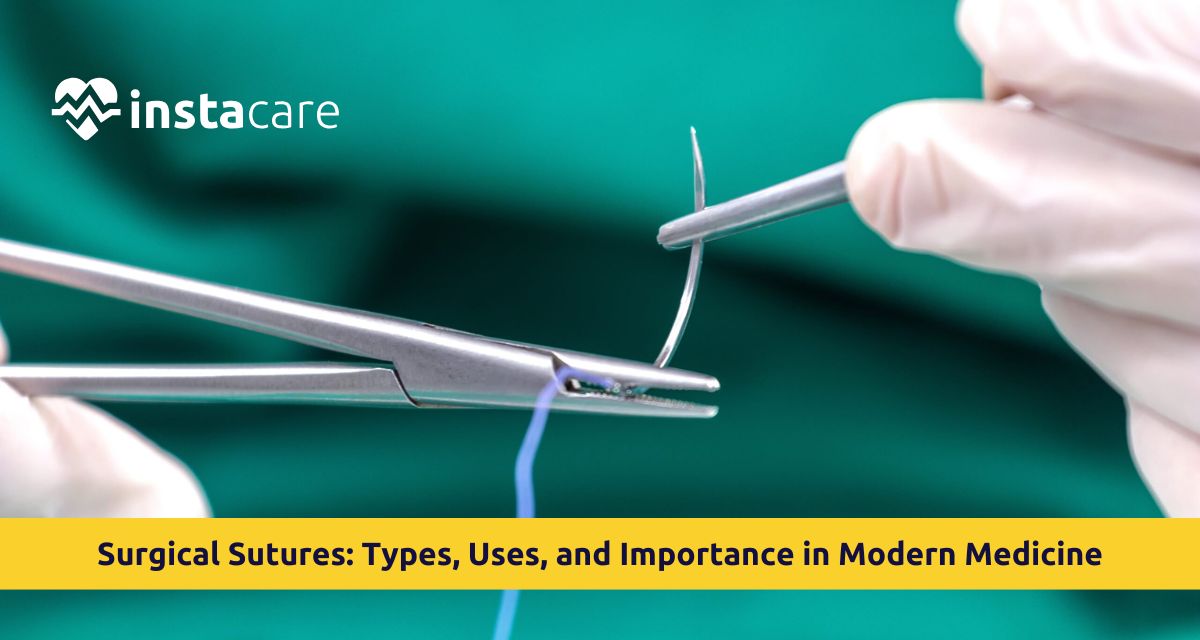
What are Surgical Sutures?
Surgical sutures are health devices made of thread-like substance in order to hold the body tissues in place after injury or surgery. They are also known as stitches. They close wounds at the edges in order to promote healing, minimize scarring, add mechanical strength during healing, prevent blood loss, and close the wound against infection.
The history of surgical sutures goes back as far as over 5,000 years, and linen and sinew were employed by ancient Egyptians to close wounds. Sterile technique and man-made material accompanied modern surgical sutures during the 19th century. Surgical sutures in modern medicine used today are highly evolved biomaterials that have been engineered to perform very specific clinical functions.
Types of Surgical Sutures
Classification of the suture surgery categories is based on several factors, the most basic of which is whether absorbable or non-absorbable material is employed.
Absorbable Surgical Sutures
Absorbable surgical sutures are inserted to be dissolved in the body by slow wear and tear by nature over a period and are not required to be removed. They hydrolyze or enzyme-atically dissolve. Natural absorbable sutures include surgical gut (purified animal intestinal collagen) and chromic gut (slow absorption). Synthetic absorbable sutures include polyglycolic acid (Dexon), polyglactin 910 (Vicryl), polydioxanone (PDS), and poliglecaprone (Monocryl).
Absorbable sutures also find general surgical suture uses in deeper tissue planes where suture removal would be inconvenient, pediatric operations where removal would traumatize children, and for tissue with rapid healing. Absorption varies from one week to eight months based on material and condition of tissue.
Non-Absorbable Surgical Sutures
Non-absorbable surgical sutures are permanent and remain permanently in tissue or until removed manually. Permanent or long-lasting support is provided by these sutures to slowly healing tissues. Only two natural non-absorbable sutures are s`ilk and cotton and the artificial ones are nylon (Ethilon), polypropylene (Prolene), polyester (Ethibond), and stainless steel.
Non-absorbable sutures are highly suitable for:
- Closing skin in instances where there is a requirement for sustained support
- Cardiovascular surgery in which permanent stability is necessary
- Tendon repair
- Where there is sustained tissue approximation
Although the sutures are non-absorbable, they can encapsulate in fibrous tissue after some time.
Surgical Suture Materials
Surgical suture materials employed in surgery differ considerably in characteristics. Monofilament sutures are made of one strand, smooth tissue passage and reduced risk of infection due to tissue drag. Multifilament (braided) sutures are made of strands braided together and have good property of handling and knot security but at risk of entrapment of bacteria in interstices.
Surgical Suture Sizes
Surgical suture sizes have a technical nomenclature. Large numbers with a zero (for example, 5-0 or 6-0) refer to finer suture, and numbers without a zero refer to heavier material. The spectrum is from 11-0 (very fine, utilized in microsurgery) to #7 (heavy, utilized in orthopedic surgery). Sutures that are finer cause less tissue trauma and scarring, and heavier sutures are stronger tensilely.
Suture Techniques
Surgical suture techniques differ according to wound site, type of wound, and requirement for healing.
- Simple Interrupted Sutures is the most basic technique in which each suture is passed separately. It is the most accurate technique used for approximating wound margin.
- Continuous (Running) Sutures include single thread passed along the wound with terminal knots only. It is the quickest technique and forms watertight closure.
- Subcuticular Sutures are removed beneath the skin surface with optimal cosmetic result with less scarring, very useful in cosmetic surgeries.
- Mattress Sutures are horizontal and vertical varieties, ever wound edge and distribute tension across a wide base for tension-bearing wounds.
Suture technique choice is based upon the nature of the wound, tissue, and desired cosmetic result.
Read More: Piles Treatment Without Surgery
How Surgeons Choose the Right Suture?
The choice of the right sutures requires significant consideration of many factors. The type of tissue is important—thin tissues such as blood vessels need thin monofilament sutures, but fascia and tendon need tensile sutures. The location of the wound is important—facial regions need to be dealt with using thin absorbable sutures for cosmesis, but tension sites such as the abdomen need tensile sutures.
Healing properties matter. The rapidly healing tissues such as mucous membranes can be used with rapidly absorbing sutures, whereas slowly healing tissues such as tendons require non-absorbing or slowly absorbing materials. Patient conditions such as age, diet, immunity, and allergy affect suture choice. Infection risk determines the application of material, wherein monofilament needs to be used in contaminated wounds.
Surgical suture vs staples is still the bane of contemporary surgery. Staples permit quicker closure and less tissue dissection but cause more scarring. Sutures permit closer approximation and more cosmetic outcome but are slower and technically more demanding. The majority of surgeons use staples and sutures, the former to the inner layers and the latter to the skin.
Advancements in Suture Technology
Computer and advanced technology have revolutionized the process of surgery sutures into technologically advanced medical devices. Antimicrobial and antibacterial sutures with antimicrobial coating cut down infection in surgery sutures significantly. Barbed sutures are composed of very fine barbs that hold the tissue tight without knots, creating even tension and quick closure.
Integrated sensors in smart sutures are able to track such wound healing factors as temperature and pH and, in doing so, potentially be able to diagnose complications early. Design needs for surgical suture needle types have also changed, from sharp-pointed cutting needles for thick tissues to tapered needles for thin tissues.
Care and Complications
Proper post-operative management reduces the complications of surgical suture. Caring for the wound involves:
- Drying and covering the wound
- Maintaining good cleansing skill
- Avoiding tension or movement
- Guarding for signs of warning of complications
Surgical Suture Removal
Surgical suture removal is also based on the location of the wound and on healing. Facial sutures are usually loose from three to five days, scalp and trunk sutures from seven to ten days, and extremity sutures for ten to fourteen days. It is done by gently sterilizing the area, cutting off the knot at the end of the suture, and pulling out the suture slowly without rupturing the tissue.
Surgical Suture Infection
Surgical suture infection is characterized by erythema, swelling and redness over the sutures, pus discharge, fever, and wound dehiscence in extreme cases. Prevention occurs through:
- Aseptic technique of suture placement
- Proper wound care
- Early detection of signs of infection
- Correct antibiotic prophylaxis if necessary
Management can be through antibiotics, removal of sutures, or drainage of the wound.
Surgical suture complications include spitting of the suture (exclusion of the body and ejection of the suture material), granuloma, allergy, scarring complications, and wound dehiscence with inadequate closure or early rupture of the sutures.
Conclusion
Surgical sutures remain the cornerstone of modern medicine, filling the gap between injury and healing. From ancient plant matter to the present smart and antimicrobial sutures, the medical devices bear witness to man's exploration of more efficient surgical performance.
Familiarity with the variety of surgical sutures, techniques, and complications empowers qualified decision-making towards optimal healing by healers. The future technology will provide biodegradable devices pre-set for the timing of disappearance and possess built-in systems of monitoring with capability for detecting complication at the earliest moment.
Please book an appointment with the best General Surgeon in Lahore, Karachi, Islamabad, and all major cities of Pakistan through InstaCare, or call our helpline at 03171777509 to find a verified doctor for your disease.