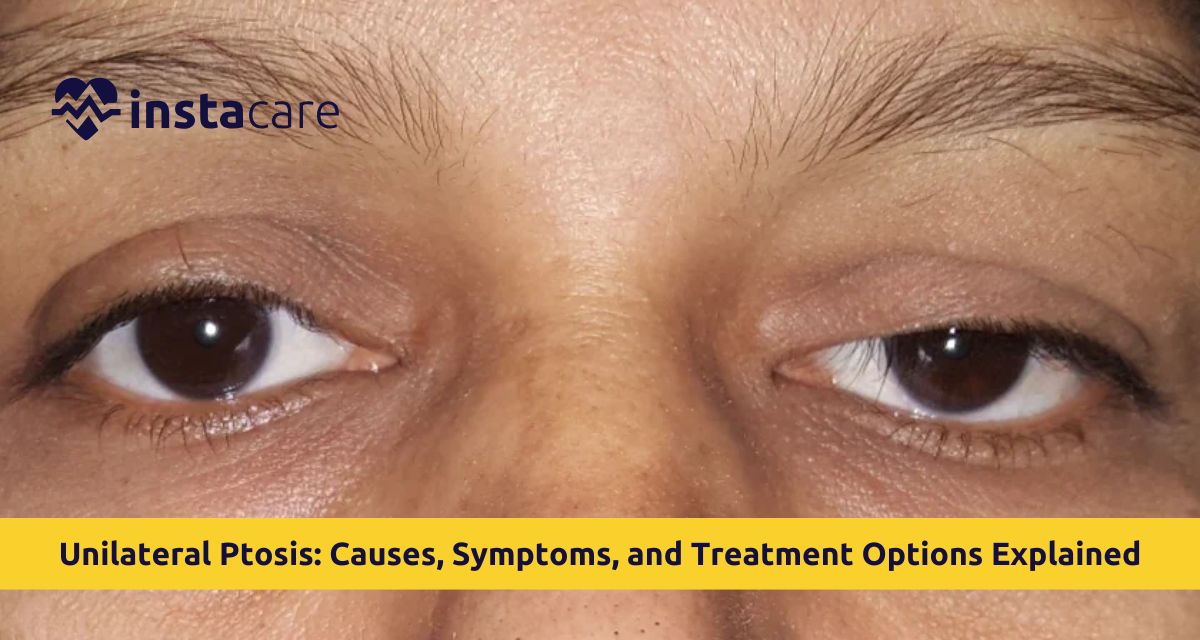
There are instances of the condition in children and adults. While untreated ptosis is a possible disruption of normal visual development for the child, in adults it's evidence of muscular or neurological disease. Knowledge about the condition causes, symptoms, diagnosis, treatment allows families and patients to make educationally informed healthcare decisions.
What is Unilateral Ptosis?
Ptosis refers to sagging eyelids. When it is unilateral, there is just one sagging eyelid. Sagging may be minimal, moderate, or complete so that the pupil is completely concealed. It needs to be distinguished from drooping due to inflammation secondary to infection or allergy.
Unilateral ptosis is due to levator palpebrae superioris muscle disorder, elevating the upper eyelid, or nerves' disorders of the muscles. Unilateral ptosis vs bilateral ptosis should be differentiated: bilateral ptosis may be a sign of inherited or systemic disease, but unilateral ptosis often means focal diseases or certain neurological diseases.
Causes of Unilateral Ptosis
The differential diagnoses of unilateral ptosis are common and diverse, yet most of them are congenital or acquired.
Congenital Causes
Newborn ptosis is unilateral when a child is born with an underdeveloped levator muscle. It is isolated or accompanied by other eye abnormalities and hereditary or due to non-hereditary Unilateral ptosis causes. Amblyopia, "lazy eye," is produced by severe congenital ptosis by allowing persistent vision obstruction.
Acquired Causes
Unilateral ptosis is more developmental in origin. A few of the common causes are:
- Age changes: With advancing age, the tendon or levator muscle of the eyelid stretches and droops.
- Neurologic diseases: Damage to oculomotor nerve or sympathetic nerves will result in unilateral ptosis and nerve damage. Third cranial nerve palsy or Horner's syndrome are a couple of such diseases.
- Muscle diseases: Ptosis and weakness of the eye muscles on one side in myasthenia gravis are not rare.
- Trauma or surgery: Traumatic or surgical injuries to the eyes from time to time injure eyelid muscles.
- Tumors and structural issues: Cancers pressing on nerves or muscles also result in sagging.
Congenital or Acquired unilateral ptosis makes a difference in planning treatment.
Symptoms and Clinical Presentation
The most obvious symptom of unilateral ptosis is the hanging eyelid. However, the condition has a broader spectrum of usual unilateral ptosis symptoms based on etiology and severity.
- Visual impairment: In ptosis of acute onset, the lower drooping eyelid obscures the pupil and causes fuzzy or obstructed vision.
- Postural change of the head: The rest of the patients and children will be happy to tilt the head back or chin lift so that they can straighten ahead. This, repeated over a period, will tire the neck.
- Eye strain: The unilateral ptosis in adults will usually complain of eye strain headache, which is induced by chronic usage since they continue to attempt compensation for the sag.
- Psychological effects: Since the eyelids play an important role in facial expressions, drooping will probably lead to embarrassment and low self-esteem.
The most serious threat of unilateral ptosis in children is the loss of vision. Amblyopia and vision loss in the deviating eye can occur if it is not treated. In adults with unilateral ptosis, systemic or neurologic disease is most often to blame, and these patients must be aggressively worked up.
Diagnosis of Unilateral Ptosis
Accurate unilateral ptosis diagnosis is achieved by proper clinical examination. Ophthalmologists prefer the combination of patient history, physical examination, and imaging studies.
- Physical exam: Determine eyelid level in millimeters to ascertain severity. Strength of levator muscle is also assessed.
- Neurological tests: In the case of suspected nerve issues, additional testing detects conditions like aneurysms, nerve palsy, or Horner's syndrome.
- Fatigue test: The patients are watched for the development of worsening ptosis after long usage of the eyes in suspected myasthenia gravis. Relief with rest indicates muscle weakness.
- Imaging scans: CT or MRI scans can be prescribed in suspected tumor or structural disease.
- Blood test: Sometimes done to exclude autoimmune disorders.
The pathologic basis should be determined because ptosis by itself is not dangerous but the pathology underlying it might be dangerous.
Treatment of Unilateral Ptosis
Unilateral ptosis treatment varies with the cause, severity, and age. Simple uncomplicated ones that do not compromise vision or activities of daily living may not have to be managed. Severe to moderate ptosis normally must be managed actively, though.
Non-Surgical Treatment
To non-surgical candidates, or those who are surgical candidates but mildly impacted, physicians can provide alternatives in the form of:
- Eyelid crutches: Special glasses accessories that support the eyelid.
- Medications: If in the case of neurological or autoimmune disease, ptosis will improve with management of underlying disease.
- Lifestyle treatment: A few patients try unilateral ptosis eye sag treatments like eyelid exercises, but no medical evidence is available to indicate that they work for the condition.
Surgical Options
Severe or vision-altering ptosis is best treated by unilateral ptosis surgery. Procedures include:
- Levator resection: Shortening or tightening of the muscle to elevate the eyelid.
- Frontalis sling: Sliding a sling to suspend the eyelid off the forehead muscle so that movement of the brow will be used to elevate the eyelid.
- Aponeurotic repair: Support or reinforcement of the levator tendon muscle, especially in age cases.
It is an exceedingly successful surgery but must be coupled with precise preoperative measurement to prevent complications and run-of-the-mill results.
Prevention and Self-Care of Unilateral Ptosis
While congenital conditions cannot be prevented, most interventions circumvent the development of acquired ptosis or worsening of underlying conditions.
- Protection of the eye from trauma and injury.
- Routine eye examination, particularly in the setting of systemic illness such as diabetes or neurologic illness.
- Prompt treatment of infection or inflammation that may compromise muscles or nerves.
- Eye hygiene and avert straining from extended computer use.
The patients should also be taught about possible unilateral ptosis complications like compromised depth perception, headache, or psychosocial distress. Early diagnosis and follow-up are the best approaches in avoiding risks.
Conclusion
Unilateral ptosis is more than a boggy eyelid; it's a disease with cosmetic, functional, and even catastrophic medical consequences. It's diagnosed in infancy as a congenital defect or in adult life secondary to neurologic, muscular, or degenerative illness. Treatment is based on recognition of the presentation and etiology of the disease.
Treatment varies from middle-aged conservative to complicated one-sided ptosis surgery, which generally produces dramatic visual and cosmetic improvement. Children are treated early to avoid permanent loss of vision, while adults are restored to comfort and usual confidence. Early detection of symptoms and specialist treatment allow patients to avoid complications and enhance quality of life in general.
Please book an appointment with the Best Eye Specialist in Lahore, Karachi, Islamabad, and all major cities of Pakistan through InstaCare, or call our helpline at 03171777509 to find the verified doctor for your disease.