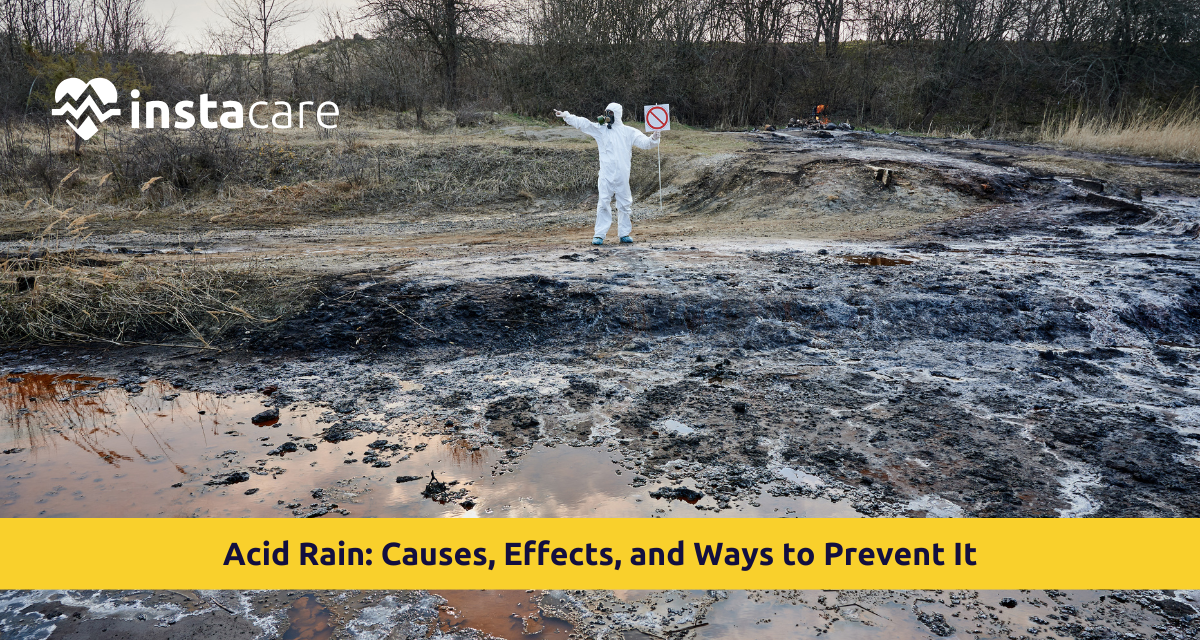
The increasing amount of Acid rain and air pollution is directly related to industrial production, motor transport, and the combustion of fossil fuels. Learning the Effects of acid rain and its formation can enable governments and individuals to make efforts towards curbing pollution and safeguarding the environment.
What Is Acid Rain?
The term acid rain is used to refer to rain that contains excessive amounts of acidic elements which are mostly sulphuric acid and nitric acid. The extent of these acids is formed as a result of the combination of pollutants in the air with water, oxygen and other water atmospheric chemicals. Rainwater is usually a little bit acidic because of the natural carbon dioxide in the atmosphere.
But in cases of elevated pollution, the acidity level of rain water is extremely high. This process is closely related to Sulfur dioxide and acid rain, when the sulfur dioxide that gets into the atmosphere reacts with the water molecules and forms acidic substances. The acid rain may take long distances in the air and only fall to the ground, this is why pollution in one area can impact ecosystems in other areas.
Read More: 7 Health Benefits Of Rainwater You Should Be Knowing
How Acid Rain Forms?
The Acid rain formation process starts when sulfur dioxide and nitrogen oxides are emitted into the atmosphere. The sources of these gases are primarily the power plants, factories, and vehicles. When the pollutants get into the atmosphere, they combine with water vapor and oxygen among other chemicals. This response results in the formation of sulfuric acid and nitric acid that combine with clouds. These acidic substances eventually come back to earth as rains, snow, sleet or dust particles. This precipitation in turn influences soil, water bodies, plants and man-made structures.
Main Causes of Acid Rain
Industrial Emissions
Industrial and power plant pollution by burning fossil fuels like coal and oil is one of the major causes of acid rain. Such fuels emit sulfur dioxide and other dangerous gases to the atmosphere.
Vehicle Emissions
Another significant cause of acid rain is transportation. The Nitrogen oxides pollution emitted by cars, trucks, and buses reacts with the moisture available in the atmosphere to form nitric acid.
Burning of Fossil Fuels
Largeness of emission of pollutants which brings about acid rain is due to burning of fossil fuels to produce electricity, heating, and industry.
Industrial Pollution
Large-scale industrial processes also increase the level of Industrial pollution and acid rain, particularly in regions where there are high manufacturing industries and power stations.
Effects of Acid Rain on the Environment
There can be severe environmental damages due to acid rain. The Environmental impact of acid rain on forests and vegetation is one of the greatest impacts.
- Acid precipitation also extracts the necessary minerals in the soil and undermines plants and trees. This may cause Acid rain damage to forests and this exposes the trees to disease, pests and extreme weather.
- The other significant issue is the Acid rain effects on water bodies like lakes, rivers, and streams. The acid rain when it flows into these water bodies reduces the pH level and therefore renders the environment unhealthy to fish, amphibians and other aquatic organisms.
In extreme cases, the complete aquatic ecosystem can be disturbed causing the loss of biodiversity.
Impact on Buildings and Monuments
Acid rain not only has an effect on the natural ecosystems but also has negative effects on buildings, monuments, and historical constructions. Acidic precipitation interacts with such substances as limestone, marble, and metal, causing their slow disintegration. This chemical process is capable of corroding surfaces and reducing the strength of buildings as time passes. Acid rain has damaged many famous monuments scattered all over the world. The visible effects of the long term impacts of air pollution are the gradual degradation of stone carvings, sculptures, and building materials.
Effects on Human Health
Acid rain is not harmful to human skin directly. Nevertheless, the acid rain-causing pollutants may cause dire consequences to human health.
- Sulfur dioxide and nitrogen oxides are air pollutants that may cause irritation to the respiratory system. There is a possibility of asthma, bronchitis and other lung diseases to become more dangerous due to long-term exposure.
- These pollutants also create fine particles that may also be transmitted through the air and inhaled, which in turn affects the heart and lungs.
Thus, the decrease in air pollution is not only essential to environmental protection, but to the health of the population.
Ways to Reduce Acid Rain
Lessons on acid rain must be undertaken by governments and at an individual level.
- Emission cut in industries and power plants through cleaner technologies and renewable sources of energy is one of the effective ways of reducing emissions. Replacement of coal with cleaner fuel will help a great deal in lowering the harmful emissions.
- Nitrogen oxide pollution may also be alleviated by making vehicles more environmentally friendly in their emissions and by promoting public transportation.
- The personal solutions include energy conservation, utilization of energy-efficient devices, and promotion of renewable sources like wind or solar energy.
Trees and forests can be planted and conserved as well to absorb the pollutants and enhance the quality of air.
Global Efforts to Control Acid Rain
Environmental policies and international collaboration have seen many countries make significant efforts to minimize the rate of acid rain.
- To reduce the amount of harmful gases released to the atmosphere, governments have come up with tougher laws to be followed by industries and vehicles in emission.
- Efforts of international agreements and environmental programs are aimed at minimizing air pollution across borders because acid rain has the capability of moving across national borders.
- There have also been technological improvements like scrubbers in power plants and cleaner industrial processes that have contributed towards the reduction of the emissions of sulfur dioxide.
These international campaigns have been effective in reducing levels of acid rain in various areas and this proves that concerted environmental policies may work.
Conclusion
Acid rain is an acute environmental issue that is brought about by air pollution through industries, vehicles and burning of fossil fuels. Acid rain has its Effects on ruined forests, water bodies, and falling buildings and monuments.
There is a need to understand the causes of acid rain and how acid rain is formed in order to devise solutions to it. Societies can mitigate the effects of acid rain by limiting the use of unclean technologies, clean technologies and adopting sustainable practices.
The environment needs to be saved against acid rain, and it must be a collective effort of governments, industries, and individuals to achieve a better environment that will support the future generation.
Please book an appointment with the best General Physician in Lahore, Karachi, Islamabad, and all major cities of Pakistan through InstaCare, or call our helpline at 03171777509 to find a verified doctor for your disease.