What Is Blepharoplasty?
Blepharoplasty is a form of surgical operation, which involves restructuring the eyelids by excising or relocating excess skin, muscle, and fat. It can be performed on:
- Upper eyelids
- Lower eyelids
- Both (combined eyelid lift surgery)
Although cosmetic enhancement surgery is performed by many people, it is also applied as droopy eyelid surgery whereby it can be used to enhance vision which is hindered by the sagging skin.
Why People Choose Eyelid Surgery?
Individuals undergo eyelid surgery both cosmetically and medically. Common Reasons:
- Sagging or droopy eyelids
- Puffy under-eye bags
- Tired or aged appearance
- Surplus eyelid skin that causes visual impairment.
- Uneven eyelids
The process can undergo major changes on the face appearance but at the same time, natural expressions are not lost.
Types of Blepharoplasty
Upper Eyelid Surgery
Upper eyelid surgery involves removing excess fat and skin on the upper eyelids. It is commonly done to correct hooded or drooping eyelids which interfere with the appearance or the vision.
Best for:
- Heavy eyelids
- Sagging skin
- Vision obstruction
Lower Eyelid Surgery
Lower eyelid surgery will address puffiness, wrinkles and bags under the eyes.
Corrects:
- Dark circles
- Fat pockets
- Loose skin
Among the common cosmetic surgeries performed on Asians are the Double Eyelid Surgery (Asian Blepharoplasty).
Uses a specification of the eyelid crease to improve appearance.
Combined Blepharoplasty
Treats upper and lower eyelids during the same session to provide a wholesome rejuvenation.
The Procedure: Step-by-Step
The blepharoplasty surgery is typically performed in local anesthesia with the use of sedation or general anesthesia.
Step-by-Step Blepharoplasty procedure:
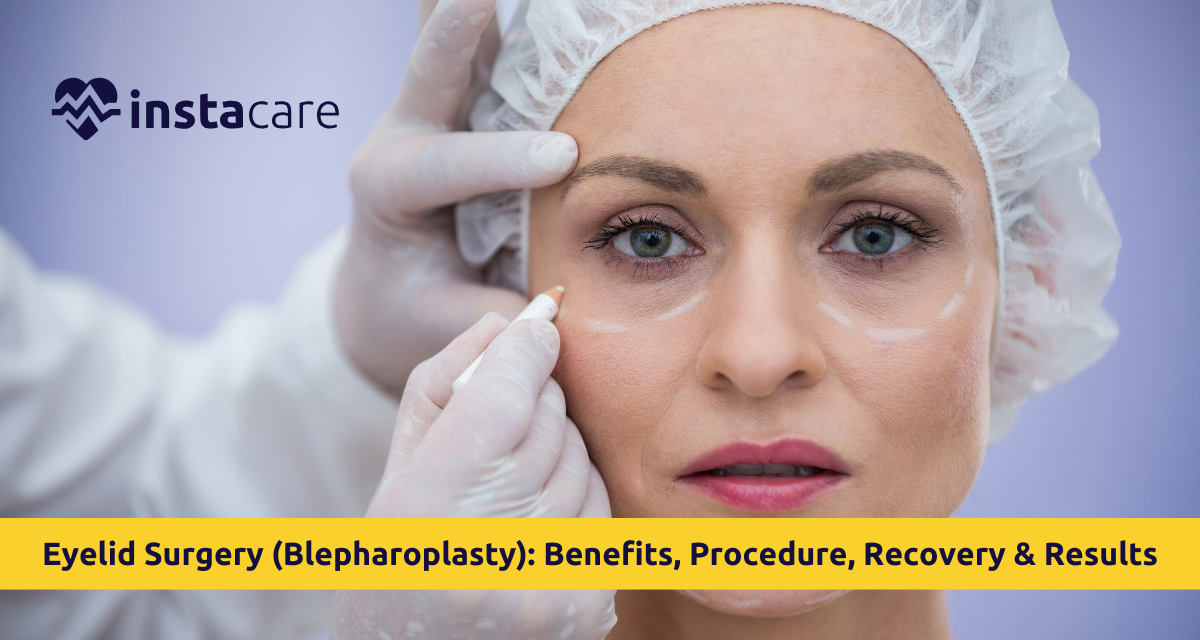
- Consultation and Marking: Surgeon lines up incision lines.
- Anesthesia: Local or general anesthesia.
- Incisions
Upper eyelid:
- Natural crease
- Lower eyelid: Inner eyelid or eyelash line.
- Fat and skin repositioned or removed.
- Closure: Attractive sutures employed to create minimal scar.
The operation is usually 1-2 hours based on its complexity.
Recovery and Healing Timeline
Blepharoplasty recovery time takes relatively shorter time compared to most cosmetic surgical operations.
First Week:
- Swelling and bruising
- Mild discomfort
- Cold compress recommended
7-10 Days:
- Removed Stitches removed (not dissolvable)
- Bruising begins fading
2-3 Weeks:
- Return to normal activities
- Noticeable improvement
1-3 Months:
- Final outcomes are more obvious.
- Scars fade significantly
Aftercare improves the healing speed and results.
Read More: 10 Effective Red Eyes Remedies
Benefits of Eyelid Surgery
Blepharoplasty is of cosmetic and functional use.
- Fresh young looks.
- Increased vision (in severe sagging).
- Reduced under-eye puffiness
- Smoother eyelid contour
- Long-lasting results
It has been found that many patients are highly satisfied with a comparison of eyelid surgery pre and post outcomes.
Risks and Possible Complications
Even though eyelid surgery is not very dangerous, it can result in risks and complications.
Possible Eyelid surgery risks:
- Swelling and bruising
- Infection
- Dry or irritated eyes
- Temporary blurred vision
- Asymmetry
- Scarring
Uncommon Blepharoplasty complications are swelling that takes long to disappear or a difficulty when closing the eyelids. Increasing the risks is minimized by selecting an experienced surgeon.
Who Is a Good Candidate?
You can be a perfect applicant because you:
- Have sagging eyelids
- Are in good overall health
- Set attainable expectations.
- Neither smokes nor can quit temporarily.
- Have drooping eyelids vision impairment.
Not suitable for:
- Certain eye conditions
- Severe dry eyes
- Untreated chronic diseases.
A health assessment is a safety measure.
Preparation Tips Before Surgery
Good preparation makes it easier to reduce the complications and makes recovery faster.
Pre-Surgery Tips:
- Quit smoking weeks prior to surgery.
- Avoid blood thinners
- Make post-operative transportation.
- Adhere to the pre-operative guidelines.
- Get necessary lab tests
Ahead of time, tell your surgeon about medications and medical history.
Cost Factors of Blepharoplasty
The Eyelid surgery cost is very diversified and depends on several things. Factors Affecting Cost:
- Surgeon's experience
- Geographic location
- Surgical procedure type (upper eyelid surgery or combined)
- Hospital or clinic fees
- Anesthesia costs
- Additional treatments
Plastic surgery is normally not insurable, but droopy eyelid surgery that is medically necessary can be covered.
Results and Longevity
Long-term effects of blepharoplasty can be very useful in improving the look of the face.
Longevity:
- Surgery of the upper eyelid: 5-10 years and above.
- Lower eyelid surgery: Can be long lasting.
- Aging is a natural process, though the majority of patients have long-term positive effects.
Maintaining results:
- Good skincare routine
- Sun protection
- Healthy lifestyle
Conclusion
Eyelid surgery or blepharoplasty is a viable option in order to have more rested eyes and functional issues such as droopy eyelids fixed. Being one of the most widespread facial cosmetic procedures, its impact on the body lasts long with relatively short downtime. The knowledge of the procedure, recovery expectations, risks involved and the cost aspects aids the patients to make wise choices. Using an experienced surgeon is a way of guaranteeing safe results and natural-appearing appearances.
Please book an appointment with the best Plastic Surgeon in Lahore, Karachi, Islamabad, and all major cities of Pakistan through InstaCare, or call our helpline at 03171777509 to find a verified doctor for your disease.