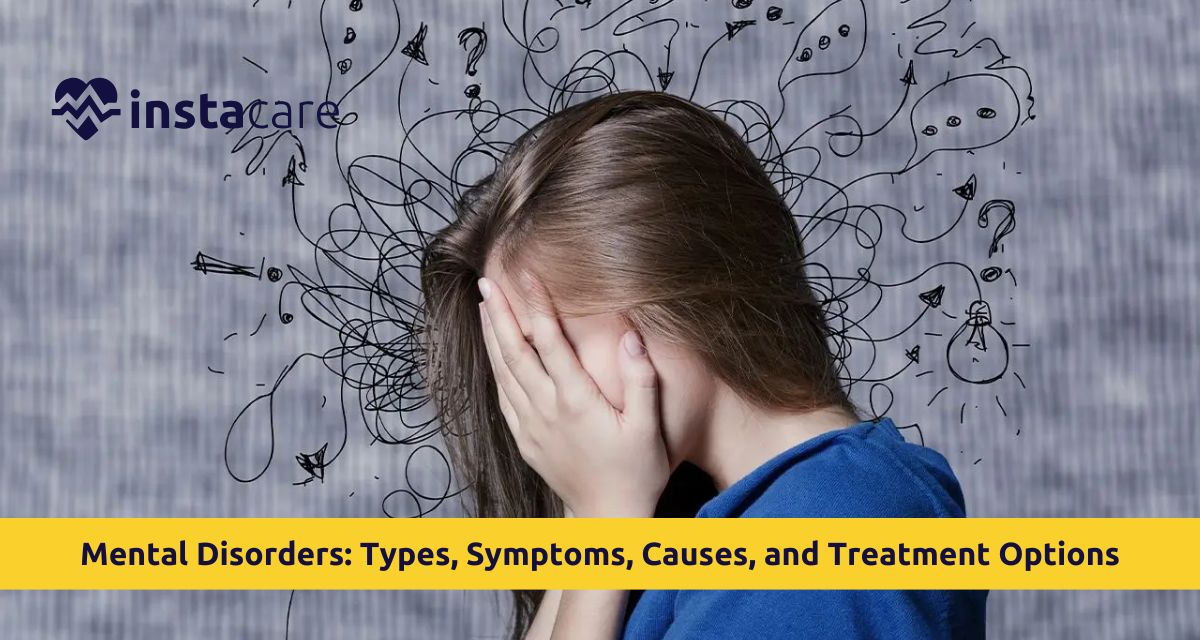
Mental disorders are conditions that affect a person's thinking, feelings, behaviour, or mental functioning. They can also impact on the way people adjust to stress in their day to day life, their personal relationships as well as their work or education. Mental illness is widespread in all ages and cultures, but most of the people take a long time to seek assistance because of some stigma or ignorance. Knowing mental disorders is a crucial step towards early diagnosis and treatment as well as recovery.
What Are Mental Disorders?
Mental disorders also known as mental illnesses are clinically described disorders that interfere with normal mental functions of the body in terms of thought, emotion, or behavior. Such conditions are mild, short-term and serious and permanent. Mental disorders may:
- Influence mood, thinking or perception.
- Disrupt day-to-day lives and relations.
- Need to be professionally diagnosed and treated.
Common mental disorders do not mean weakness and personal failure. They are valid health conditions and in most cases they are the result of the compounds of biological, psychological and environmental factors.
Common Types of Mental Disorders
Mental disorders are a great number with their own peculiarities and modalities of treatment. Among the most frequent types of mental disorders, there are:
Anxiety Disorders
Anxiety disorders are characterised by extreme fear or worry, which
cannot be controlled easily.
- Cyclic generalized anxiety disorder.
- Panic disorder
- Social anxiety disorder
- Phobias
Mood Disorders
Mood disorders impact mostly on the emotional condition and the energy levels.
- Depression
- Bipolar disorder
- Constant depressive disorder.
Psychotic Disorders
These conditions influence the reality perception.
- Schizophrenia
- Delusional Disorder
- Neurodevelopmental Disorders
They are often diagnosed at an early age, which influences their development and learning.
Attention-deficit/hyperactivity disorder (ADHD)
- Autism spectrum disorder
- Trauma-Related Disorders
- Post Traumatic Stress Disorder (PTSD).
- Acute Stress Disorder
The knowledge of these common mental disorders will enable individuals to identify symptoms on time and get the right treatment.
Causes and Risk Factors
Mental disorders do not typically have one cause. On the contrary, they are formed as a result of an interplay
of factors such as:
- Biological causes: Genetic, brain chemistry, hormonal Imbalance.
- Psychological: Traumatic experiences, prolonged stress, negative thinking patterns.
- Environmental: Abuse, neglect, economic tension, social alienation.
- Lifestyle characteristics: Drug use, insomnia, physical inactivity.
The presence of a risk factor or factors does not predispose an individual to mental illness, but it can predispose them.
Signs and Symptoms of Mental Disorders
The symptoms depend on the severity and the kind of the condition. The typical red flags are:
- Constant depression or depressed mood.
- Excessive worry or fear
- Emotional instability or mood swings.
- Problem in concentrating or decision-making.
- Changes in sleep or appetite
- Quitting social life.
- Perceptions of despair or insignificance.
- Behavioural or personality change.
The early detection of these symptoms can be used to enhance the outcome with timely options of mental health treatment.
Diagnosis of Mental Disorders
Mental disorders are normally diagnosed by a mental health professional. The process may involve:
- Mental health assessment and clinical interviews.
- Medical and family history.
- Mental survey or psychological testing.
- Elimination of physical disorders that can present as mental illnesses.
Proper diagnosis of mental disorders means that individuals are treated rightly and effectively instead of being provided with irrelevant and ineffective treatment.
Read More: What You Must Need to Know About Social Media and Mental Health
Treatment Options for Mental Disorders
Treatment strategies are customised and may involve a combination of approaches based on the condition and its severity. Usual mental health treatment options are:
- Psychotherapy: Cognitive-behavioral therapy (CBT), talk therapy, trauma-focused therapy.
- Drug: antidepressants, anti-anxiety, mood stabilizers, anti-psychotics.
- Lifestyle interventions: exercising, sleep, stress.
- Support Programs: Rehabilitation services, peer support, group therapy.
When these individuals receive good care, most of them become very much better and their lives become worth living.
Coping Strategies and Management
Besides professional treatment, self-management is a significant concern in long-term mental health. Assistance coping strategies are:
- Having a routine in everyday life.
- Meditating or practising relaxation.
- Staying physically active
- Development of a good social support system.
- The use of alcohol and recreational drugs should be avoided.
- Developing achievable objectives and limitations.
These plans supplement the clinical treatment and enhance emotional resilience.
Reducing Stigma Around Mental Disorders
A major impediment to mental health care is stigma. Negative perceptions towards mental illness will attract discrimination, shame and silence. Reducing stigma requires:
- Candid dialogue on mental health.
- Training on mental illnesses as medical conditions.
- Promoting the help-seeking behavior.
- Helping people unconditionally.
Ensuring a supportive environment will make people feel secure when accessing care and complying with therapy.
When to Seek Professional Help?
When the symptoms are present, professional assistance is necessary.
- Persist for weeks or months
- Disrupt work, relationship or normal functioning.
- Include suicidal or despairing thoughts.
- Lacks a response to self-care measures.
Symptoms can be prevented through early intervention, thereby enhancing long-term recovery.
Conclusion
Millions of people around the world have mental disorders, but these disorders are not well understood or
even treated. Learning how to identify the mental disorders, its causes, and seeking prompt diagnosis and treatment are important measures towards improved mental health. Through proper care, support and awareness, mental patients can cope with their symptoms and lead a productive life.
Please book an appointment with a Psychologist in Lahore, Karachi, Islamabad, and other major cities of Pakistan through InstaCare, or call our helpline at 03171777509 to find a verified doctor for your condition.