What Is Red Meat Allergy?
Red meat allergies are immune reactions to certain substances that are only found in mammal meat. Alpha-gal syndrome primarily involves a sugar molecule called alpha-gal that is found in many mammals but is absent in humans. After a tick bite, some humans may be induced to develop an autoimmune response to alpha-gal. Thereafter, consumption of red meat may elicit a reaction to the perceived threat. Contrary to food intolerances that merely react to digestive systems and cause complaints such as bloating or indigestion and discomfort, food allergies induce a reaction along the immune system and may even be life threatening.
Common Causes of Red Meat Allergy
This allergy typically develops due to tick bites. When a tick bites a person, it may introduce a sugar molecule, alpha-gal, through its saliva. The immune system then produces antibodies to alpha-gal, so that eating mammalian meat triggers symptoms. According to the CDC, alpha-gal syndrome occurs after a tick bite and is characterized by a reaction to all products that either contain red meat or are derived from other mammals.
Common triggers may include:
- Beef
- Pork
- Lamb
- Goat
- Venison
- Meat-based broths or gravies
- Gelatin in some foods or medicines
- Dairy
Some sensitive individuals may also react to some dairy products. Individuals with a red meat allergy may react to none, some, or all of the above products.
Symptoms of Red Meat Allergy
The symptoms are typically delayed in the case of alpha-gal syndrome. This is another major distinguishing feature from other food allergies. This syndrome is typically characterized by symptoms occurring between 2 and 6 hours after consumption of red meat.
Common symptoms may include:
- Itchy skin
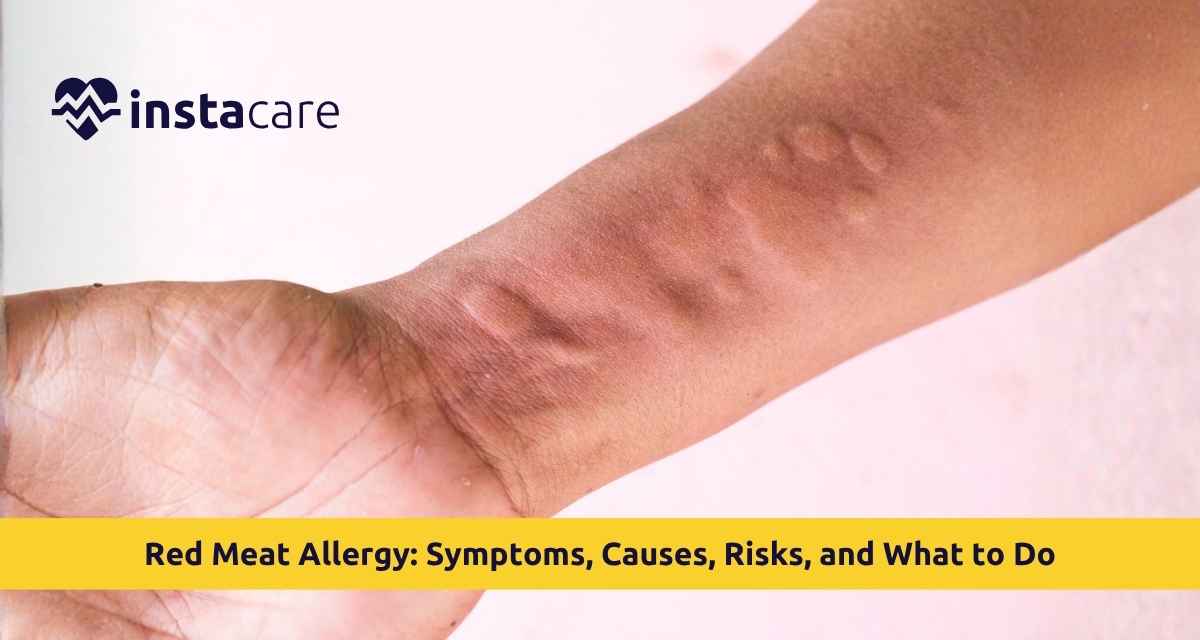
- Hives or rash
- Swelling of the lips, face, tongue, or throat
- Stomach pain
- Nausea or vomiting
- Diarrhea
- Shortness of breath
- Dizziness or fainting
- Anaphylaxis
Because some symptoms may occur when a person is typically asleep, it may be difficult to diagnose and treat the allergy.
Why Is Red Meat Allergy Serious?
Red meat allergy is a serious condition. While some people may have mild symptoms, others may have more severe reactions. Symptoms of a severe allergic reaction may include difficulty breathing, low blood pressure, and loss of consciousness. Serious reactions may require emergency treatment with an epinephrine auto-injector.
The danger of red meat allergy is that a reaction may not occur every single time a person eats red meat. For instance, a person may eat a small amount of red meat and only experience mild stomach discomfort, but they may also develop hives, which is a stronger allergic reaction. The severity of the allergic reaction may be determined by the amount of red meat eaten, and may also depend on the person's exercise level, the amount of alcohol in the person's system, and the person's overall health.
Book Your Liver Function Test (LFT) at IDC Lab & Get 10% Off
How Red Meat Allergy Is Diagnosed?
Red meat allergy should only be diagnosed by a medical doctor, especially an allergist. In diagnosing red meat allergy, the doctor may ask the patient about their history of symptoms and the foods they have eaten, and whether they have had tick bites. The doctor may also ask about the timing of their symptoms.
The following may occur for diagnosis:
- Evaluate medical history
- Ask about tick bites
- Alpha-gal blood testing
- Visit allergy specialist
- Avoid certain foods and track symptoms
The AAAAI reports that, because the symptoms of red meat allergy are delayed, its diagnosis often begins with a detailed medical history and a physical examination.
Treatment and Management
Avoiding foods and products that contain red meat is the only way to manage red meat allergy. According to the Mayo Clinic, the only treatment for red meat allergy is to avoid consuming red meat and to read product labels to identify whether they contain red meat.
Some methods for reducing risk include:
- Steer clear of red meat if it brings on a reaction
- Read the ingredients carefully to look out for meat extracts, gelatin, and other ingredients which are animal-derived
- Be cautious about all restaurant food, especially sauces, soups, and gravies
- Ask your doctor if dairy and gelatin should also be avoided
- Have a plan if the reaction is severe
- Carry an epipen if it has been prescribed
Meat testing should never be done if you have a severe reaction. Food challenges should only be done in a clinical setting.
Products and Food You Should be Careful With
Red meat allergies are not just triggered by the obvious food choices like steak or burgers. Many processed foods may have hidden ingredients that are derived from mammals. Examples of these are the following:
- Beef broth or stock
- Pork fat or lard
- Sausages or processed meats
- Meat-flavored seasonings
- Gelatin-based candy
- Marshmallows or jelly that contain gelatin
- Some medications that come in gelatin capsules
- Some dairy products
This is why it is important to speak to your doctor to get a full list of foods and products you should avoid if you have alpha-gal syndrome.
Can You Get a Red Meat Allergy and It Not be Permanent?
For some, it is possible to build a tolerance to the allergy by avoiding tick bites, but this is not the case for everyone. Some people may even remain allergic for life. The best option is to avoid experimenting and stay in contact with your doctor.
Preventing Red Meat Allergy
Preventing contact with ticks will likely help prevent developing a red meat allergy, especially for those living or traveling in tick-infested zones.
To prevent tick bites, you should:
- Dress in long sleeves and pants when traveling in a grassy or wooded area.
- Apply a repellent to deter ticks.
- Inspect your clothing and body after an outdoor activity.
- Take a shower after being outdoors.
- Check for ticks on your pets.
- Remove ticks in a careful and timely manner.
Not being bitten by a tick may keep red meat allergy symptoms from getting worse.
Final Thoughts
Red meat allergy is an immune response, not an aversion to meat, and it may trigger anything from mild stomach discomfort to a severe allergic reaction. Because the symptoms are not immediate, a lot of people may not recognize the source of their discomfort is the consumption of mammalian meat. If you experience hives, stomach discomfort, swelling, difficulty breathing, or dizziness after eating red meat, you should see a doctor. With a diagnosis, an appropriate diet, and an emergency plan, this allergy is manageable.
Please book an appointment with the best General Physician in Lahore, Karachi, Islamabad, and all major cities of Pakistan through InstaCare, or call our helpline at 03171777509 to find a verified doctor for your disease.