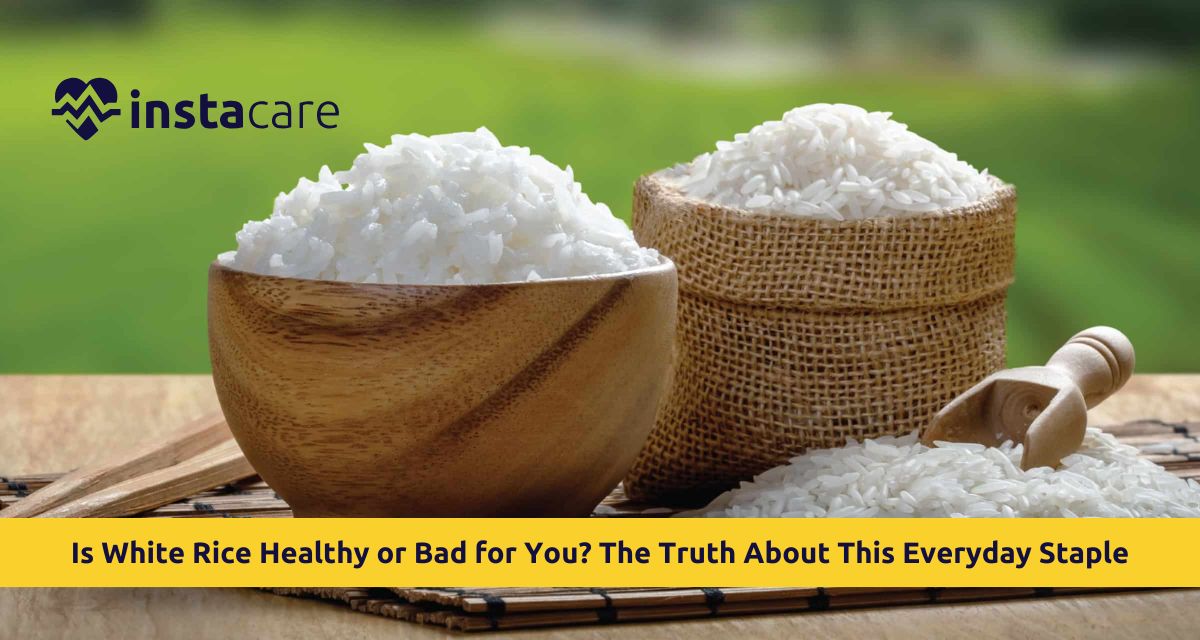
The reality is that white rice is not only good but has got its positive as well as negative side. It is not as nutritious as whole grains and also it is less nutritious and more glycemic index than whole grains. This is a manual to the white rice nutrition, its health consequences, and how to intelligently make it a part of your diet.
What Is White Rice?
White rice is a type of rice that is milled and polished; the husk, bran and germ outer layers are removed. This makes it soft textured, bright in color and has a prolonged shelf life at the expense of removing most of the natural nutrients and fibers in brown rice.
The loss of these nutrients is replaced by fortifying the white rice with iron, folic acid and the B vitamins in many brands. In fact, is white rice processed? Yes, white rice is processed but not unhealthy. Depending on the amount of rice one eats, how it is prepared and what it is served with, the effect of white rice is determined.
Nutritional Profile of White Rice
The weight of one serving of cooked white rice is approximately 150g and it has the following content:
- Calories: about 200
- Carbohydrates: 44 grams
- Protein: 4 grams
- Fat: less than 1 gram
- Fiber: 0.5 grams
- Minerals and vitamins: trace iron, folate, and vitamin B 6
That is, white rice calories are moderate, but it has a lot of carbohydrates in it; it has the greatest impact as it provides the body with quicker energy. Nonetheless, the issue also exists that these fibers, antioxidants, and minerals are not found in such grain. The extreme white rice glycemic index of 70-90, where the fast increment of blood sugar levels takes place, is possibly hazardous to diabetics.
Health Benefits of White Rice
Nevertheless, white rice has several health benefits of white rice as long as it is taken in moderation despite the criticisms.
1. Easy to Digest
White rice is easy on the stomach and thus can be used on stomach diseases or when an individual is recuperating the illness. This is mainly incorporated in light diets since it contains very low levels of fat and fiber hence easy to digest.
2. Source of Quick Energy
White rice is a very fast and rather efficient source of energy due to the large proportion of carbohydrates it includes. In fact, that makes it very good to any person but particularly to those athletes who require instant energy prior to engaging in exercises or matches.
3. Rich in Nutrients
In the majority of varieties of white rice, some essential vitamins are added, such as folic acid and iron, in order to prevent deficiencies and allow people to stay healthy.
4. Naturally Gluten-Free
White rice has no gluten and can therefore be consumed easily by the consumers, even in case they are gluten intolerant or have celiac disease.
5. Mild and Versatile
It is quite neutral in taste and can be combined with proteins, vegetables and sauces in an endless number of meals. It will be mixed with healthy food and make up a healthy meal.
Such are the benefits of eating white rice that makes it a worthy part of your meal plan as long as you consume it in moderated amounts.
Possible Health Concerns
Although it certainly belongs in the healthy lifestyle, consuming excessive amounts of white rice time after time might lead to rather a number of issues.
1. High Glycemic Index
White rice is very glycemic and thus has the propensity to elevate the blood sugar of a person very quickly. Understanding white rice and blood sugar connection is important - this shall also be the reason why one should not in any case, be at a loss to tell why such dishes should not be taken by diabetics or those who do not want to experience the spikes in insulin levels.
2. Low in Fiber
In fact, during the processing process, the bran layer is removed, which decreases the fibre composition of the bran layer, therefore, bringing two negative outcomes, namely indigestion and early satiation. The reason is that fiber assists not only in the movement of the bowel but also in the stabilization of the blood sugar; all these are minimal in white rice.
3. Weight Gain Possibly
White rice accelerates digestion, therefore resulting in one taking in a lot. It can also lead to weight gain in the long run in case one eats large amounts of it without supplementing proteins or vegetables.
4. Risk to Diabetics
The risk of diabetes type 2 is linked to long-term taking of white rice due to the fact that the carbohydrate content of white rice is very digestible, and thus causes the immediate increase of blood sugar level. Many wonder is white rice bad for diabetics - the answer depends on portion control and pairing.
5. Traces of Arsenic
Similar to the majority of rice, white rice has a chance of being contaminated with arsenic due to the soil and water that it is exposed to. Rinsing with a lot of water before cooking minimizes the risk.
These are among the side effects of eating white rice; this usually occurs when a person takes it excessively or in an unbalanced diet.
White Rice vs. Brown Rice: Which Is Better?
The significant distinction in white rice vs brown rice lies in the processing of the food and its nutritional value. Since it is a whole grain, brown rice is richer in fiber, magnesium, and antioxidants, bran, and germ layers. These are eliminated in white rice; therefore, white rice is smoother in texture but very unhealthy.
Brown rice is digested at a slower pace hence remaining the person fuller whereas the white rice provides the body with quick energy. It is possible that people with sensitive digestion or due to some health requirements might be eating white rice. Nevertheless, brown rice tends to be the winner when it is about losing weight, improved digestion or average sugar level in the blood.
There is no pure good or bad in the argument of white or brown rice. All that is a matter of the individual needs of the diet and the way that one integrate them with other kinds of food.
How to Make White Rice Healthier?
You do not need to abandon white rice in case you enjoy its consumption. These are few easy ways of how to make white rice healthier:
- Pair It Smartly: Combine rice with high-fiber vegetables, lentils, beans, or lean protein to aid the digestive system and maintain sugar spikes
- Watch Your Portions: It is advisable to eat half a cup or one cup of cooked rice in one meal to prevent calories overload
- Wash Before Cooking: Repeated rinsing of the white rice eliminates the starch on the surface and reduces the glycemic index of the white rice
- Include Healthy Oils: When cooking rice, it is appropriate to use a little bit of olive or coconut oil, which slows down the process of carbohydrates digestion
- Cool Then Reheat: When cooked rice is cooled down, before being eaten, this enhances resistant starch that is beneficial to gut health
- Select Enriched Varieties: Fortified white rice replaces nutrients that have been lost during milling
These procedures provide a series of techniques of making white rice healthier without compromising on the natural tastes and feel of the rice.
Who Should Limit White Rice Consumption?
Even though it does not provoke any harm to the majority of people, some cohorts, which are to be concerned about their consumption of white rice, do exist.
Individuals with Diabetes: White rice glycemic index content can be found in the dish, thus is able to cause a spike in blood sugar levels. To minimize the effect, it is recommended to eat it with vegetables and protein.
To Those Who Are on Weight Loss: Thinking is white rice good for weight loss? Then this is the question, which is moderated. Substitute some of your portion with foods that contain high levels of fiber to feel fuller.
Stagnant Individuals: White rice is high-energy and it has an estimated content of 200 calories in one cup. Unless you exercise, then you are likely to accumulate fat because of the calories.
Individuals That Should Increase Their Fiber Intake: Consider healthy alternatives to white rice such as whole grains like quinoa, oats, or brown rice to increase the amount of fiber in the digestive system and a healthy heart.
When you are in either of these categories, you might consider eating white rice occasionally or switch on to other healthier versions of white rice.
Conclusion
White rice is either healthy or not so? It is based on what you eat and how you live. Enriched white rice is energy giving, digestible and nutritional. On the negative side, it is also quite low in fiber and may raise blood sugar after the consumption in excess.
The key is in balance. Eat white rice in small portions, combined with other healthy products, and continue to exercise. White rice is capable of being a part of a nutritious, satisfying diet, provided that it is consumed in a reasonable way. It is necessary to remind you that it is never about getting rid of rice in your meals, it is all about intelligent eating and in the appropriate proportion.
Please book an appointment with the best Nutritionist in Lahore, Karachi, Islamabad, and all major cities of Pakistan through InstaCare, or call our helpline at 03171777509 to find a verified doctor for your disease.