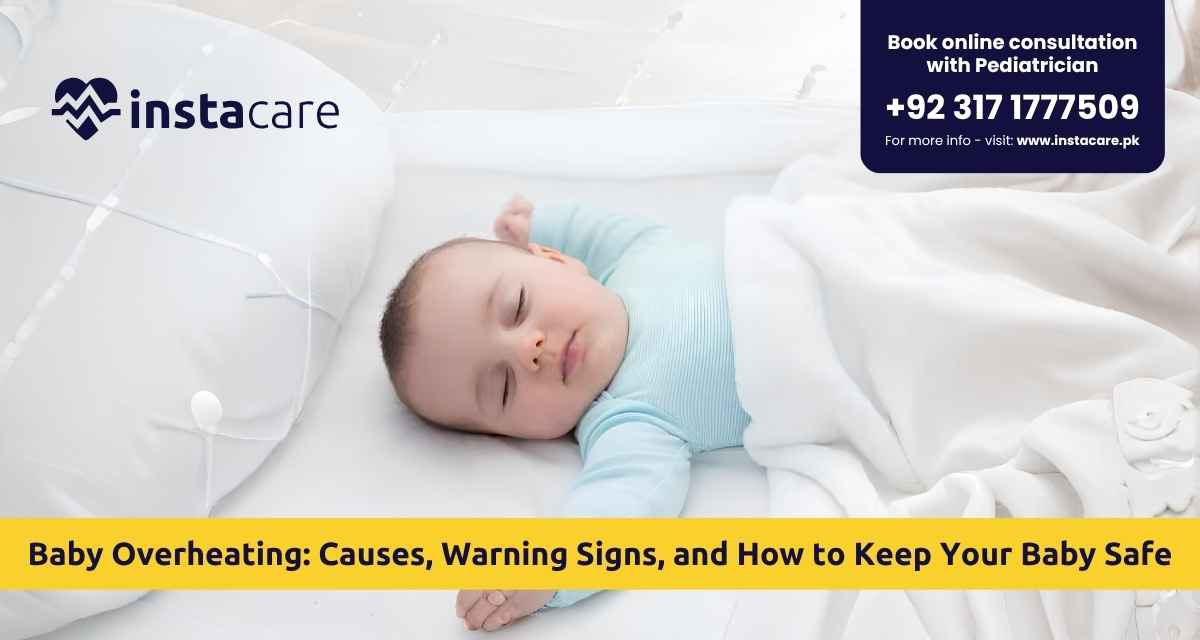
Baby overheating can occur in the hot sun, during sleep, in a warm room, inside a car, heavy clothing, or when a stroller is covered with a thick fabric. The mild symptoms of baby overheating include sweating, fussiness, and a flushed face. However, serious baby overheating can cause dehydration and heat exhaustion and can be life threatening and as severe as heatstroke, which is an emergency and needs to be treated immediately.
Why Do Babies Easily Overheat?
It is simply because babies are small and their body systems, including the system that helps to regulate temperature, are still developing and not as efficient and effective as in older children and adults. Also, babies depend completely on adults for their clothing, shade, hydration, room temperature, and everything else that can help them to not overheat.
The most common causes of baby overheating include:
- Too many layers of clothing,
- Heavy blankets during sleep,
- A warm or poorly ventilated room,
- Direct sun exposure,
- Hot weather (including heat waves),
- Being left in a parked car (this is one of the most dangerous and life-threatening causes of overheating),
- Poorly covered strollers with no or little air flow,
- Not feeding/baby dehydration,
- Baby sickness (fever or otherwise).
Recognizing Signs of Overheating in Babies
Overheating in babies should be suspected where babies appear more uncomfortable, sleepy, sweaty, or warm to touch. Mild signs may become severe and even threaten a baby’s life if the baby stays in an overheated condition for a long time.
Overheating babies signs include:
- Sweating neck, back, and head
- Warm or Flat chest or tummy
- Rapid breathing
- Fast heart
- Nervous and/or atypically crying
- Restless sleeping
- Heat rash
- Refusal to feed
- Fewer than normal wet diapers
- Dry mouth
- Tired and/or unusually sleepy
- Limp and/or floppy body
Overheating babies do not always experience heavy sweating. Some babies may just feel weak, uncomfortable, and may be quiet or unresponsive to normal.
Dangerous Signs for Babies
Some of these conditions may require you to seek immediate medical attention. Request emergency services for a baby that is hard to wake, weak, breathing fast, is sweating, having heat dry skin or a seizure, is vomiting repeatedly, and is limp and/or unresponsive. Heat Stroke is a medical condition you should never ignore.
Baby Overheating While Sleeping
Concerns about babies overheating during sleep are very common. Babies should be able to sleep in a comfortably cool room. Sleepsuits should not be too heavy and be positioned carefully, away from the babies’ faces. To check if babies are overheating, feel the chest, tummy, or back of the neck. Hands and feet may feel cool, so they are not helpful to check babies’ core body temperature.
Signs your baby may be too hot during sleep include sweating, damp hair, flushed cheeks, rapid breathing, or restlessness. Remove excess layers, improve the airflow, and relocate them to a different environment.
Claim 25% OFF on Human Care Lab Diagnostic Tests
What to Do If Your Baby Is Overheating?
Quickly and calmly moving the baby is the first step of your cooling process.
- Moving the baby to an air conditioned space is ideal. If air conditioning is not available then a space with a breeze, or in the shade will do.
- Remove clothing and coverings such as blankets, hats, and socks. For babies, and young children, breastmilk and formula need to be offered with frequent feeding. If the baby is older and has been introduced to water, give them a small amount of water.
- A damp cloth with lukewarm water can be used to wipe the baby in order to help cool them, but it should be done gradually. There should not be a drastic change in water temperature, such as an ice bath.
- Watch over your baby for any changes in breathing and alertness. Keep track of any feeding and signs made with their diaper.
- If symptoms do not improve in a short amount of time seek medical care with a baby that is floppy, lethargic, or showing signs of illness and discomfort.
How to Prevent Baby Overheating?
- The first line of defense against baby overheating is prevention. Hot weather calls for only light coverings and clothing that is also loose and breathable. Over clothing should be avoided especially indoors and in the care. If it is a warm room, one light layer is sufficient.
- Your baby should stay out of direct sunlight. When outside, use shade, hats, and other barriers. When used on a stroller, blankets and thick cloths can trap heat and reduce airflow. These should be avoided.
- For a baby, the best way to stay cool is through safe fans, the opening of windows (if the air outside is cooler), or using air conditioning. Baby's feeds should be more frequent and or longer in the heat, since hydration is so important. Breast milk and formula can be offered as often as desired to babies.
- Never, under any circumstance, leave your baby in a car, even if the windows are rolled down. This is the most serious and most easily avoidable cause of baby overheating.
- It is common for babies to get heat rash with the combination of hot and humid weather. This rash is small and red and is most common in the neck, back, and chest. Sweat being trapped is the culprit.
- To avoid heat rush, keep the baby cool, and dress in breathable clothing. It should be easy to keep the skin dry. If the rash gets worse, or is painful, or shows signs of infection, see a professional.
- Dehydration is a baby needing to go to the doctor. Also, if there are fewer wet diapers, an unusually high level of sleepiness, a fever, or no improvement after cooling, a doctor should be consulted. Baby's feeds also should not be refused.
- Seek immediate medical attention if your baby is difficult to wake, has shortness of breath, is limp with dry skin, and is extremely fatigued and has a seizure. Parents should go with their gut instincts. It is better to get a second opinion if you think something is off about your baby.
Conclusion
Overheating can happen quickly for babies especially when the weather is hot, when they are sleeping, traveling, or while they are outside. Parents need to be observant since babies are not able to communicate verbally. Overheating can be indicated by the baby being sweaty, having fast and shallow breathing, being irritable, reducing their eating, and having fewer wet diapers. A baby can be shaded and well fed to help lower the chances of them overheating. It can help to keep the baby lightly layered. If a baby has concerning symptoms, medical help should be sought.
Please book an appointment with the best Pediatrician in Lahore, Karachi, Islamabad, and all major cities of Pakistan through InstaCare, or call our helpline at 03171777509 to find a verified doctor for your disease.