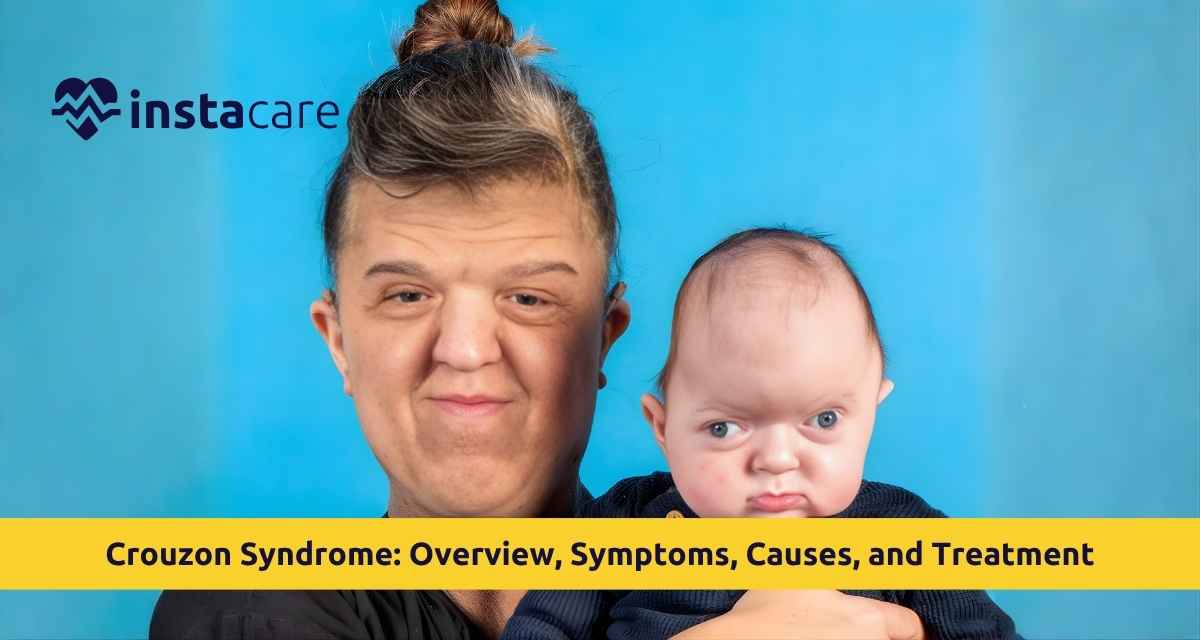
Crouzon syndrome is a genetically rare disease that mainly involves the growth of the skull and face. It belongs to a group of disorders called craniofacial syndromes, during which inappropriate development of the skull results in unusual physical appearance. Individuals with Crouzon syndrome normally have their sutures fused earlier than the usual age when these sutures, the fibrous joints that enable the skull to enlarge as the brain swells, fuse.
This premature fusion is referred to as craniosynostosis and it may result in various health related issues, such as the abnormal head shape, facial malformation and even nervous system issues.
Causes of Crouzon Syndrome
Causes of Crouzon syndrome are mainly due to FGFR2 gene mutation (fibroblast growth factor receptor 2). This gene carries the instructions on how to produce a protein that is useful in regulating the growth and development of the skull and face bones. In case of mutation in FGFR2 gene, this causes premature fusion of the sutures in the skull giving rise to the characteristic craniafacial appearance of the Crouzon syndrome. Other bones in the body can also develop as a result of this gene mutation.
Crouzon syndrome is an autosomal dominant inherited disease. This implies that all one has to do to develop the condition is to inherit one copy of the modified gene out of the two parents. In most instances, a Crouzon syndrome patient inherits the mutation which was inherited by a parent who has Crouzon syndrome. Nevertheless, the mutation may also be spontaneous and happen in a child, having no previous history of this condition in the family.
Common Symptoms of Crouzon Syndrome
Crouzon syndrome does not spare the head and face giving it a characteristic feature of craniosynostosis, where the sutures in the skull head are closed earlier than expected. The Crouzon syndrome symptoms may be mild and severe, but some of the common aspects of the disorder are:
Head and Skull:
- Abnormal head shape: The most apparent aspect of Crouzon syndrome is that of an abnormal head shape, commonly referred to as brachycephaly (wide, short skull) or scaphocephaly (long and narrow head). This is due to the premature suture fusion at the skull.
- Prominent forehead: This is because the skull develops abnormally, making the forehead look abnormally big or swollen.
- Wide-set eyes (hypertelorism): The eyes of people with Crouzon syndrome are usually widely spaced because the eye sockets are formed abnormally.
- Flattened midface: The central area of the face that includes the cheeks and nose can be underdeveloped or flattened.
- Poor development of upper jaw: The upper jaw or maxilla may be underdeveloped and appear in an inverted or flat form.
Other Features:
- Hearing loss: A lot of people with Crouzon syndrome have hearing loss either as a result of structural defects in the ear or as a consequence of complications linked to the skull defects.
- Vision issues: Vision can be impaired due to shallow eye sockets and people can be affected by strabismus (crossed eyes) or other vision problems.
- Dental problems: The teeth are usually crowded or misaligned because of facial deformities.
- Cognitive development: Although intellectual disability is not a common case with individuals with Crouzon syndrome, some might experience developmental delays which are usually related to the disorder complications.
What is the Diagnosis of Crouzon Syndrome?
Mostly, the crouzon syndrome diagnosis is made on the basis of the manifestation of typical physical signs, in particular, the deformed head shape and facial features. Nonetheless, genetic testing is necessary to confirm diagnosis. This is through the examination of the FGFR2 gene to identify mutations that cause the condition. Imaging, like CT scans or MRI, can also be used by doctors to scan the skull and the brain to determine abnormalities.
Considering that craniosynostosis is one of the severe signs of Crouzon syndrome, experts can also observe brain maturation to ensure that the possible accumulation of pressure due to the limited skull expansion is detected, and the latter may cause neurological problems.
Treatment Options for Crouzon Syndrome
Although Crouzon syndrome is incurable, there are a number of treatment choices that can be used to control the syndrome and enhance quality of life. The severity of the symptoms and age at which the individual is diagnosed determine the treatment.
1. Surgical Treatment:
- Cranial surgery: Crouzon syndrome surgery to repair the premature fusion of the skull sutures is one of the most common cranial surgery procedures in Crouzon syndrome. This is usually conducted during the infancy or early childhood period to enable normal skull and brain development. To re-form the skull, surgeons can excise sections of it to provide additional space to the expanding brain.
- Facial surgery: Sometimes surgery is required to fix the underdeveloped midface or jaw. This can include bone shaping or rearranging to enhance the appearance and functionality of the face.
2. Hearing and Vision Care:
- Hearing aids or implants: Hearing loss can occur in many individuals with Crouzon syndrome and can be addressed through hearing aid or in severe cases, it can be treated by cochlear implants.
- Sight correction: It is possible that some people need corrective lenses or surgery to fix their vision, strabismus or eye-related complications.
3. Speech and Developmental Therapy:
Speech therapy can be useful to children with Crouzon syndrome to assist in communication skills, particularly in case of any speech or cognitive development delays. It is necessary to intervene early to solve any learning problems.
4. Ongoing Monitoring:
- Orthodontic care: Since individuals with Crouzon syndrome are likely to develop problems with their teeth, they might need orthodontic care to assist them in aligning their teeth appropriately.
- Frequent check-ups: The person should be monitored by specialists regularly to check whether there is any change in the skull, the brain, vision, or hearing as the person grows old.
Read More: Irritable Bowel Syndrome IBS Attacks How Long Do They Last
Prognosis
Through early diagnosis and proper treatment, several people with Crouzon syndrome are able to achieve a complete life. The cognitive development is typically normal and the majority of individuals with the condition are able to live independent lives. But the intensity of physical appearance, and complications associated with craniofacial defects may differ, thus the treatment programs are very intensive.
The outcome of the case mainly relies on the effectiveness with which one manages his or her health issues and the effectiveness of surgeries conducted to restore the skull and facial deformities.
Conclusion
Crouzon syndrome is a genetic disorder that is rare and it involves development of the skull and face. Although the condition has a number of challenges especially with reference to craniofacial abnormalities, early intervention and treatment has the potential of making the lives of the affected much better. The treatment involves surgical correction, hearing and vision care and developmental support and with proper care, individuals with Crouzon syndrome can live normal lives.
Please book an appointment with the best Neurosurgeon in Lahore, Karachi, Islamabad, and all major cities of Pakistan through Instacare, or call our helpline at 03171777509 to find a verified doctor for your disease.