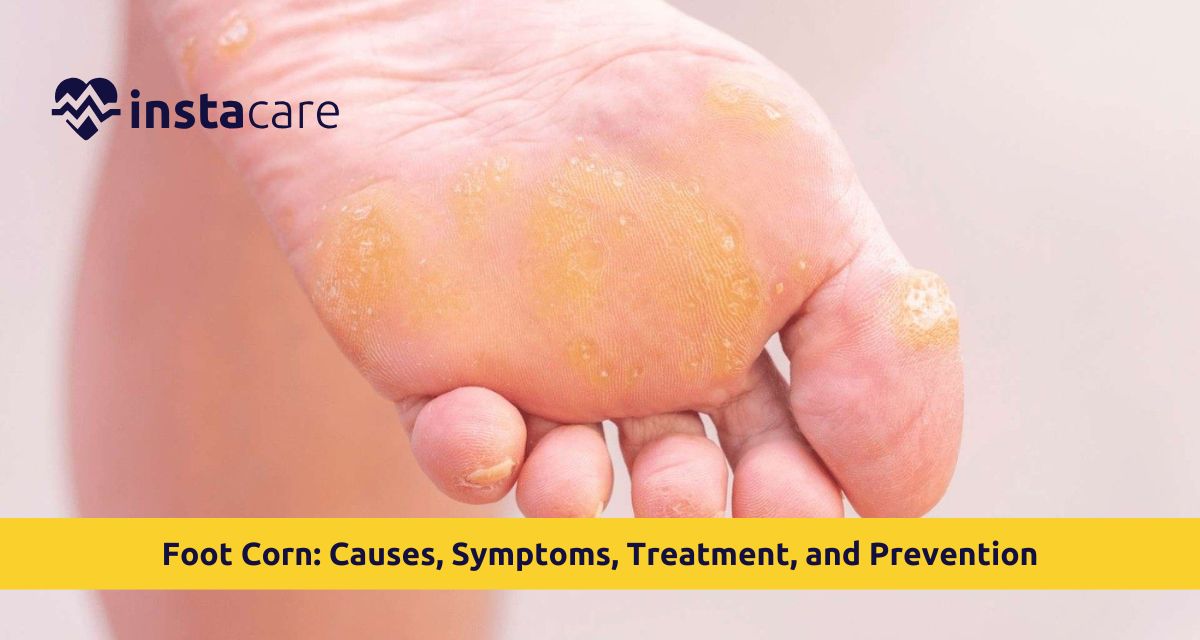
What is a Foot Corn?
A corn of the foot is a localized, small patch of thickened, hardened skin that arises due to chronic pressure or rubbing. In contrast to calluses, which are found over broad areas, corns are typically small and localized, and painful. They arise as the body's reaction to chronic rubbing, with layers of dead cells accumulating in the skin to guard against the underlying tissues.
Corns are a hard core of keratin (skin protein) that may protrude far into the skin layers. The core, which is usually cone-shaped, is responsible for why corns are so tender when they are pressed upon because it may push on nerve endings and deeper tissues.
Read More: Everything You Need To Know About Clubfoot
Types of Foot Corns
Hard Corns (Heloma Durum)
Hard corns are the most prevalent type, most often occurring on the tops and sides of the toes where bones are more near the surface. They might be visible as tiny, focal regions of hard, dry skin with a hard core. They're particularly prevalent as foot corn on toes, the fourth and fifth toes in fact since shoes bear the most pressure there.
Soft Corns (Heloma Molle)
Soft corns form between toes, typically between web spaces where there is moisture accumulation. The perpetual moistness makes these corns more tender than hard corns, but just as painful. Soft corns are white or grayish and rubbery to the touch.
Seed Corns (Heloma Millare)
Seed corns are individual small corns that tend to occur on the bottom of the foot, often in regions that have less weight. They are not tender but become bothersome when larger or pressed.
Causes of Foot Corns
Ill-Fitting Footwear
The majority of foot corn causes and solutions stem from ill-fitting shoes that result in pressure points and friction. Typical shoe issues are:
- Shoes that are too tight or small
- High heels that push toes into compactly packed toe boxes
- Loosely fitting socks that lead to sliding and rubbing
- Worn-out soles on shoes that fail to adequately support the foot
- Seams or stitching that cause pressure points
Foot Deformities
Structural deformities of the foot result in areas of pressure concentration, resulting in corn development:
- Hammertoes or claw toes
- Bunions (hallux valgus)
- High arches or flat feet
- Bone spurs
- History of injury to the foot that changed foot mechanics
Biomechanical Issues
Walking pattern and foot function abnormalities may lead to the formation of corns:
- Abnormalities in the gait pattern
- Uneven weight distribution
- Irregular leg length
- Arthritis or stiff joints
Activity-Related Factors
Some activities and lifestyle factors raise the risk of developing corns:
- Long-time walking or standing
- Repetitive motion sports of the foot
- Barefoot walking on hard surfaces
- Poor hygiene of the foot
Foot Corn Signs and Symptoms
Primary Foot Corn Symptoms Physical Appearance:
- Small, cone-shaped or rounded spots of hardened, thick skin
- Yellowish or grayish color
- Sharp edges
- Central core that is occasionally visible
Pain and Discomfort:
- Severe, stinging pain with pressure
- Tenderness to palpation
- Increased pain on walking or shoe wear
- Sensation of walking on a pebble
Secondary Symptoms Surrounding Tissue Changes:
- Redness in the region around the corn
- Dry, scaly skin over the lesion
- Discoloration of the skin
Functional Impact:
- Change in walking patterns to avoid pain
- Difficulty wearing shoes
- Decreased level of activity due to pain
- Compensatory patterns causing further issues in the feet
When to Seek Professional Help
- Severe pain hindering daily activity
- Signs of infection (redness, heat, pus, or red streaks)
- Habitual corns even after home management
- Multiple corns at once
- Underlying conditions such as diabetes or circulatory disease
Diagnosis of Foot Corns
Clinical Examination
Health clinicians mostly make diagnoses of foot corns by looking and physical inspection. Diagnosis usually involves:
Visual Inspection:
- Assessment of size, shape, and location of the lesion
- Assessment of condition of the adjacent skin
- Identification of central core feature of corns
Physical Examination:
- Palpation to assess depth and tenderness
- Pressure testing to symptom reproduction
- Assessment of foot anatomy and biomechanics
Differential Diagnosis:
Foot Corn vs. Callus An awareness of foot corn vs callus differentiation leads to proper treatment:
Foot Corns:
- Smaller, more focal locations
- Perceptible central core
- More tender upon pressure application
- Typically on non-weight-bearing surfaces
Calluses:
- More generalized area of thickened skin
- No apparent central core
- Typically less tender
- Tend to develop over weight-bearing surfaces
Other Diagnostic Problems
- In others, health professionals might prescribe:
- X-rays to eliminate underlying bone abnormalities
- Biomechanical assessment to specify contributing factors
- Evaluation for systemic disease that impacts skin integrity
Foot Corn Treatment
Home Remedies for Foot Corns Soaking and Softening:
- Soak feet in warm water 10-15 minutes a day
- Add Epsom salts or mild soap for extra softening
- Carefully file away softened skin with a pumice stone
- Use moisturizer to avoid over drying
Protective Padding:
- Apply pressure-reducing foot corn pads or use moleskin
- Place cushioning near (not on) the corn
- Toe spacers are also an option for soft corns between toes
Natural Remedies:
- Castor oil or vitamin E oil for softening tissue
- Tea tree oil for its antiseptic use (diluted)
- Apple cider vinegar soaks (diluted) for tissue softening
Over-the-Counter Treatments Foot Corn Medicine:
- Salicylic acid preparations (pads, gels, or liquids)
- Foot corn cream with urea for softening and moisturizing
- Medicated corn remover products with acids
Protective Products:
- Cushioning foot corn pads for individual toe areas
- Gel toe protectors for tender areas
- Pressure-redistributing orthotic insoles
Professional Treatment for Foot Corn Podiatry Care:
- Professional foot corn removal with aseptic instruments
- Prescription-strength drug products
- Custom orthotic appliances to correct underlying conditions
- Biomechanical evaluation and gait analysis
Advanced Treatments:
- Cryotherapy (freezing) treatment of recalcitrant corns
- Laser treatment for precise corn removal
- Injection treatment for foot corn pain relief
Surgery for Foot Corn
In more serious instances or after conservative management failure, foot corn surgery may be required:
Surgical Options:
- Corn removal with core excision
- Fixation of bony abnormalities under
- Tendon or joint surgery for biomechanic problems
- Digital arthroplasty to correct hammertoe
Factors in Recovery:
- Wound care after surgery
- Modification of activities during healing
- Physical therapy if necessary
- Long-term follow-up to prevent recurrence
Prevention Interventions for Foot Corns
Proper Choice of Footwear Shoe Fitting Information:
- Buy shoes in the afternoon when feet are usually swollen
- Leave sufficient toe room (thumb-width from longest toe to shoe edge)
- Select well-supported arching and cushioned footwear
- Replace worn-out footwear regularly
- Opt for professional shoe fitting for best outcomes
Shoe Recommendations:
- Low-heeled shoes with wide-toe-box
- Water-permeable materials to prevent water accumulation
- Cushioned and moisture-wicking socks that fit properly
- Alternation of wearing two or more pairs of shoes throughout the day
Foot Care Practices Daily Foot Care:
- Bathe feet regularly with mild soap
- Dry thoroughly, particularly between toes
- Apply moisturizer to avoid drying out
- Daily inspection of the feet for early signs of issues
Prevention Strategies:
- Utilize defense padding where there is a defect
- Maintain a healthy body weight to minimize pressure on the feet
- Address foot deformities early with professional assistance
- Take good care of nails to avoid ingrown nails
Modification of Lifestyle Modifications of Activity:
- Separate activity during prolonged standing or walking
- Stretch calves and feet often
- Wear proper shoes for particular activities
- Increase activity gradually to enable acclimatization
Conclusion
Awareness of foot corns and effective foot corn home remedies along with prevention strategies can go a long way in providing better comfort as well as health to your feet. From early detection of foot corn symptoms to using effective home treatments along with professional treatment whenever needed, there are various means of treating this common disorder.
The solution to effective corn treatment lies in addressing both short-term effects and long-term causes. Removal of the foot corn may be relief but long-term success is achievable only with due regard to proper footwear, foot mechanics, and preventives. Whether you have painful corns on your toes or don't want to get them again, inclusion of proper treatments and preventives is the solution.
Keep in mind that recurring or painful foot corns, particularly on individuals with diabetes or circulatory disease, require professional attention. If you're looking for a foot corn doctor near me, visit a podiatrist who will offer proper diagnosis and treatment based on your needs.
Please book an appointment with the best Dermatologist in Lahore, Karachi, Islamabad, and all major cities of Pakistan through InstaCare, or call our helpline at 03171777509 to find the verified doctor for your disease.