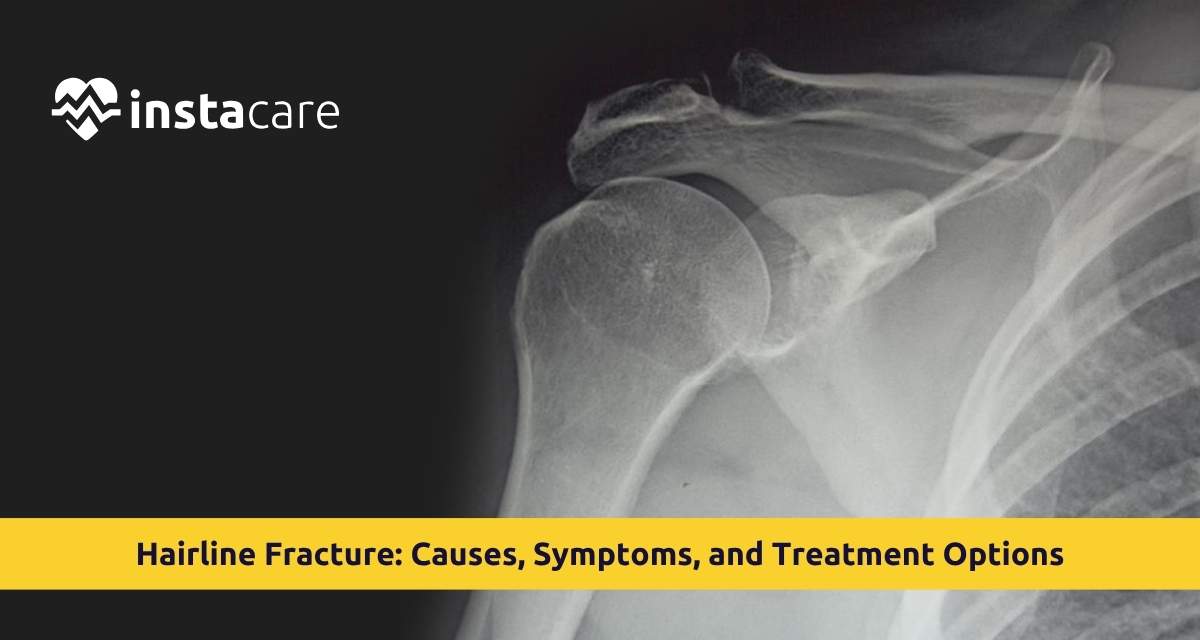
What is Hairline Fracture?
A hairline fracture is a little, thin line in the bone but does not normally go completely through the bone. Although it is not as serious as a complete case of bone fracture the hairline fracture can also be very painful and disruptive of movement. A hairline fracture, in contrast to bigger fractures, which usually imply a complete fracture of the bone, commonly happens due to accumulated stress or a single, sharp blow that fails to fracture the bone in its entirety.
Hairline fractures involve the heaviest-bearing bones such as feet, ankles, shins, but may involve other bones (ribs, spine, hands). Imaging procedures such as X-rays are commonly used to diagnose such fractures but in some cases, these fractures may also go undiagnosed since they might not appear vividly during an X-ray.
Causes of Hairline Fractures
Repetitive stress or overuse is the main cause of hairline fractures, particularly the one involving impact or pressure on the bones. Hairline fractures can be caused by some of the most frequent causes:
Repetitive Stress or Overuse:
Certain repetitive movements may cause stress build up in a particular bone, like running, jumping or weightlifting, resulting in cracking of the bone. This is especially prevalent among athletes or people who indulge in sports of high impact such as running, basketball, gymnastics, or soccer. Weakness of the bone over time due to the fact that the pressure is always on it creates more chances of fractures.
Sudden Impact:
A fracture may be hairline which means it can be caused by an abrupt, awkward response, say, when stepping onto a hard ground, or falling. This is particularly so when the bone is already weak because of a previous injury or because of underlying health issues.
Bone Density Issues:
Hairline fractures are higher in people who have a low bone density e.g. those who have osteoporosis. The bones which are weaker can crack easily or break even when supporting comparatively very slight use or action.
Poor Technique or Equipment:
Incorrect technique in physical exercises like running with the use of inappropriate new shoes, lifting weights without appropriate posture, etc., may put an undue stress on certain bones and make them more vulnerable to a hairline fracture. Moreover, the lack of protection equipment in sports may result in the development of fractures due to injuries that are received.
Fatigue:
Exhaustion may result in poor performance when performing any physical task and the person is more exposed to incurring a hairline fracture due to a slip, poor positioning or mishandling of a piece of equipment.
Underlying Health Conditions:
Some medical issues, such as malnutrition or vitamin D deficiency may make bones weak and susceptible to fractures. Also there can be chronic conditions such as diabetes or rheumatoid arthritis that can place bones at more risk of destruction.
Symptoms of a Hairline Fracture
Hairline fractures normally result in pain which is aggravated by activity and relieved by rest. The intensity of symptoms may differ depending upon the place and the reason of fracture. Symptoms of a fracture of the hairline are common to include:
- Pain at Injury Site: Pain is mostly localized to the place of the fracture and may become worse with movement or pressure on the bone.
- Tenderness: The surrounding of the fracture can be tender to touch and you can experience swelling when pressing around.
- Swelling: This may cause swelling of the area around the fracture site, which might increase with time. Bruising can also occur in a few instances.
- Inconvenience in Moving the Affected Part: That movement might be limited by pain, particularly when the fracture involves a weight-bearing bone, or when it is in a joint such as the ankle or foot.
- Pain that increases with activity: This is unlike a complete fracture which would immediately result in pain but a fracture of the hairline fracture is a gradual process which results in pain increasing with activity or repetitive stress.
- Warmth: It can be hot around the fracture site where inflammation or swelling can occur.
🩻 Book MRI Direct Contrast at Dr Essa Lab – Get 15% OFF
Diagnosis of Hairline Fractures
Although sometimes hairline fractures may not be evident in an initial X-ray, they are most commonly diagnosed by imaging. The latter diagnostic tools are the most widespread and they include:
- X-rays: The most common diagnostic tool used in identifying bone fractures is X-rays. With hairline fractures, however, crack does not necessarily show immediately.
- MRI (Magnetic Resonance Imaging): MRI may be done when the fracture of the hairline is hard to reveal on an X-ray. The imaging method can be used to see soft tissue destruction and possibly small cracks in the bone that cannot be detected with traditional X-rays.
- CT Scan (Computed Tomography): CT scan will give a fine image of the bone, and assist doctors to detect hairline fractures, particularly on intricate bone structures such as spine or skull.
Treatment for Hairline Fractures
A hairline fracture is usually treated depending on where the injury is and the extent of the fracture. Most hairline fractures can be treated conservatively, with rest and proper care. Treatment options include:
- Rest: The key aspect of healing a hairline fracture is rest. It is important to avoid activities that can stress the affected bone so that it can be able to heal effectively. It might be required to limit physical activity or prevent some movements temporarily depending on the place where the fracture took place.
- Ice: Ice will help to alleviate swelling and pain, apply this to the affected area. Ice application should last 15-20 minutes every few hours, particularly in the first 48 hours following the injury.
- Compression: The swelling can be reduced by compression using a bandage or brace to stabilize the area. A splint or a cast can be involved in a few instances to restrict the movement and safeguard the bone when it is recovering.
- Elevation: Raising the injured part above the level of the heart may aid to reduce the swelling and boost blood flow to the fractured region.
- Pain Relief: OTC pain relief products like ibuprofen or acetaminophen may be used to relieve pain and inflammation.
- Physical Therapy: When the bone has mended, physical therapy could be prescribed to assist in building strength, flexibility and range of motion to the affected region.
- Surgery: Sometimes, surgery might be required in the event that the fracture is so severe or fails to heal through the conservative procedures. Surgery could involve placing plates, screws or rods to stabilize the bone as it forms.
Hairline Fractures Prevention
Although you may not be able to prevent all hairline fractures, there are various measures that you may take to minimize the risk:
- Slow Build-up in Exercise: When exercise is part of your daily routine, particularly with some of the more vigorous sports involved, you need to ease into the workouts and gradually raise the activity level and time to prevent overwhelming your bones.
- Adequate Footwear: Adequate footwear to use during exercise such as running, hiking and sports will help avoid undue strain on the bones and joints.
- Proper Nutrition: Be sure to get adequate calcium, vitamin D and other nutrients to have healthy, strong bones. This is especially valuable to people having osteoporosis or other bone weaknesses.
- Strengthening Exercises: Strengthening the muscles can be achieved through adding strength training to your exercises, which would assist in building up the muscles and giving more support to the bones as well and in preventing the risk of fractures.
- Rest: Have frequent rests to prevent overuse fatigue. Allow your body ample time to rest between exercises or physical activities.
Conclusion
A hairline fracture may be very hard to notice but it can be very painful and impair the normal way of life. Early diagnosis and proper management can be important to full recovery. Knowing the causes, symptoms and the treatment of hairline fractures, one will be able to take the necessary measures to prevent and treat this frequent injury successfully. In case you have the suspicion that you have a hairline fracture, you need to seek medical attention with a medical practitioner to get a proper diagnosis and properly promote your recovery.
Please book an appointment with the best Orthopedic Surgeon in Lahore, Karachi, Islamabad, and all major cities of Pakistan through InstaCare, or call our helpline at 03171777509 to find a verified doctor for your disease.