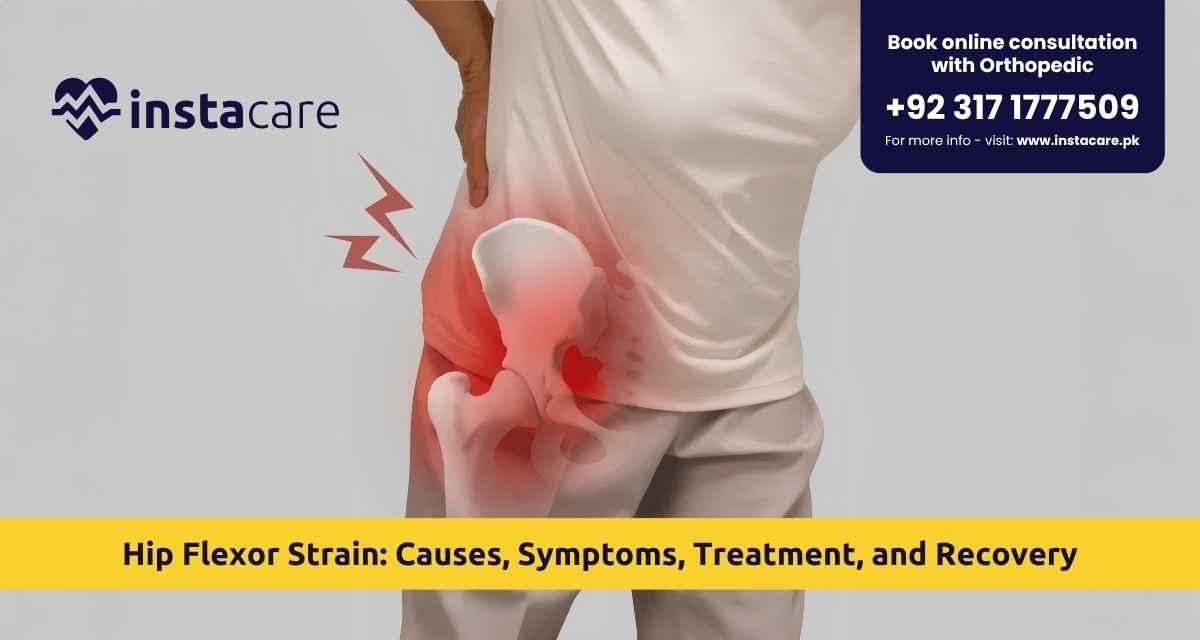
Hip flexor strains are injuries that mostly affect athletes or those who are physically active. Hip flexor strains can result from an increase in physical activity from a sedentary lifestyle. Hip flexors can be strained in daily tasks like walking, hip flexor injuries can be exacerbated by an activity as simple as climbing stairs.
With the right rehabilitation and by making the correct modifications to activity levels, most mild hip flexor strains will completely heal. It is important to know the symptoms of hip flexor injuries and what activities should or shouldn't be done in order to strengthen hip flexors and return to full mobility as soon as possible.
What Is a Hip Flexor Strain?
Hip flexor muscles are located in the front of the hip. Hip flexor muscles move the thigh closer to the body and are most active during movements such as walking and running, as well as climbing stairs and kicking. Straining a hip flexor occurs when the muscle is injured or overly stretched from rapid or excessive movement. A muscle strain can be classified as mild or serious, depending on how much muscle tissue is injured or affected.
A hip flexor strain that is mild can be painful to the hip and the site of the strain can be tendered. It can be difficult to perform movements that are normally easy to perform. Severe hip flexor strains can lead to a significant loss of strength in the hip and can be very painful.
What Causes a Hip Flexor Strain?
A hip flexor strain can develop suddenly as the result of an activity or develop gradually after repeated stress. Hip flexor muscles can be overstressed after sudden acceleration, violent kicks, and rapid changes in movement. While poor flexibility can lead to overstretch of the hip flexor, muscle fatigue can also be a factor. Strain injuries can be the result of returning to an activity too soon.
Common factors that contribute to hip flexor strain are:
- Returning to normal activity after an injury
- Rapid changes or overstretch of hip flexor
- Suddenly changing exercise intensity
- Exercise with tired muscles
- Straining activities such as running, sprinting, or jumping
- Repeated kicking
People who regularly participate in activities that stress the hip flexors are more likely to experience symptoms, especially if they have a sudden change in their activity level.
Common Hip Flexor Strain Symptoms
Symptoms of a hip flexor strain can develop gradually or suddenly during an activity. Discomfort in a hip flexor strain is usually felt in the front of the hip and can be extended into the upper thigh and groin. Symptoms are usually aggravated by raising the knee and by running or climbing stairs. Symptoms are also aggravated by activities that bend the hip flexor.
Symptoms may include:
- Pain in the front of the hip
- Discomfort in the upper thigh
- Tenderness in the affected area
- Discomfort when the knee is raised
- Pain while running or brisk walking
- Discomfort when walking up or down stairs
- Tightness in the muscles
- Hip flexibility may be reduced
- Weakness when moving the leg in certain positions
- In some cases, there may be mild swelling
Symptoms may vary in severity, depending on the degree of the strain. More mild cases may result in pain or discomfort while doing certain activities. More significant strains may result in pain while walking or doing everyday activities.
How is a Hip Flexor Strain Diagnosed?
Diagnosis generally involves discussing the symptoms, how the injury occurred, and the activity or activities that caused the pain to worsen. The health care professional may ask the person whether the pain started suddenly or gradually. The health care professional may also test the range of motion in the hip, as well as the strength of the muscles. The person may also be asked to walk and perform other movements that cause or have caused symptoms.
Because pain in the hip and groin may be caused by a number of different conditions, additional assessment may be warranted when symptoms are severe, ongoing, and/or are not typical. Pain in the hip may have multiple causes, and the location of the pain does not always point to one particular condition. For a mild strain, additional assessment is not typically warranted. However, further assessments may be warranted if the symptoms of a mild strain are not typical and/or if the recovery is not progressing as expected.
Broken Hip: Causes, Symptoms, Treatment, and Recovery
Hip Flexor Strain Treatment
One of the early goals of treatment is to avoid further irritation to the affected muscle. This is done by generally protecting the muscle. One of the first things to keep in mind when you sustain a muscle strain is to rest from activities that are painful. Icing the muscle helps, too, and this is particularly helpful in the first phase of the muscle strain. As recovery continues, gentle stretching can be incorporated.
Reduce Pain Causing Activities
Pain causing activities should be modified to the extent possible. This does not mean that you should abstain from movement altogether. Gentle and comfortable movements should replace activities that are causing pain and irritation to the muscle.
Use Cold Therapy
Cold therapy can be very helpful in the initial phases of the injury when discomfort is at its highest. Provide a cold pack to the area of injury, but be sure to keep it wrapped and avoid placing it directly on the skin.
Restore Movement
As the injury and discomfort begin to heal, begin restoration of movement and flexibility through stretching. Gently stretch the hip in extension as a part of recovery from a hip flexor strain.
Hip Flexor Strain Recovery Time
Healing a hip flexor strain is highly variable depending on the severity of the muscle strain and the level of general fitness of the individual. Previous injuries and the level of activity that the individual must sustain are also factors. Most importantly, the injury will heal faster if muscle rehabilitation is strictly adhered to. Intense activity will make the symptoms of the injury worse if the healing of the muscle does not regain flexibility and strength.
Recovery should not simply be counted by the number of days post-injury. Recovery should be assessed based on progress towards an improved function. Signs of progress can be described as:
- The ability to walk comfortably.
- Having a better range of motion in the hips.
- Less discomfort during movements of daily life.
- Increased muscular strength.
- Increased flexibility.
- Increased comfort performing certain movements.
Progress towards the goal of returning to sport should be gradual.
Book MRI Both Hip Joints at Top Labs – Up to 25% Discount
Rehabilitation of a Hip Flexor Strain
Injury rehabilitation strives to regain the normal range of motion to the injured area. Rehabilitation of the hip flexor can help regain muscular strength and flexibility. Rehabilitation can include stretching, strength training, and balance activities. The rehabilitation plan should be tailored to the specific recovery phase of the injured person. The first phase can be restricted movements and can progress to strength training. Each phase can help restore the normal function of the hip flexor. Activities that significantly increase pain should be avoided.
How to avoid a Hip Flexor Strain?
It is not possible to completely avoid muscle injuries, but several habits may help lower the risk of injury.
Warm-Up
Preparation for demanding exercise should not be abrupt. The body should gradually be prepared for more intense movements.
Gradual Increase of Activity
Hip muscles can be overstrained by sudden increases in intensity and/or distance of training. The body should be given the proper time to adjust to the increased demands on the muscles.
Maintain Hip Strength
Having strong hip muscles can be helpful for having a supportive range of movement and control. There are conditioning exercises that can ensure someone has the strength and flexibility required for an active lifestyle.
Avoid Training Through Increasing Pain
Continuing a particular activity that brings on pain more and more is counterproductive and can actually lead to a setback, making recovery longer. Changing the intensity or avoiding that activity completely can help avoid even more irritation to a sensitive area.
Allow Time for Recovery
Don’t work the same muscle group over and over without allowing that muscle to recover. Once muscle fatigue sets in, it can be tough to maintain control and can alter the normal movement patterns.
When Should You Seek Medical Attention?
Most mild strains can benefit from self-care and a gradual return to movement. There are instances where it’s critical a medical professional evaluate the injury. These include severe hip pain, major restrictions in movement, and if the symptoms are worsening or not improving with traditional self-care methods.
An assessment is also beneficial if a person:
- Can’t weight bear on the injured leg
- Has pain that is worsening or was not previously mild
- Is experiencing major swelling
- Is experiencing numbness
- Has a significant loss in movement of the leg
- Has an injury where a snap was audibly heard
- Is experiencing continued symptoms that are not improving
These can all be symptoms of a hip injury that are likely something more complicated than a muscle strain.
Conclusion
A strain of the hip flexor causes pain and muscle tightness and weakness. Strains are difficult when hip flexors are used to lift the knee or bend the hip. Strains may occur from sudden movements, repetitive activities, overstretching, or an abrupt increase of intensity in exercise. Mild strains can be improved from modification of activity, gradual movement, and rehabilitation. Recovery should prioritize mobility and flexibility and strength before return to previous physical activity.
To possibly reduce the chances of recurring hip flexor injuries, a few strategies are: warm-ups, gradually increasing the difficulty of exercises, ensuring balance in hip strength, giving adequate time for muscle recovery, and quickly addressing any issues that cause discomfort.
Please book an appointment with the best Orthopedic Surgeon in Lahore, Karachi, Islamabad, and all major cities of Pakistan through InstaCare, or call our helpline at 03171777509 to find a verified doctor for your disease.