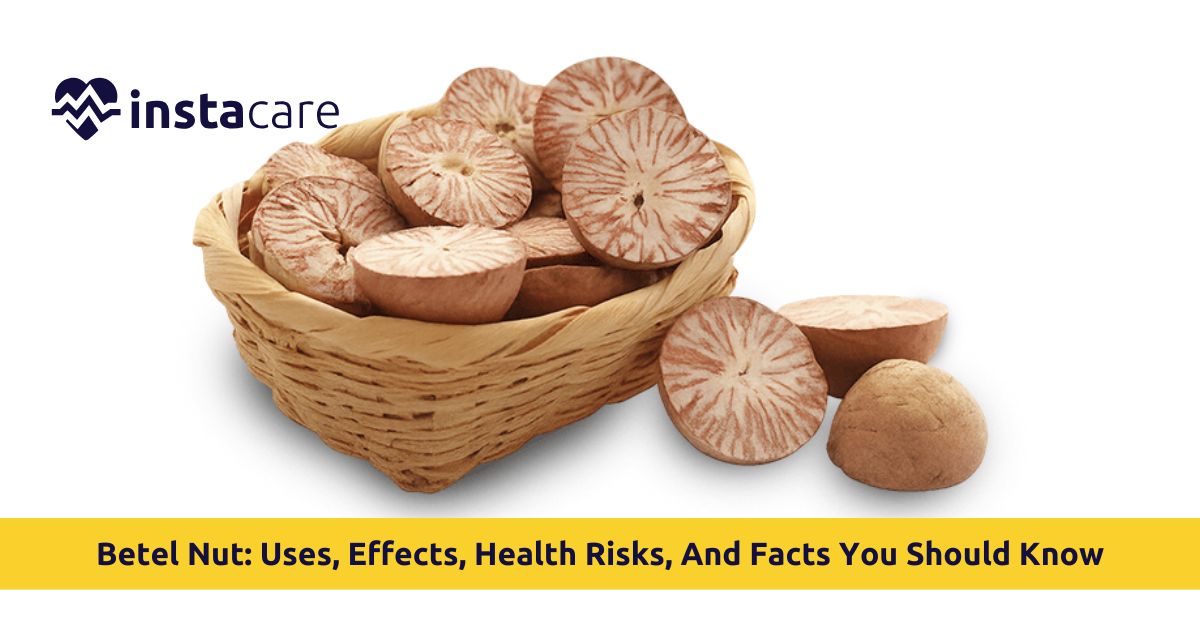
Betel nut is regarded as one of the widely used psychoactive drugs in the world particularly in South Asia, southeast Asia and the Pacific area. Betel nut chewing is a deep rooted tradition and culture as well as an everyday life aspect in countries such as betel nut in Pakistan, India, Bangladesh and Sri Lanka. It is mostly consumed in the form of paan, supari, gutka, or mixed dishes.
Nevertheless, even though it is widely accepted, long term consumption of betel nut is severe in its effects on health. This is due to traditional use or neutrality as many people believe that it is harmless although medical research points out otherwise. This paper describes what betel nut are, its cultural applications, its impact on the body, health hazards, its addictive properties, and how it can be safely quitted.
What Is Betel Nut?
Betel nut or areca nut is the seed of the areca palm (Areca catechu). It is commonly confused as a nut, although it is a seed, botanically speaking. Betel nut can be either eaten alone or packed in a betel leaf with slaked lime, sweeteners, spices or tobacco.
This is a chewing habit referred to as betel nut chewing. Active compounds like arecoline which are stimulants at the central nervous system are contained in the nut. It is these chemicals that cause the alertness and mild euphoria that are experienced by the users.
Traditional and Cultural Uses
Betel nut is a centuries-old cultural practice among the Asian cultures and it is closely associated with social practices.
- A gift given to guests in order to show respect and hospitality.
- Worn in weddings, religious and celebrating events.
- Theoretically thought to help digestion after eating.
- Popularly used when people are on socializing and breaks.
In Pakistan, betel nut uses has become common in paan shops and stalls where it is commonly sold as either flavored supari, or combined with tobacco-based products. Because of its cultural acceptability, it is used by a lot of individuals at a tender age.
Effects of Betel Nut on the Body
Health influences of betel nut begin to manifest immediately after eating and it has an impact on various body systems.
Short-Term Effects
- More vigilant and full of vitality.
- Feeling of mild euphoria
- Rapid heart rate and blood pressure.
- Salivary overflow.
- Reduced appetite
These immediate effects can be pleasant hence prompting repetition.
Long-Term Effects
- Dependency and addiction
- Damage to oral tissues
- Greater exposure to long term diseases.
- The mental and physical health suffers.
The regular use of arecoline over stimulates the nervous system, as well as leads to irreversible health damage in the long run.
Read More: Tiger Nuts Benefits Sexually
Health Risks of Betel Nut
Betel nut consumption over the long run is associated with severe health issues, a large number of which cannot be reversed.
Betel Nut Oral Health Effects
The most affected is the mouth:
- Tooth discoloring yellow or brown.
- Persistent bad breath
- Gum disease and tooth loss
- Mouth ulcers and infections
Other Health Risks
- Risk of oral and throat cancer is high.
- Other Health Risks
- Raised esophageal and stomach cancer likeness.
- Hypertension and cardiovascular disease.
- Liver damage
- Digestive disorders
- Weakened immune system
Areca nut is categorized into carcinogen by the World Health Organization which means that it can cause cancer without tobacco.
Betel Nut and Addiction
Betel nut addiction is a problem that is very serious and overlooked. Arecoline has a stimulant effect which causes nicotine-like dependency. Typical indications of addiction are:
- Ahidic desires of betel nut.
- When not chewing, irritable or restless.
- Impossibility of focusing without it.
- Using the product despite the warnings of health.
Since betel nut is socially accepted, nobody realizes the addiction until serious health problems emerge.
How to Quit Betel Nut Safely?
You need to think of giving up betel nut at once when you notice:
- White, reddish-pink or black patches in the mouth.
- Soreness or pain during eating.
- Impossibility to open the mouth completely.
- Bleeding gums or loose teeth
- Constant desire to chew betel nut.
Permanent damage can be avoided by early diagnosis and cessation of the habit.
How to Quit Betel Nut Safely?
Betel nut chewing can be difficult to quit but with the appropriate plan, it becomes easy.
- Step by step decrease daily intake.
- Eliminate situations and places that precipitate the habit.
- Switch betel nut with gum free of sugar or healthy snacks.
- Keep a good oral hygiene.
- See a dentist or doctor on a regular checkup.
- Consult with the help of an expert or a counselor in case of serious addiction.
- Family and friends are important sources of support in successful quitting.
Conclusion
Despite the cultural and traditional importance and applications of the betel nut, its negative impacts are more than the perceived positive impacts. Betel nut has been shown scientifically to be associated with addictiveness, oral diseases and various cancers. Guaranteeing awareness, use reduction, and complete cessation would significantly enhance the health in the long term. Betel nut is a type of nut that requires informed decisions to make living a healthier future.
Book an appointment with the best Gynecologist in Lahore, Karachi, Islamabad, and other major cities through InstaCare. You can also call 0317-1777509 to connect with a verified doctor. Use the button below to book now.