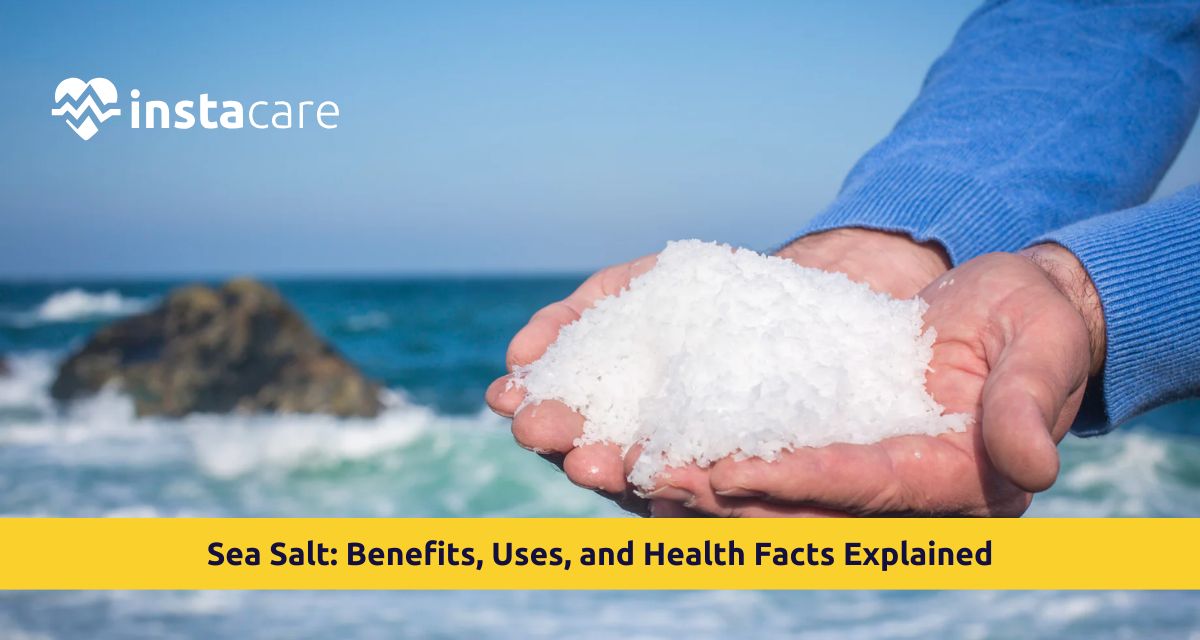
Salt has been a food additive since time immemorial, with its preservative property as well as flavour. Possibly, one of the modern nutrition topics is the emergence of sea salt as a natural substitute of refined salt. Most individuals relate it with superior quality, reduced additives, and add minerals. It is also necessary to comprehend the actual sea salt benefits and its nutrition and potential risks to make better food choices. Sea salt can be included in a nutritious diet when it is used sparingly and correctly and it does not specify more nutritional priorities.
What Is Sea Salt?
Sea salt is formed by evaporating the seawater or by natural means of sunlight or artificial heating. It normally has little processing as compared to refined salt. This aids in preserving its natural texture and slight variations of flavors. The main distinguishing features of sea salt are:
- Crystals coarser than refined salt.
- Natural difference of color based on origin.
- Less processing or minimal additives.
- Peculiar taste profiles according to mineral traces.
Due to its mode of production, people tend to prefer sea salt because it offers them less processed food.
Nutritional Profile Of Sea Salt
Nutritionally, sea salt nutrition is not complex but it is frequently misunderstood. Sodium chloride is the main component of sea salt and is essential in the balance of fluids, nerve impulses and muscle activity. Mineral composition can comprise:
- Sodium (primary component)
- Magnesium
- Calcium
- Potassium
- Iron (trace amounts)
These are the naturally occurring sea salt minerals, which add to the taste, although in very small amounts. One should not regard sea salt as an important source of daily minerals because it can be replaced by whole foods, such as fruits, vegetables, and dairy.
Key Benefits Of Sea Salt
Sea salt when taken in moderation can have a number of functional and culinary benefits.
Promotes Electrolyte Balance
Sodium plays a critical role in the control of hydration and muscle contractions. Sea salt contains sodium naturally which helps in sustaining these physiological functions, particularly on physical exercise.
Enhances Natural Flavor
The overall texture of sea salt and its light mineral flavor can add more flavor to the food, as it is usually more conducive to thoughtful seasoning than to overeating.
Minimal Processing
Sea salt has fewer processing stages than refined salt and this is attractive to people who want to reduce highly processed foods in their diets.
Culinary Versatility
Sea salt for cooking is popular because of its high dissolution in cooking, and its capacity to provide mouth feel when it is sprinkled on dishes.
Read More: Sendha Namak: Health Benefits, Uses, and Nutritional Secrets of Rock Salt
Sea Salt Vs Table Salt
Whether it is the sea salt vs table salt they tend to debate on health distinctions but both are similar in their chemical composition. Main differences include:
- Refining: Table salt is highly refined and sea salt is slightly refined.
- Iodine: Table salt is typically iodized; sea salt is not often so.
- Feel: Sea salt is coarser in nature.
- Tasting: Sea salt can be more complicated in taste.
The fortification of table salt with iodine helps to prevent thyroid diseases and users of sea salt have to take care of the iodine consumed through alternative sources.
Possible Side Effects And Risks
Although it is a natural image, high consumption of salt of any kind may not be healthy. It is imperative to know sea salt health effects. Potential risks include:
- High blood pressure caused by sodium excess.
- Increased strain on kidneys
- Excessive retention of fluid and bloating.
- Possibility of lack of iodine in case the sea salt will substitute iodized salt completely.
Sea salt does not contain less sodium than the table salt, and therefore portion control is essential.
Choosing The Right Sea Salt
High-quality salt is not just the matter of looks or advertising. Sea salt is normally desired in its purest form, yet quality and safety remain important. Tips for choosing sea salt:
- Check source and method of harvesting.
- Select foods, which are of a good brand.
- Take into account grain size depending on the needs of cooking.
- Make sure that Iodine is consumed in other foods when non-iodized salt is used.
Eat the right diet and the salt you consume does not matter.
How Much Sea Salt Is Safe to Consume?
It is important to use salt moderately. Although a special guideline on sea salt exists, general sodium guidelines can be used. It is advisable to check the sea salt daily intake to avoid long-term health risks. The healthy eating habits involve:
- Restricting processed and packed foods.
- Consuming food without salt.
- Replacing salt use with herbs and spices.
- Being within acceptable levels of sodium.
- Salt must not rule food, ruling food.
Conclusion
Sea salt is a tasty, low calorie, and low-processed seasoning that can be incorporated into a healthy diet when consumed in moderation. Answer to is sea salt healthy? Although it has trace minerals and is also culinarily appealing, it does not make it much healthier than other forms of salt. In the case of sea salt being healthy, it is moderated, the quality of the entire diet, and the sufficient level of iodine in the diet. When consumed consciously, sea salt can be used to supplement other healthy food without posing a danger to health, which is the key aspect.
Please book an appointment with the Best Nutritionist in Lahore, Karachi, Islamabad, and all major cities of Pakistan through InstaCare, or call our helpline at 03171777509 to find the verified doctor for your disease.