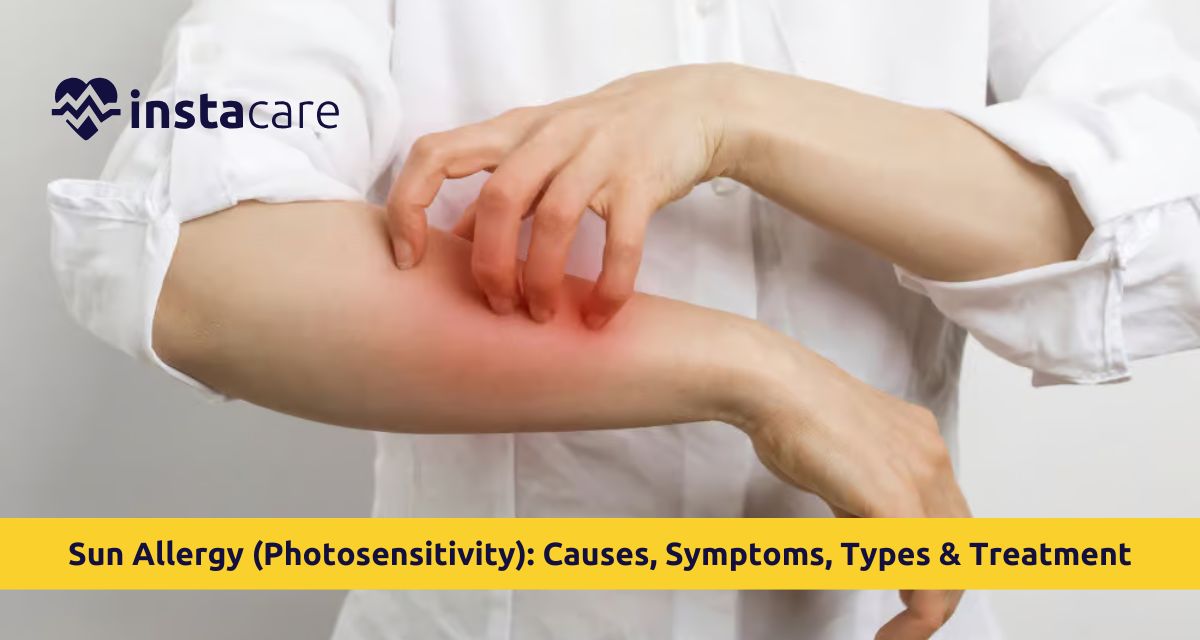
What Is Allergy to the Sun (Photosensitivity)?
A sun allergy rash develops when the body system responds to the ultraviolet (UV) rays of the sun in an abnormal manner. The reaction may cause inflammation, causing red, itchy, or blistered skin. Individuals with sun sensitivity skin can experience flare-ups within a short time of being out in the sun. Sun allergy may manifest itself on any part of the body, such as the arms, chest, neck, and especially the face- otherwise known as sun allergy on the face.
Common Types of Sun Allergy
There are a number of different sun induced skin allergies, having their distinctive triggers and manifestations:
The Polymorphic Light Eruption (PMLE):
- The majority of allergies to the sun.
- It is a red itchy blister or bumps and this appears when one has been exposed to the sunlight.
- It normally happens during spring or summer.
Solar Urticaria:
- Hives develop quickly on exposure to the sun.
- May be dangerous and result in burning or stinging pain.
Actinic Prurigo:
- Onset of chronic sun allergy in childhood.
- It is marked by extremely scratchy rashes.
Photoallergic Reactions:
- Instigated by topical agents such as perfumes or some sunscreens.
- Causes photosensitive skin disorders that are delayed.
Drug-Induced Photosensitivity:
- Some drugs make one more vulnerable to reactions of the sun.
- These drugs are generally antibiotics, diuretics, and NSAIDs.
Causes and Risk Factors of Sun Allergy
Sun allergies are the result of an improper reaction of the immune system to UV radiation. The important causes and risk factors are:
- Genetics: PMLE or photosensitivity reaction in family history.
- Skin type: Fair-skinned people are at risk.
- Drugs: Photosensitizing drugs are dangerous.
- Topical products: Perfumes, deodorants or oils may cause reactions.
- Medical history: Autoimmune disorders or some metabolic disorders.
- Environmental factors: Seasonal sunlight and elevation.
Signs and Symptoms of Sun Allergy
Common signs include:
- Flushed, pruritic post-solar rash.
- Minor bumps, blisters, or hives.
- Pain on the afflicted regions during burning or stinging.
- Swelling of exposed skin
- Outbursts of mostly arms, neck, chest and face (face sun allergy)
- Temporary pain that can take up to several days.
There are those with mild symptoms and those with severe reactions that impact on their day-to-day life.
Read More: 7 Effective Sunburn Treatment Options
How is Sun Allergy Diagnosed?
Diagnosis is made by a mix of medical history, physical exam, and occasionally by lab tests:
- Extensive sun exposure history and symptom pattern.
- Skin test of the sun allergy rash characteristics.
- Phototesting to determine UV sensitivity.
- Photoallergic reactions can be excluded with patch tests.
- In uncommon instances, to identify underlying autoimmune or metabolic complications, blood tests are done.
The diagnosis at an early stage can prevent repeated exacerbations and minimize the threat of permanent damage to the skin.
Treatment Options of Sun Allergy
The management procedure requires the severity of the symptoms and the type of sun allergy:
- Topical corticosteroids: Decrease sun-exposure inflammation and scratching of Itchy rash after sun exposure.
- Antihistamines: Reduce itch and prevent hives.
- Immune-modulating creams: In severe or chronic cases.
- Phototherapy: Desensitisation of photosensitive skin disorders to gradually increase exposure of UV.
- Avoid triggers: Discontinue products that result in photoallergic reactions.
The mild cases can be resolved by mere protection, whereas the chronic or severe ones need to be under the control of a doctor.
Prevention and Sun Protection Tips
It is more advisable for Sun allergy prevention than cure it. Key measures include:
- Apply the highest SPF sunscreen with broad-spectrum coverage to sun allergy.
- Wear hats, protective clothing, and sunglasses.
- Restrict the use of the sun during the brightest periods (10 am -4 pm)
- Shade is to be sought where possible.
- Topical irritants: avoid exposure to the sun.
- Slowly raise sun exposure during the spring or following winter to curb PMLE flare-ups.
These should reduce the chances of skin allergy due to sun and keep the skin healthy.
Home Remedies and Lifestyle Management
The mild symptoms could be reduced with the help of natural remedies:
- Aloe vera gel to treat irritation.
- Cold compresses on inflamed regions.
- Baths in oatmeal to treat itching.
- Coconut oil as a skin repair and hydrator.
- Do not take hot showers and exacerbate sun-sensitive skin.
- Anti-inflammatory, antioxidant-rich diet.
To this end, medical treatments can be supplemented with these measures to those who are in need of knowing how to treat sun allergy in a natural manner.
When Should You See A Doctor?
Consult a dermatologist if:
- Rash is chronic or recurring.
- Symptoms disrupt normal functioning.
- Infection (pus, swelling, severe redness) is present.
- Antihistamines and OTC creams do not help to alleviate symptoms.
Early consultation is a guarantee to proper treatment and prevention of complications.
Sun Allergy vs. Other Skin Conditions
Sometimes, sun allergy may be confused with:
- Heat rash or prickly heat
- Contact dermatitis or eczema.
- Drug eruptions
- Other photosensitive skin diseases.
A dermatologist is able to distinguish between the two and prescribe the appropriate treatment.
Conclusion
Photosensitive skin and Sun allergies, such as PML,E can greatly influence life on a daily basis particularly during sunny seasons. It is important to identify the symptoms at the earliest stage, adhere to preventive steps, such as the Best sunscreen for sun allergy, and consult the doctor when necessary to manage the symptoms. By using a combination of medicines and natural remedies, the result will be relief and protection of the skin, as well as an opportunity to enjoy the sun and do it without pain.
Please book an appointment with the best Dermatologist in Lahore, Karachi, Islamabad and all major cities of Pakistan through Instacare, or call our helpline 03171777509 to find a certified doctor for your illness.