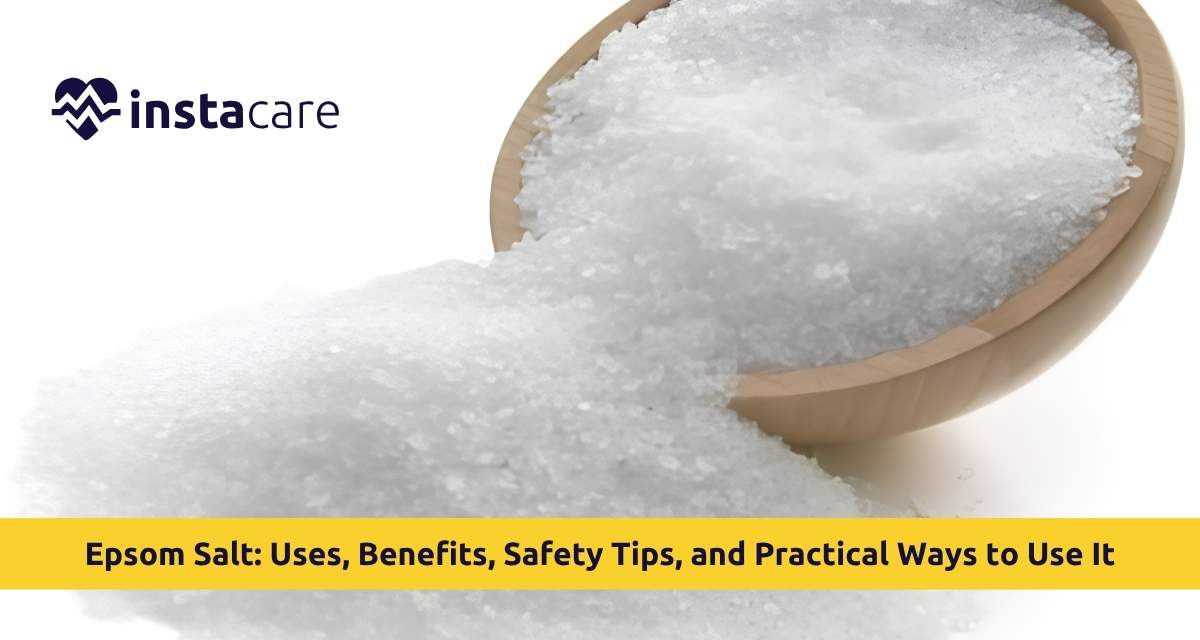
Epsom salt is a familiar item in many households, a common addition to bathrooms and home spas. It provides skin care help and can even help reduce the soreness in muscles and relax the mind. Despite the name, Epsom salt really isn't a salt. It is a compound of magnesium and sulfate. It's, in fact, a naturally occurring mineral. Epsom salt looks like table salt, but is actually different. This means it can be used in a way different from table salt. For example, it can be used in a lot of different types of baths, even foot soaks, and can be used in medicine. The goal of this post is to describe what Epsom salt is, as well as what it can do, the key points to consider when using Epsom salt, and other helpful ways to use Epsom salt to help wellness during the day.
What is Epsom salt?
Epsom salt is magnesium sulfate and comes from a saline spring in Epsom England, where Epsom salt was first distilled and got its name from. Unlike table salt, magnesium sulfate has many other benefits when it's used externally. Magnesium, which is one of the components of Epsom salt, is necessary for a lot of functions of the body like muscle and nerve function and energy production. Epsom salt can help with those things, as well as improve bone health.
Common Uses of Epsom Salt
Individuals often use Epsom salt in the following ways:
Epsom Salt for Bathing
When dissolved in a warm bath, Epsom salt helps soothe sore muscles and increases relaxation. Typically, 1–2 cups of Epsom salt is enough for a calming effect. Epidural salt may even alleviate the aches and pains resulting from labor.
Epsom Salt for Soaking Feet
Epsom salt is great for tired, enervated, and swollen feet. When added to a warm water basin, Epsom salt works best when left for 15–20 minutes of soaking time. Calluses can also be targeted and softened with the help of Epsom salt.
Epsom Salt for Exfoliating
Rough skin from knees, elbows, and heels can be a nuisance and treated with Epsom salt. Mixed with water or oil, rough skin on those areas can be treated to a milder form of scrubbing.
How to Use Epsom Salt Safely?
Using Epsom
salt is not without risks. It is recommended to use Epsom salt with a measure
of caution.
For a Bath
- Warm water
with a cup to a cup and a half of Epsom salt for 15m–20m.
- Post-bathing,
a moisturizer should be used to combat skin dryness.
- Avoid hot water and stay hydrated.
Foot Soaks
- Mix warm
water with half a cup of Epsom salt.
- Soak for
15-20 minutes and dry completely.
- Avoid soaks on open cuts and infected areas.
Oral Use
- Use Epsom
salt with labels that indicate that they are for swallowing.
- Follow the labels for the dosage. If the salts are taken in large amounts they can cause stomach irritation, lead to dehydration, and cause diarrhea.
Consult a doctor if you have any kidney issues, chronic bowel problems, or if you take any other medications. Epsom salts for the bath, which are sold in stores for cosmetic purposes or for soaking the body, should not be swallowed.
Benefits and Limitations of Epsom Salt
Epsom salt
can be a great addition to wellness and self-care routines. Here are some
benefits.
- Relief and
Relaxation: Warm water mixed with Epsom salt makes a calming bath that is great
to help ease tension.
- Muscle Care:
Epsom salt is a great way to help ease minor aches and stiffness that occur
after workouts.
- Self-Care:
It makes a great exfoliant and helps to soften rough skin.
- Foot Care: If your feet get swollen and sore after a long day at work, Epsom salt can help.
- Caring for Yourself: Epsom salts are easy to find at your local drug store and grocery, making it a cheap option for self-care.
Limitations
- It's said
that magnesium cannot be easily absorbed through skin, which is of limited
evidence.
- It is not a substitute for medical management of chronic pain, severe constipation.
- Taking too many baths with Epsom salt can irritate the skin.
DIY Tips for Epsom Salt Baths
Try these
bath ideas to make the most of your Epsom Salt routine:
- Relaxing
Lavender Bath: Combine 1 cup Epsom Salt with warm water and add a few drops of
Lavender Essential Oil.
- Muscle
Recovery Soak: Combine 2 cups of Epsom salt with 1/2 cup of baking soda in warm
water.
- Refreshing Foot Soak: Combine Epsom salt and a few slices of lemon or a couple drops of peppermint oil in warm water.
Tip: Always test essential oils on a small patch of skin first to ensure no allergic reaction occurs.
Conclusion
Epsom salt
is a fantastic addition to self-care routines and can help relieve stress in
the body. Beloved by many for the soothing properties to make relaxing baths
and foot soaks, Epsom salt is great for unwinding the body. Although it is not
a cure-all, it helps relieve minor issues and be an inexpensive and easy option
to add to your self-care. You can incorporate Epsom salt into your daily
routines for relaxing and skin care.
Epsom salt should be used with caution. If using it internally, seek professional consultation. Also beware of your skin's sensitivity when using Epsom salt in baths and scrubs. It can easily be incorporated into your wellness routine with the right approach.
Please book an appointment with the best Dermatologist in Lahore, Karachi, Islamabad, and all major cities of Pakistan through InstaCare, or call our helpline at 03171777509 to find a verified doctor for your disease.