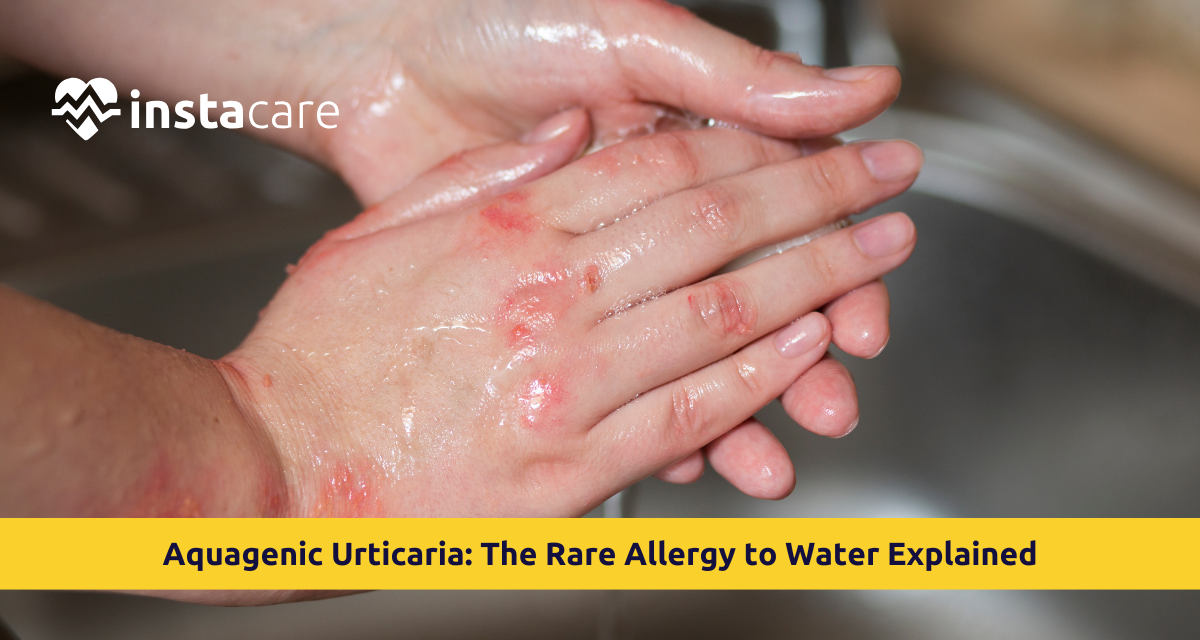
As such, water is not actually an allergen, but the body responds to it in a disastrous way. Owing to this fact, the condition is classified under the dermatological allergic reactions, and regarded as one of the rarest chronic urticaria conditions. Knowledge of its symptoms and causes and management techniques can enable individuals to live with this strange skin hypersensibility disorder.
What Is Aquagenic Urticaria?
Aquagenic urticaria is a type of physical urticaria whereby contact of water causes itchy hives or skin irritation. The response is normally seen within minutes upon exposure and may take between 30 minutes to hours. Patients tend to find it difficult going about their daily engagements since exposure to water is inevitable. Even the natural body moisture such as that of sweat or even tears can trigger the symptoms.
Major features of aquagenic urticaria are:
- Changes in the skin that happen fast upon exposure to water and hence itching and reddening occur in minutes of exposure to water.
- Formation of small red hives or welts, usually forming in areas of the chest, arms, neck or back on coming into contact with water.
- The symptoms that do not depend on the type of water, that is, the reaction may take place with rainwater, tap water, sweat, or even tears.
It is a very uncommon condition, which can have a great impact on both the quality of life and comfort every day.
Symptoms of Aquagenic Urticaria
Symptoms normally occur soon after the contact with water on the skin. Itching following exposure to water is one of the most frequent complaints that may be severe and unpleasant.
Individuals having this condition can exhibit:
- Constant itching and irritation of the skin, usually beginning within several minutes of exposure to water and lasting until the skin is fully dry.
- Redness and raised hives, where small bumps or welts can be found on the areas of the affected skin and can be inflamed or even warm.
- Burning or stinging pains especially when a large part of the body comes in contact with water like during bathing or swimming.
The symptoms tend to fade away with time, although, with frequent exposure, the discomfort can be frequent.
What Triggers Aquagenic Urticaria?
Throughout, unlike most allergies caused by chemicals or food, aquagenic urticaria reactions arise as a result of water coming in contact with the skin. This complicates the process of preventive triggers.
Common triggers include:
- Bathing or showering, exposure to water over a long period of time can result in hives or itching all over the body.
- In pools, lakes or oceans, as no difference in the reaction is determined by whether the water is fresh, salty, or chlorinated.
- During exercise or hot weather, when it is not even in touch with water, it may cause itching and irritation due to sweating.
Symptoms may also be provoked by environmental exposure of sensitive people like rain or humidity.
Read More: Glow Up Your Skin - Incredible Ways To Use Glycerin For Skincare
Causes and Risk Factors
Aquagenic urticaria is not well understood about its etiology. Nevertheless, scientists suppose that it can be a reaction of water and the materials contained on the skin.
The following may be the reasons:
- The reactions on the skin surface which are chemical reactions involving the interaction of water with natural oils or compounds and leads to an immune response.
- A release of histamine in the body just as in other forms of chronic urticaria, results in itching, reddening, and swelling.
- Exposure of the sensitive skin to nerve stimulation which can result in inflammation and irritation when water enters the outer layer of the skin.
The condition may manifest in adolescence or early adulthood, but it may come at any age.
How Aquagenic Urticaria Is Diagnosed
Aquagenic urticaria diagnosis requires the consideration of a dermatologist or allergy specialist. The physicians tend to start with a conversation of the symptoms exhibited by the patient and pattern associated with water exposures.
Diagnosis may involve:
- Evaluation of medical history, in which the doctors are required to ask specific questions related to Itching after water exposure and other skin reactions.
- This is known as water challenge test, in which a cloth dipped in water is applied on the skin to see if hives will form.
- Further skin tests, which allow eliminating other skin hypersensitivity disorders that can also cause the same symptoms.
The correct diagnosis will help in the correct identification of the condition and its control.
Treatment Options
Though, aquagenic urticaria has no permanent cure, some therapies can be used to minimize the symptoms and provide a better feeling.
Doctors often recommend:
- Antihistamine drugs, which are used in the management of itching and inflammation by blocking the secretion of histamine in the body.
- Protective lotions or barrier creams, which are put in place before coming into water so as to minimise direct skin contact.
- Light therapy (phototherapy) which can be used to reduce skin sensitivity in a few patients.
The modes of treatment differ with the severity of the symptoms and the response of the individual to treatment.
Living with Aquagenic Urticaria
This condition can only be managed through lifestyle modification in order to minimize water-related triggers. Though being totally dry is not possible, there are some methods which will allow controlling the symptoms.
Some of the useful lifestyle habits are:
- Showering or bathing less, limiting the amount of time that water is in contact with the skin.
- It would be better to use lukewarm water instead of extreme temperatures that could help reduce irritation.
- Use of moisturizers/protective cream, which forms a protective layer and helps in Managing aquagenic urticaria.
Through adequate care and medical counseling, some people are taught to cope up with symptoms.
When to See a Doctor
Any person who in most cases itches or has hives when exposed to water should seek medical consultation. Even though aquagenic urticaria is rare, other skin conditions which are to be treated may have similar symptoms.
You need to visit a doctor when:
- Whenever the skin is in contact with water, the skin will react every time. This happens when the skin is in contact with water in the form of bathing, sweating or when it is exposed to rain.
- Symptoms get extreme or painful, and it is not easy to perform daily activities.
- There is swelling or general hives, which can signify a more critical allergic response.
Early diagnosis will assist in the treatment and management of my symptoms.
Conclusion
Aquagenic urticaria is one of the least common dermatologic allergic reactions, resulting in itching and hives following the exposure to water. Although the condition might be considered as an abnormal situation, it is a known type of skin hypersensitivity disorder. Even though it has no lasting cure, treatment can be done with the help of antihistamines, protective skincare and lifestyle changes that can alleviate the discomfort. This condition can be effectively treated through medical assistance and adequate awareness; thus, patients have a chance to cope with the symptoms and enjoy a high quality of life.
Please book an appointment with the best Dermatologist in Lahore, Karachi, Islamabad, and all major cities of Pakistan through InstaCare, or call our helpline at 03171777509 to find a verified doctor for your disease.