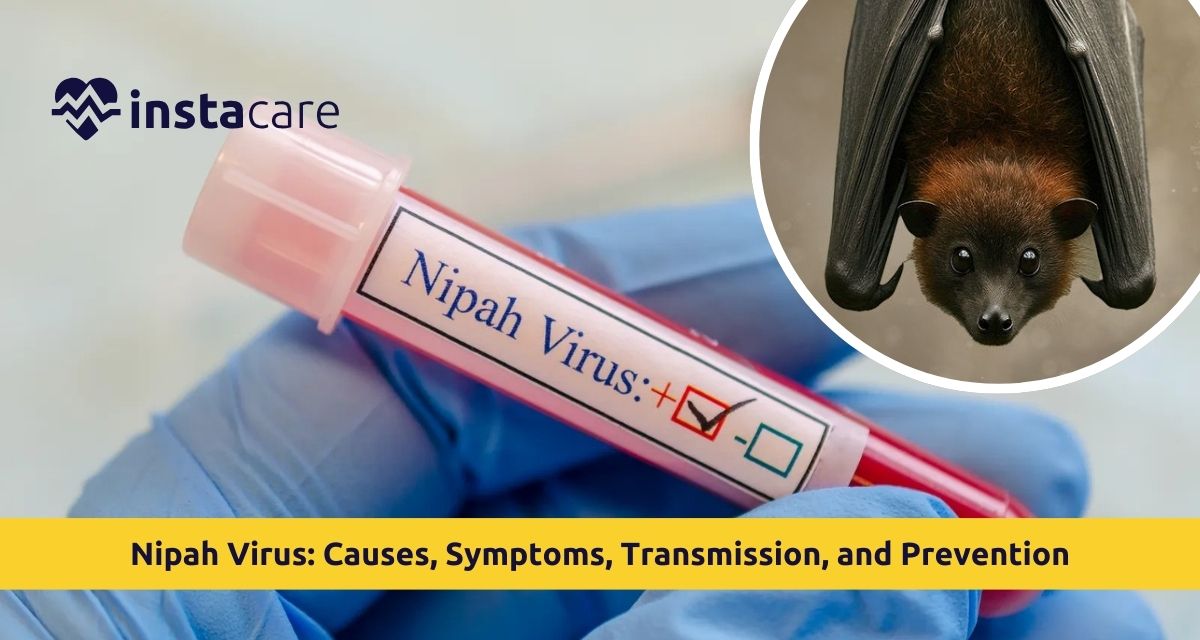
Nipah virus is a lethal zoonotic virus that can be spread between animals, and in some circumstances, it may also be transferred to humans. It has also been blamed for creating a severe respiratory illness and fatal brain oedema, and epidemics have been reported primarily in South and Southeast Asia. The Nipah virus is considered to be one of the biggest health challenges in the world, as the mortality rate is very high and there is no licensed vaccine to battle the virus.
The causes of the Nipah virus outbreak, the modes of transmission, the clinical manifestations, and the means of preventing it must be well known to minimise the risk of outbreaks and improve the response.
What Is the Nipah Virus?
Nipah virus is a paramyxovirus classified in the genus Henipavirus. It was initially identified in 1998 when it erupted in Malaysia, in which the pig farmers fell seriously ill. The significant peculiarities of the Nipah virus include:
- It is an animal-to-toxic virus (zoonotic virus).
- It can infect the respiratory system and the brain.
- It has Nipah virus high mortality rate.
- There is currently no approved Nipah virus vaccine.
Nipah virus can cause large-scale outbreaks; therefore, it is considered a priority pathogen by the World Health Organization (WHO).
Nipah Virus Causes
The Nipah virus predominantly infects fruit bats, particularly those in the genus Pteropus, or flying foxes. These bats can be infected with the virus and may have no symptoms. The average causes of the Nipah virus are:
- Eats or beverages contaminated with bat saliva or urine.
- Close interaction with sick animals like pigs.
- Close physical contact with the bodily fluids of infected human beings.
Human infection is common when preventive measures are not adhered to, particularly in settings where bats and humans coexist closely.
Nipah Virus Transmission
There are various ways that the Nipah virus transmission can take place, which is particularly threatening during outbreaks. Included among the major modes of transmission are:
- Animals to humans: Infected livestock or bats.
- Foodborne: The ingestion of raw date palm sap that has been contaminated by bats.
- Human to human: Face-to-face contact with respiratory secretions, blood, or body fluids.
- Healthcare-associated infection: Infection control practices.
There have been cases of human-to-human transmission of the disease, particularly in outbreaks involving family members and healthcare professionals.
Symptoms of Nipah Virus Infection
The symptoms of the Nipah virus infection may be mild to severe, and they may manifest themselves 5-14 days after exposure. Early symptoms may include:
- Fever
- Headache
- Muscle Pain
- Fatigue
- Sore Throat
Severe symptoms may include:
- Acute respiratory distress
- Difficulty breathing
- Disorientation or distorted cognition.
- Seizures
- Brain inflammation (encephalitis).
In most instances, the disease advances very fast, thus causing a coma in a few days. Survivors may develop neurological complications over the long term.
Nipah Virus Mortality Rate
The Nipah virus mortality rate is very high compared with that of most other viruses. There are reported fatality rates of between 40% and 75, based on the outbreak, access to healthcare and early diagnosis. Some of the causes of mortality include:
- Late medical attention.
- The intensity of neurological symptoms.
- Access to intensive care services.
- The patient's age and underlying health conditions.
Given the high mortality rate, it is important to identify it as early as possible and implement control measures.
Diagnosis of Nipah Virus
Diagnostic features of Nipah virus infection are problematic due to the fact that the first symptoms are similar to those of typical viral diseases. Diagnostic methods include:
- Tests based on reverse transcription polymerase chain reaction (RT-PCR).
- Enzyme-linked immunosorbent assay (ELISA).
- Isolation of the virus in special laboratories.
The virus is normally tested in high-biosafety laboratories since it is infectious.
Nipah Virus Treatment
At present, no definitive Nipah virus treatment exists in the form of an antiviral drug. The management It is primarily supportive and aims to minimise complications. The treatment modalities involve:
- Intensive care unit supportive care.
- Mechanical respiratory failure ventilation.
- Treatment of convulsions and neurological signs.
- Strict infection control measures.
Monoclonal antibodies and antiviral drugs are also being tested, although they have not yet been approved for general clinical use.
Nipah Virus Vaccine Status
At this point, no Nipah virus vaccine has been licensed for use by citizens. Nonetheless, they continue their vaccine research because the virus has the potential to cause a pandemic. Current efforts include:
- Preclinical and early clinical trial of experimental vaccines.
- Studies of monoclonal antibody treatment.
- International partnerships initiated by WHO and research facilities.
Prevention is the best offense, until the introduction of a vaccine.
Nipah Virus Guidelines and Prevention
Nipah virus guidelines are considered essential in the prevention of outbreaks and the containment of the spread.
The major prevention strategies are:
- It is necessary to avoid drinking raw or unprocessed date palm sap.
- Rinsing of fruits and avoiding half-eaten fruits.
- Reducing interaction with sick animals and bats.
- Wearing personal protection gear in healthcare.
- Isolating the infected on time.
Education to the community and ensuring awareness of the people are significant in prevention, particularly in high-risk areas.
Public Health Response and Surveillance
Nipah virus outbreaks have to be detected at an early stage with proper surveillance systems. The strategies of public
health involve:
- Infection surveillance of the animal populations.
- Quick contact tracing in outbreaks.
- Infection control of healthcare workers.
- Risk communication and community involvement.
Well-established public health infrastructure contributes to minimizing outbreak levels and spread.
Long-Term Effects in Survivors
The victims of Nipah virus infection could have long term health issues. Potential long-term complications are:
- Long-term impairments in the nervous system.
- Problems with memory and concentration.
- Seizure disorders
- Alterations in personality or behavior.
Mechanical follow-ups and rehabilitation is necessary most of the time.
Conclusion
The Nipah virus is among the most threatening emerging infectious diseases because it has high mortality rate, various ways of transmission and no approved vaccine. Knowledge of the causes of Nipah virus, its modes of transmission, its symptoms, and prevention measures is important for mitigating its effects.
Until the availability of effective treatments and vaccination, the best means of protecting people and eliminating future outbreaks are strict compliance to the Nipah virus rules, early identification and community education.
Please book an appointment with the best General Physician in Lahore, Karachi, Islamabad and all major cities of Pakistan through Instacare, or call our helpline 03171777509 to find a certified doctor for your illness.