What Determines Hair Type?
The nature of hair is a subject of psychological, biological and environmental factors. Although the largest influence is the genetic factor, lifestyle and hair care practices can also influence the behaviour of hair with time. The determinants of the type of hair are:
- Shape of the hair follicle
- Scalp oil production of the scalp is natural.
- Hair strand diameter
- Uptake and loss of moisture in hair.
- Hormonal changes and aging
All those factors make the foundation of classifying hair types that are commonly depicted graphically in a hair types chart.
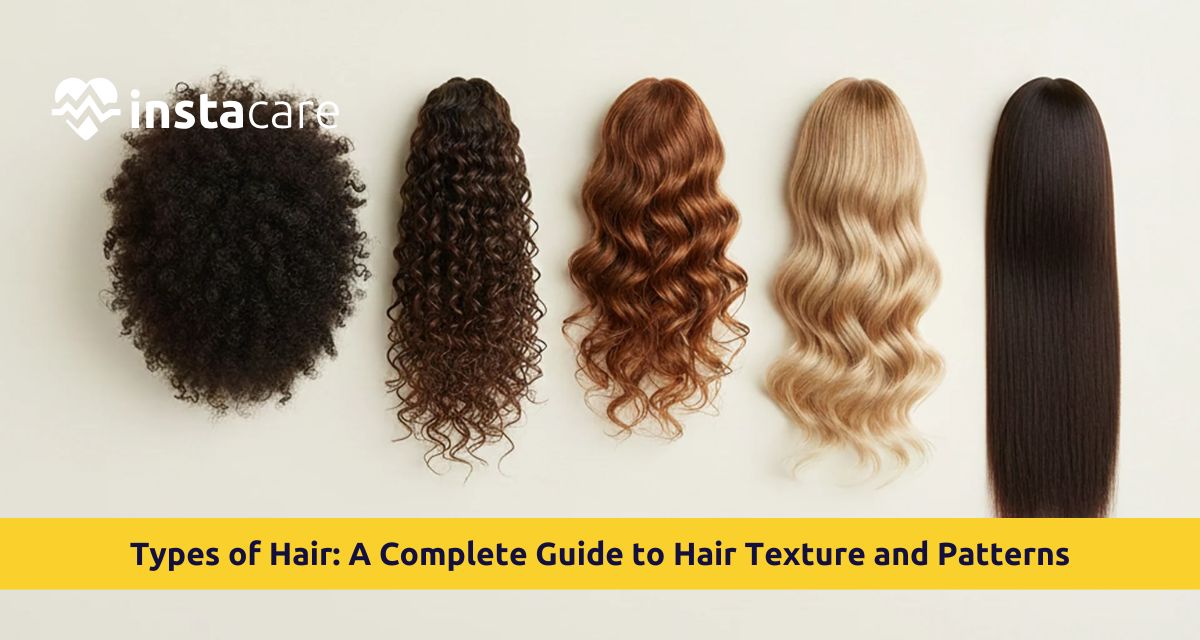
Main Types of Hair Based on Texture
Hair texture is described as the natural shape or pattern of the hair strand. This is the most standard method of categorizing the hair texture types.
Straight Hair Type
The straight hair type lacks the natural curl or wave and it is easy to reflect light thus appearing shiny. Common characteristics:
- Smooth and sleek texture
- Oil flows readily all the way to the ends.
- Can appear flat or limp
- Oily hair compared to other hair types, gets oily.
Straight hair does not need heavy products as they may accumulate.
Wavy Hair Type
The wavy hair type combines straight and curly hair, whereby there are loose S-shaped waves.
Key features:
- Half-wavy and not in tight curls.
- Can be prone to frizz
- Straight hair cannot compete with styles.
- Requires balanced moisture
Wavy hair will respond to soft styling products and moisture-oriented products.
Curly Hair Type
The curly hair type is in the form of curls or spirals and is more volumized.
Common traits:
- Naturally arid because of difficulties in oil distribution.
- Prone to frizz and breakage
- Strong curl definition
- Needs regular moisture
Knowledge of the hair curl patterns assists in deciding on routines that help in curling it.
Coily Hair Type
The coily hair type is highly curled or in zig zags and is also the most delicate type of hair.
Characteristics include:
- Massive and bulky look.
- Highly prone to dryness
- Dries considerably.
- Needs heavy moisture and delicacy.
Coily hair is used to protective styles and deep conditioning.
Read More: Hair Loss - Symptoms Causes and Treatment
Hair Types Based on Thickness
Hair thickness is the thickness of the individual strands which is frequently explained as fine vs thick hair.
Fine Hair
- Thin individual strands
- Burdened down easily by products.
- Prone to breakage
Medium Hair
- Balanced thickness
- Holds styles well
- Less fragile than fine hair
Thick Hair
- Wide individual strands
- Strong and resilient
- Can feel coarse or heavy
The aspect of thickness has a significant role to play in the behavior of hair with respect to styling and products.
Hair Types Based on Porosity
Hair porosity types determine the ability of the hair to absorb and retain moisture.
Low Porosity Hair
- Water sits on the surface
- Waterproof.
- The accumulation of the products is easy.
Medium Porosity Hair
- Sorbs and is highly absorbent.
- Easiest to manage
- Reacts to majority of the treatments.
High Porosity Hair
- Absorbs moisture quickly
- Loses moisture just as fast
- Much of the time broken or treated with chemicals.
Porosity influences the response of hair to the conditioners, oils, and treatments directly.
Scalp Types and Their Role
This begins with a healthy scalp which translates to healthy hair. The type of scalp also determines the level of oil production and the state of the hair. Common scalp types include:
- Oily scalp
- Dry scalp
- Combination scalp
- Sensitive scalp
Scalp based product selections enhance the health of hair in the long term.
Common Hair Problems by Hair Type
There are problems with each type of hair. Common issues include:
- Straight hair: greasy and no volume.
- Hair: split and unruly.
- Hair: Curly, dry, and split.
- Coily hair: loss of length and drying up.
Knowing hair types and care is the way to avoid such issues.
Choosing the Right Hair Care Routine
A customized hair type routine is a must to have healthy hair.
General care tips include:
- Using sulphate-free shampoos
- Training on a regular basis depending on hair texture.
- Shunning of extreme heat styling.
- Deep conditioning of dry hair types.
- Defensive hair styles against delicate hair.
The hair texture and porosity should always be in tandem with the hair care routines.
How to Identify Your Hair Type at Home?
It is easy to know the type of hair just by making a few observations at home.
Procedures of how to identify hair type:
- Shower and do not use any hair products.
- Note natural texture, pattern of curl.
- Finger feeling Thickness of the strand.
- Test water to test porosity.
These are the steps that guide in choosing your natural hair features.
Conclusion
Hair is not identical and no two locks of hair are identical. Knowing your hair texture, thickness, porosity and that of your scalp type enables you to create an effective and sustainable hair care routine. In the case of straight, wavy, curly, or coily hair, knowledge will result in better healthier hair. Knowing about the hair types for men and women is empowering to make better decisions and confidence in hair in the long run.
Please book an appointment with the best Dermatologist in Lahore, Karachi, Islamabad, and all major cities of Pakistan through InstaCare, or call our helpline at 03171777509 to find a verified doctor for your disease.