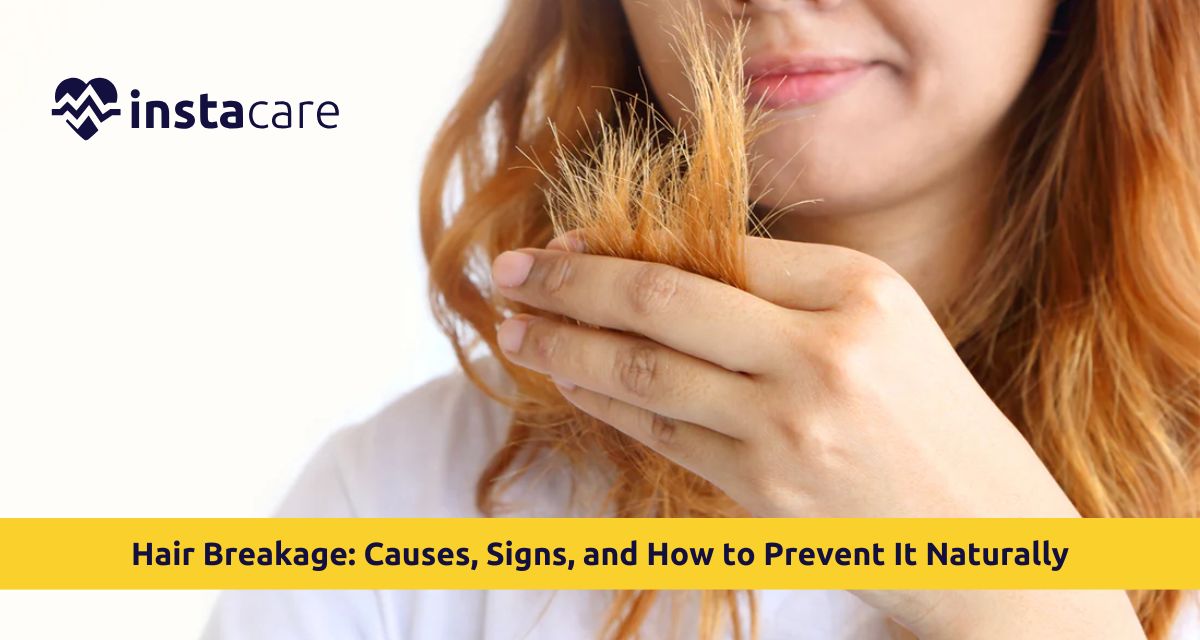
Hair breakage is a common hair issue that affects people of all ages. As opposed to the hair falling at the roots, breakage happens when the hair strands lose their strength and break down along the hair shaft resulting in hair of uneven length, frizz, and split ends. Hair damage can be a major cause by factors like poor hair care habits, environmental stressors, and nutritional deficiencies amongst others. This knowledge of the factors that cause hair breakage, as well as the means of prevention of its occurrence is bound to help restore the strength of the hair and the overall beauty.
What Is Hair Breakage?
Hair breakage is a condition when the strands of hair in the
hair structure break or snap because it is weakened. It usually occurs when the hair shaft becomes dry, loses elasticity, or loses its protein balance.
The hair which breaks easily is usually dry, rough, and weak.
Hair breakage, on the contrary, does not involve the hair follicle as is in the case of natural shedding. It occurs when the hair becomes so feeble that it cannot withstand daily styling, brushing or weathering. Hair breakage is particularly common among those who regularly use heat tools or undergo chemical processing.
Common Causes of Hair Breakage
There are several internal and external factors that can weaken hair strands and cause breakage. Common causes include:
- Overheating of hair: Using of straighteners, curlers and
blow dryers regularly.
- Over-brushing/ rough handling: This is the hair breakage from brushing wet or tangled hair.
- Chemical treatments: perming, relaxing, bleaching and hair colouring.
- Dehydration: Scalp and strands of hair that is likely to break.
- Environmental exposures: Sunburn, pollution, wind and hard water.
- Nutritional deficiencies: Reduced protein, iron, zinc or vitamins intakes.
- Tight hairstyles: ponytails, braids, or buns that tug on the hair shaft.
To prevent hair breakages, it is necessary to identify these causes.
Signs and Symptoms of Hair Breakage
Hair breakage is characterized by textural and visible
appearance. Common signs include:
- Uneven hair length
- Split ends and frayed tips
- Too much frizz and flyaway.
- Splitting or bristly hair.
- Broken and short strands around the hair or crown.
- Disability to keep hair long.
If not addressed in time, dry hair breakage may worsen over time, leaving the hair thin and brittle.
Hair Breakage vs Hair Fall
Hair breakage and hair fall are not similar, as they are two different conditions.
Hair breakage:
- Hair snaps along the shaft
- No connection with the hair root.
- Frequently due to damage or dryness.
Hair fall:
- Hair sheds from the root
- A frequent association to hormonal changes, stress or medical conditions.
- A component of the hair growing process.
The difference can be understood to make decisions on the appropriate hair breakage treatment and care regime.
How to Prevent Hair Breakage?
Hair breakage is one issue that can be prevented through proper care and protection habits. The prevention strategies are effective and they are:
- Detangling hair with a wide-tooth comb.
- Not to brush the wet hair aggressively.
- Restricting the use of heat styling and heat protectants.
- The replacement of sulphate-free and moisturizing shampoos.
- Sampling split ends on a regular basis.
- Not tight hairstyles that strain the hair strands.
Regular care also has a significant part in the hair breakage prevention in the long term.
Best Treatments for Hair Breakage
The therapy aims at replacing the lost moisture, strength, and elasticity of the damaged hair. Effective options include:
- Deep conditioning treatments: Enhance hydration and softness.
- Protein treatments: Strengthen weakening hair shafts.
- Conditioners: that leave-in: Decrease friction and dryness.
- Bond-repair treatments: Assist in repairing inner hair structure.
Severe damage can be dealt with through professional treatments, whereas mild cases can be dealt with through normal at-home treatments.
Read More: Is Your Hair Thinning Causing More Treatment
Home Remedies for Hair Breakage
Hair strength should be helped with natural remedies, which
should be used regularly. Popular conditions of the hair breakage:
- Coconut oil: This penetrates into hair shafts and lowers protein loss.
- Aloe vera: It is moisturizing and calms down the drought of the scalp.
- Egg masks: A good source of protein to make hair strong.
- Avocado masks: Enhance the hydration and elasticity.
- Castor oil: Hair supporting or hair thickening oil.
Such hair breakage remedies work best when accompanied with tender handling of hair.
Diet and Nutrition for Strong Hair
Nutrition is very essential in hair health. Unhealthy eating habits may weaken hair and lead to breakage. Key nutrients
include:
- Protein: This is crucial in the body of hair structure and growth.
- Iron: It helps avoid weakness and hair loss.
- Omega-3 fatty acids: Enhance the hair and scalp hydration.
- Biotin and B vitamins: Benefit hair strength.
- Vitamin E: Saves hair against oxidative damage.
Hair breakage and nutrition have close relation so a good nutrition is the way to strong and healthy hair.
When to See a Hair Specialist
Although the majority of the occurrences of hair breakage can be treated by changing the lifestyle and care, professional assistance might be required when:
- Despite regular care, breakage still occurs.
- The hair is terribly fine or weak.
- Scalp complications such as itching, redness, or pain may develop.
- Hair blistering is associated with drugs or illnesses.
A trichologist or dermatologist may assist in diagnosing the underlying problem and prescribe specific treatment.
Conclusion
Hair breakage is a condition that can be controlled at an early stage and regularly. You can spare your hair from additional damage by learning to identify its causes and symptoms, and by taking proper care of it. Using a combination of gentle hair care, practical hair break treatment, nourishing hair break treatment, and a proper diet will help one regain hair strength. Wellness of hair starts with conscious behaviour and future dedication.
Please book an appointment with the Best Dermatologists in Lahore, Karachi, Islamabad, and all major cities of Pakistan through InstaCare, or call our helpline at 03171777509 to find the verified doctor for your disease.