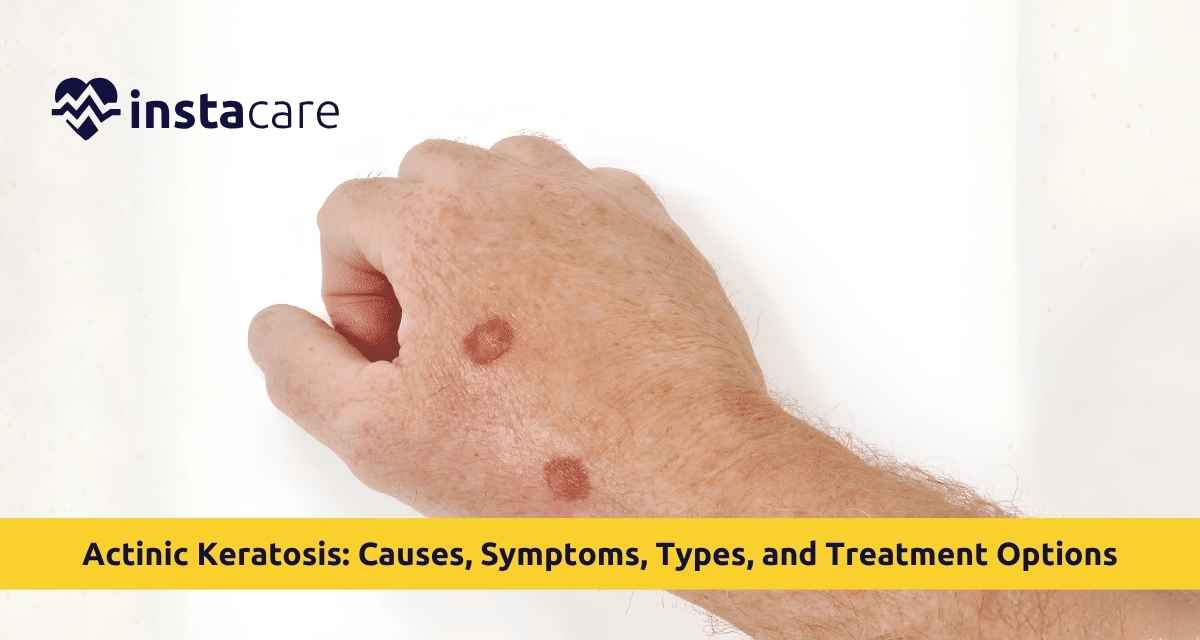
aa AK typically is diagnosed on patients older than 50, but can occur on younger patients from significant sun exposure. AK patches occur on patients with lighter hair and skin. AK is a serious skin condition and further develops into skin cancer, so early diagnosis of AK helps long term prevention.
What is Actinic Keratosis?
Actinic keratosis is a UV induced patch on the skin from epidermal cell damage. UV exposure develops keratinocytes (skin cells) to develop abnormal mutations in patches. These patches occur from cell overgrowth and develop slow. These patches can develop into squamous cell carcinoma. Actinic keratosis is not a dangerous skin patch that develops, but it is a serious skin condition/damage warning sign that shows the possibility of health concerns and malignancy.
Causes of Actinic Keratosis
Cumulative UV exposure is the leading cause of actinic keratosis. Other risk factors include:
- Chronic sun exposure: This is the main cause of concern. UV exposure over the years can induce actinic keratosis.
- Tanning beds: It is important to consider that the UV radiation provided in tanning beds can also cause actinic keratosis.
- Light skin, hair, and eyes: Races with fair skin allow for less UV protection.
- Age: The older the patient, the more susceptible they are. This is due to a significant increase in cumulative UV exposure.
- A compromised immune system: Individuals who take immunosuppressant medications or who suffer from any of the numerous immunosuppressive diseases, are at a greater risk of developing actinic keratosis.
- Genetics: If an individual has a history of developing actinic keratosis and/or skin cancer, their risk is greater.
Actinic keratosis signifies that damage to the skin has already been done. This is suggestive of why preventative measures against sun exposure are important.
Common Symptoms of Actinic Keratosis
Actinic keratosis has a subclinical gradual onset, which is signified by the following symptoms which are the early stages of keratosis:
- Patches that are rough, dry, and scaly: The are usually less than 1 inch and have similar texture to that of sandpaper.
- Lesions that are red, pink, or the color of the skin: These lesions have differing colors and textures.
- Areas that are raised and thickened: They may crust over.
- Itching and burning: Keratosis may be mildly irritating but usually does not cause much pain.
- Tenderness: Keratosis is sensitive to palpation.
Actinic keratosis lesions are not painful by nature, which is why patients may develop numerous lesions in various areas and remain completely unaware. These lesions typically develop in multiples in areas of the body that experience the highest sun exposure.
🧪 Book Liver Function Test (LFT) at Ibn-E-Sina Clinical Lab – Get 30% OFF
Types of Actinic Keratosis
Actinic keratosis can take on many different appearances that can make or break a treatment decision.
- Classic AK: Small, rough patches, often red or pink, that can be found on the hands or face.
- Hypertrophic AK: These lesions are thickened, raised, and can resemble warts.
- Pigmented AK: These can be darker (pigmented) and moles can resemble these.
- Actinic cheilitis: This occurs on the lips and can be rough, scaly, or crusted.
- Multiple or field AKs: This can be described as several lesions that are clustered together and is treated as a sun damaged skin "field" instead of treating lesions one at a time.
Knowing these lesions can help healthcare professionals determine the best treatment as well as predict future malignant transformations.
Diagnosis of Actinic Keratosis
It is important to diagnose Actinic Keratosis early to stop it from advancing to squamous cell carcinoma. The methods to diagnose are:
- Physical examination: Dermatologists evaluate the lesions based on their location, appearance and texture.
- Dermatoscopy: There is a magnified exam that can assess and help determine if something is AK or another skin condition.
- Skin biopsy: for lesions that appear atypical, thick, or are growing rapidly, a biopsy is performed as a method to rule out cancer.
- Monitoring: An important part of treatment is revisiting your healthcare professional to help them monitor your skin and new lesions and evaluate the old ones.
For those with a long sun exposure history or a post skin cancer history, a skin evaluation is necessary on a consistent basis.
Treatment Options for Actinic Keratosis
Due to the numerous forms of Actinic Keratosis, it is rare to have a case that is untreatable. The most common method is cryotherapy. In this process, the lesions are frozen where the abnormal cells slough off.
- Topical Medications: We can use creams or gels (5-fluorouracil, imiquimod, or diclofenac) to manage multiple lesions and treat the entire sun-damaged area of skin.
- Photodynamic Therapy (PDT): This involves applying a light-activated medication to the skin to target precancerous cells and reduce damage to the healthy surrounding cells.
- Curettage and Electrodessication: This technique allows removal of the lesion and destruction of the remaining tissues by burning it with an electric current.
- Laser therapy: This is a more selective approach for removal of surface skin lesions.
- Surgical excision: This is the procedure of choice for skin lesions that have a considerable depth and those that are not typical and are more likely to cause malignant transformation (skin cancer).
Selection of the procedure is based on the size, number, and location of lesions, patient preference, and overall health of the patient. For patients with a considerable degree of sun damage, it is standard practice to combine more than one technique.
Prevention and Lifestyle Tips
Avoiding UVR and optimal skin care is the best way to prevent the development of actinic keratosis. This includes the following:
- Use a broad spectrum sunscreen with SPF of at least 30 on a daily basis including on face, neck, hands, and other areas of the body that are exposed to the sun.
- Protective clothing and wide-brimmed hats are helpful, along with UV blocking sunglasses.
- Sun exposure should be avoided, especially at peak hours (10 a.m. to 4 p.m) and the use of tanning beds should be avoided.
- Skin should be regularly self-checked and any new lesions, bumps, rough patches, or lesions with changing appearance should be noted.
- Annual skin examinations by a dermatologist should be done, especially for those who are Fair-skinned or those who have a history of sunburns.
These measures, if taken regularly, can prevent the development of new lesions and help to avoid cancer of the skin.
Conclusion
Actinic keratosis, a skin condition which can become cancerous due to UV exposure, can be slow to progress. It can progress to squamous cell carcinoma if left untreated. The best option to manage actinic keratosis is prevention, which means sun protection and also early detection and treatment. Cryotherapy, other topical treatments, and surgical intervention work best if done early and regularly. Lifestyle changes along with treatment can decrease new actinic keratosis lesions and malignant transformations, which helps sustain a greater quality of life.
Please book an appointment with the best Dermatologist in Lahore, Karachi, Islamabad, and all major cities of Pakistan through InstaCare, or call our helpline at 03171777509 to find a verified doctor for your disease.