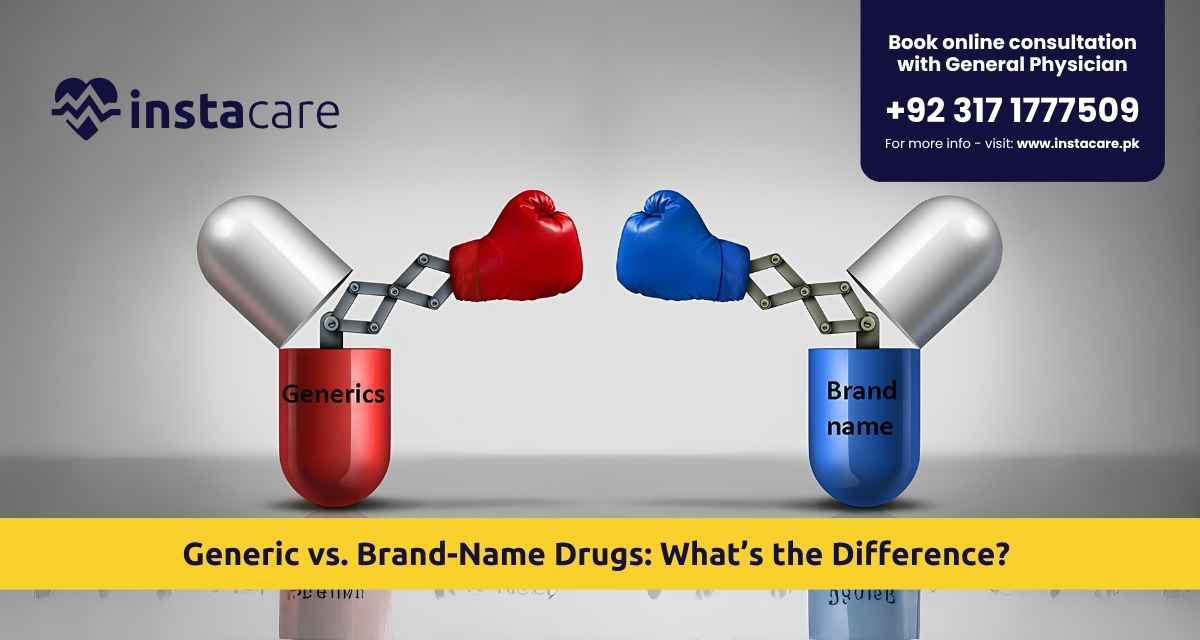
When a generic medicine gets approved, it is designed to offer the same clinical benefit as its brand name medicine. It is composed of the same active ingredient, same strength, same dosage, and same route of administration. It is required to fulfill established requirements for quality and performance. Knowing what is the same and what can be different will help consumers be less confused when choosing or receiving their medicine.
What Is a Brand-Name Drug?
A brand name drug is a medication that is introduced under a specific Trade Name. Before a medicine is introduced to a market, the quality, safety, and effectiveness are evaluated to determine a proper dosage and possible side effects. A company that researches and develops the medicine is granted a certain period of exclusive rights. During this time, other companies are not allowed to introduce their version of the medicine to the market.
After the time of exclusivity is up or if the other requirements are met, other companies may create a generic version of the medicine with the same active ingredient. The brand name doesn't describe the drug's active ingredient. It's more or less the medicine's name that a company uses to sell its particular version of that medicine.
What Is a Generic Drug?
Generic drugs are medicines that have been approved to be similar to already approved brand name drugs in important clinical characteristics. Approved generic drugs must have the same:
- Active Ingredient
- Strength
- Dosage Form
- Route of Administration
- Intended Use
- Clinical Effect
For example, if a brand name drug is an oral tablet containing a certain active ingredient, its generic version must have the same active ingredient and be administered the same way.
Like a brand name drug, generic drugs must also demonstrate appropriate quality, stability, and manufacturing standards in order to be approved.
What Is the Main Difference Between Generic and Brand-Name Drugs?
The differences between generic and brand name drugs are primarily with the name, appearance, inactive ingredients, manufacturer, and price. The ingredient that is the primary therapy for the medical problem is the same in both. Both versions of the medicine contain the same ingredient that is the primary therapy for the medical problem. Generic medicines may look different. Color, shape, size, inscriptions, coatings, and packaging may all be different from the brand name drug. Appearance differences do not mean that the drug will have a different effect. Small appearance differences are allowed if they do not affect the drug's safety or effectiveness.
Do Generic and Brand-Name Drugs Have the Same Active Ingredients?
What makes a generic drug a better option than a brand name drug is that they use the same active ingredient. An active ingredient is a substance found in a drug that provides the therapeutic effect to the drug. Active ingredients can be found in drugs that lower blood pressure, treat pain, reduce swelling, and even treat other conditions. For a drug to be approved as a generic equivalent, it must have the same active ingredient and strength as the original drug.
👉 Book IDC Lab Test – Get 10% Off
Are Generic Drugs as Effective as Brand-Name Drugs?
Generic drugs are evaluated for their effectiveness and are expected to yield the same clinical benefits as their brand-name equivalents. Generic drugs must also demonstrate bioequivalence prior to approval. This means that the active ingredient must sometimes be used to treat a medical condition in the same way as the original drug. This proves that the generic version of the drug is identical to the original. For this reason, having lower price tags does not suggest that generic drugs contain a poor quality active ingredient, or that they should be used to provide a less effective treatment.
Why Do Generic Drugs Cost Less than Brand Name Drugs?
The cost of most drugs is primarily due to the price set by the manufacturer. Compared to brand-named drugs, the costs associated with research and development of generic drugs are less significant because generic drug manufacturers do not have to create and submit as much original research.
They, however, must provide enough evidence for an equivalent active ingredient and a reference drug. Competition also rises when several manufacturers are allowed to produce generic versions of the same drug. Generic drugs become even more affordable because of this competition, though they are still required to meet quality and performance standards.
Why Do Generic Medicines Look Different?
Patients can be worried when their regular tablets change color and/or shape in the case of the generic medication. This can be perfectly normal.
The look of generic medicines can be different in many ways compared to the branded medicine. These can be:
- Color
- Shape
- Size
- Packaging
- Presence of markings on the tablets
- Flavor
- Certain coatings
These differences should not affect the primary action of the medicine. Minor changes can be allowed in the appearance of a medicine as long as the changes do not compromise the safety and effectiveness of the medicine.
Surgical Sutures: Types, Uses, and Importance in Modern Medicine
Can Inactive Ingredients Be Different?
Yes. There can be differences in the generic and branded medicines in this aspect.Medicines have both active and inactive ingredients. The inactive ingredients are used to form the tablet, to coat the tablet, to color the tablet, to enhance stability of the tablet, or to aid in manufacturing the tablet. The active ingredients produce the main therapeutic effect.
Generic medicines can have inactive ingredients which are different compared to those in branded medicines as long as they meet safety requirements and do not affect the performance of the drug. These differences typically do not present any issues to the average person. However, there are some people who may have allergies, sensitivities, or intolerances to inactive ingredients. If you have a known allergy to ingredients or start to have unexplained symptoms and have to change your medication, tell your doctor or pharmacist about your concerns.
Are Generic Drugs Safe?
Approved generic medicines must meet safety and quality standards for manufacturing, active ingredient strength, and performance.
Simply being a less expensive option does not mean a generic drug is manufactured to lower quality. Generic manufacturers must show that their medicine meets all standards and is able to be a substitute for its reference medication. As with all other medicines, generic drugs may cause side effects. Most expected side effects are generally similar to the corresponding branded medicine.
Can You Experience Different Side Effects?
- Most patients should expect similar therapeutic effects and common side effects since they have the same active ingredient.
- Some people may notice differences after switching medications, especially if they are sensitive to an inactive ingredient.
- Changes in symptoms may not be caused by the actual switch. Other factors may impact how a person feels and may include health and other medications, diet, time of the dosage, and many other factors.
- If you develop new or severe symptoms after switching from one medicine to another, contact your doctor before stopping the medicine.
Should You Choose Generic or Brand-Name Medicine?
For most medicines, an approved generic version can be a low-cost substitute for the original brand-name version that works just as effectively. Medicine substitutions may be complicated, so you should make decisions according to your personal circumstances. You may want to speak with a health care professional or pharmacist if you:
Have previously experienced problems after switching medicines.- Have allergies or sensitivities to inactive ingredients. Take a lot of medicines at the same time.
- Are uncertain if a generic substitute is appropriate.
- Notice an unexpected change in the appearance of medicine.
- Get new or worsening symptoms.
For people with complex or chronic conditions, it is particularly important to seek guidance from a health care professional when the medicine or treatment is changed.
Herbal Medicine: Nature’s Healing Power Explained
How Can You Identify Generic Medicine?
One thing you can look for is the name of the medicine. Generic drugs are labeled by the active ingredient, whereas, brand drugs are labeled by their association with a particular name. Your prescription or packaging should contain information about the drug’s strength, dose form, and active ingredient. If you are unsure about what you have been given, ask your pharmacist for clarification and do not rely on the look of the tablet.
Final Thoughts
While generic drugs and brand name drugs may have different prices, appearances, and packaging, as well as a different manufacturer and inactive ingredients, the clinical benefit that should be expected to be provided by an approved generic version of a brand name drug should be the same.
A generic drug has the same active ingredient, strength, dosage form, and the same route of administration as the original drug. In many cases, generic medicines enable patients to obtain treatment at a much lower cost. However, it is essential to take into account one’s personal condition and advice from a medical professional and to consider all medications before making a final decision about treatment.
If there are any concerns regarding changes in generic Medicines and brand name medicines, a conversation with a pharmacist or a medical professional can be helpful to determine if the medicine is safe for the patient's individual needs.
Please book an appointment with the best General Physician in Lahore, Karachi, Islamabad, and all major cities of Pakistan through InstaCare, or call our helpline at 03171777509 to find a verified doctor for your disease.