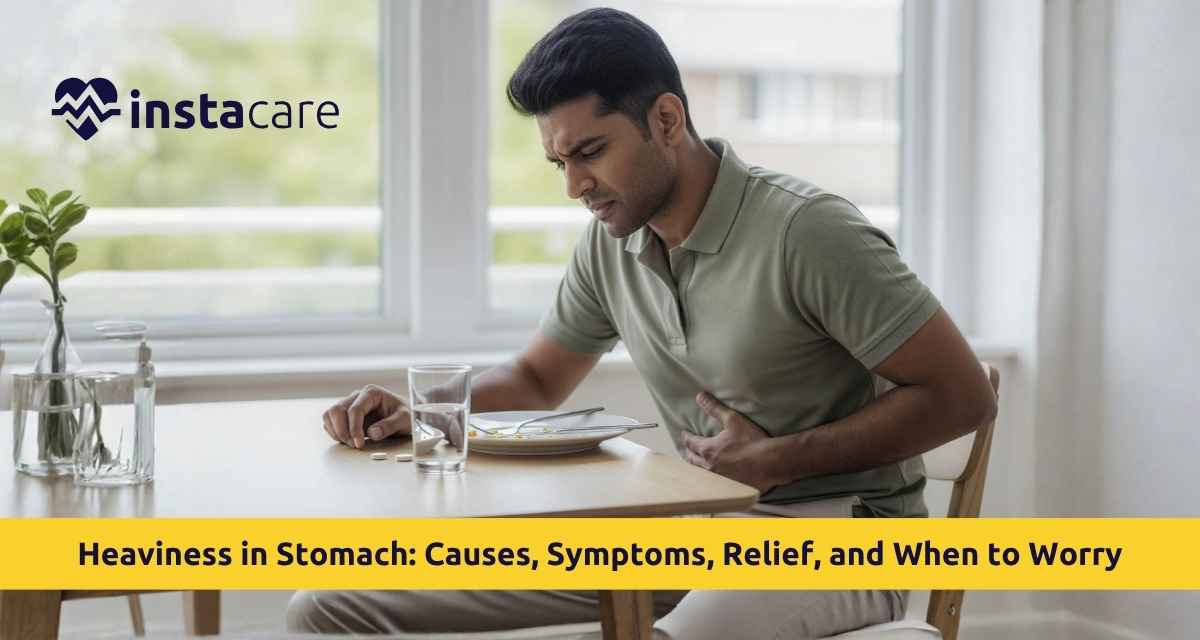
Though a few bouts of stomach heaviness after eating may not necessarily be a cause of alarm, when the sensation persists or is accompanied with other uncomfortable symptoms, then it may be an indication of the presence of another medical condition, which requires intervention. The blog will discuss the three predominant causes of being so heavy in the stomach, how to get it to go away, and when to see a doctor.
What does Heaviness in the Stomach Mean?
Not a medical diagnosis, the heaviness in the stomach. It is more general that you have an overfilled, uncomfortable, or swollen stomach. To others, it is accompanied by the process of burping, nausea, gas, rumbling or feeling that the food has stagnated in the stomach. It can occur after a big meal, after foods with a lot of fats or spicy food, or on stressful days where the digestion is impaired. This sensation is commonly associated with bloating or indigestion.
According to health sources, bloating is a full and uncomfortable stomach and indigestion might be accompanied by upper abdominal discomfort, early fullness during meals, bloating, nausea or belching. This is why the same issue can be characterized using various combinations of words: it is heavy, it is full, it is bloated, it presses, or it is an upset stomach.
Common Causes of Stomach Heaviness
The causes of heaviness in the stomach can be numerous. There are ones that are mild and short-lived and those that may require medical consultations. Common causes include:
- Excessive or rapid eating: Big meals may stretch the stomach and slow down the speed of digestion. A rapid meal may mean the consumption of larger amounts of air as well contributing to the pressure and bloating.
- Gas in the gut: This is one of the most common reasons. Gas forming foods like fizzy drinks, beans, lentils and cabbage may enhance fullness and tightness.
- Indigestion: It may result in pain or unhappiness in the upper abdomen, premature fullness, belching, nausea, and bloating.
- Constipation: The bowel becomes congested and the abdomen becomes heavy, swollen and uncomfortable.
- Food intolerance: Dairy, gluten or other trigger foods make some individuals feel heavy and bloated.
- Irritable bowel syndrome (IBS): The typical symptoms of IBS include bloating, cramps, and alterations in bowel movements like diarrhea or constipation.
- Stress and anxiety: Stress has the ability to upset the digestive system. It can slow down the digestive system of certain individuals, and increase bloating, pain or constipation.
- Hormonal changes: There are those individuals who feel full and bloated around their menstrual cycle due to normal hormonal swings.
Symptoms of Stomach Heaviness
A big stomach can hardly stand on its own. Other indigestion symptoms may also be observed depending on the cause. These may include:
- Heavy or stuffed in the belly
- Abdominal pain or slight pain
- Burping or farting more than normal
- Gurgling pains in the stomach.
- Nausea after meals
- Being too full too quickly during meals
- Heartburn or acid reflux in some cases
- Bowel movement or constipation.
When the heaviness predominantly occurs post-meal, it can be in connection with indigestion, overeating, food intolerance or gas. Provided it comes and goes with a bowel change, constipation or IBS might be a cause. In case it is exacerbated by stress, it could be because of the gut-brain connection.
🩻 Book X-RAY Abdomen at My Test Lab – Get 25% OFF!
How to Relieve Heaviness in the Stomach?
Numerous less severe cases can be ameliorated at home through some basic modifications. Helpful home remedies for bloating include:
- Have smaller meals: Big meals can overwhelm stomachs. Smaller meals, which are more frequent, can tend to be less demanding on the stomach.
- Eat slower: Eat slowly and have your mouth closed during chewing to minimize air that is swallowed.
- Drink plenty of water: Fluids promote the digestive system and possibly the constipation that constitutes part of the problem.
- Walk or move: Exercising is good to help digest food and can also reduce bloating. Even a stroll will help.
- Limit the intake of fizzy drinks and heavy trigger foods: Fizzy drinks, very fatty foods, very spicy foods and highly processed foods can worsen symptoms.
- Treat constipation: Soluble fibre e.g. oats or linseed can be used when there is constipation.
- Reduce stress: Stress can help some individuals digest better and have fewer stomach-related problems.
- Ask a pharmacist as needed: Steps like simeticone can work on some individuals with bloating, and laxatives can be used in case it is the cause.
Foods and Habits that Make it Worse
In some cases avoiding triggers of the problem is the best form of treatment. You may want to watch whether your symptoms get worse after certain meals or habits. Common triggers include:
- Overeating per meal.
- Eating very late at night
- Fizzy drinks
- Fatty, spicy, sweet or grossly processed food.
- Gas-forming foods like beans, lentils and cabbage.
- Eating too fast
- Smoking, which may aggravate reflux and stomach issues.
It can be helpful to maintain a plain food and symptom diary. Should the heaviness recur after specific foods, this pattern can aid in determining triggers and clarifying your symptoms to a doctor in case it is necessary. This can be useful in particular where there is a suspicion of food intolerance or IBS.
When Should You See a Doctor?
Easier mentioned stomach heaviness occurring after a heavy meal is not worrisome. However, the medical advice is to seek medical help in case the symptoms occur on a regular basis, are persistent and continue to increase.
- Reliable medical authorities advise you to seek immediate medical attention in case you develop weight loss, blood in stool, multiple vomiting, black stools, difficulty, jaundice, excruciating or persistent abdominal pains, or notable weakness.
- Emergency assistance is required in case the symptoms of the indigestion are accompanied by the pains in the chest, by the feeling of shortness of breath, by the sweat or pain extending to the jaw, neck, or arm.
- Medical attention should be seen as well in cases of bloating accompanied with fever, vomiting, severe constipation, a lump or swelling in the abdomen or inability to pass stool, urine, or gas. Such indicators can be the symptoms of a more severe issue that should not be overlooked.
Final thoughts
The stomach discomforts that are commonly associated with heaviness, bloating, gas, indigestion, constipation, food triggers, or stress. In a wide variety of instances, it is better with small meals, slower food intake, hydration, activity, and avoiding trigger foods. However, there is a risk that it may become too frequent, serious or be accompanied with warning, so there is a reason to visit a medical service provider as opposed to self-treating over an extended period.
Please book an appointment with the best Gastroenterologist in Lahore, Karachi, Islamabad, and all major cities of Pakistan through Instacare, or call our helpline at 03171777509 to find a verified doctor for your disease.